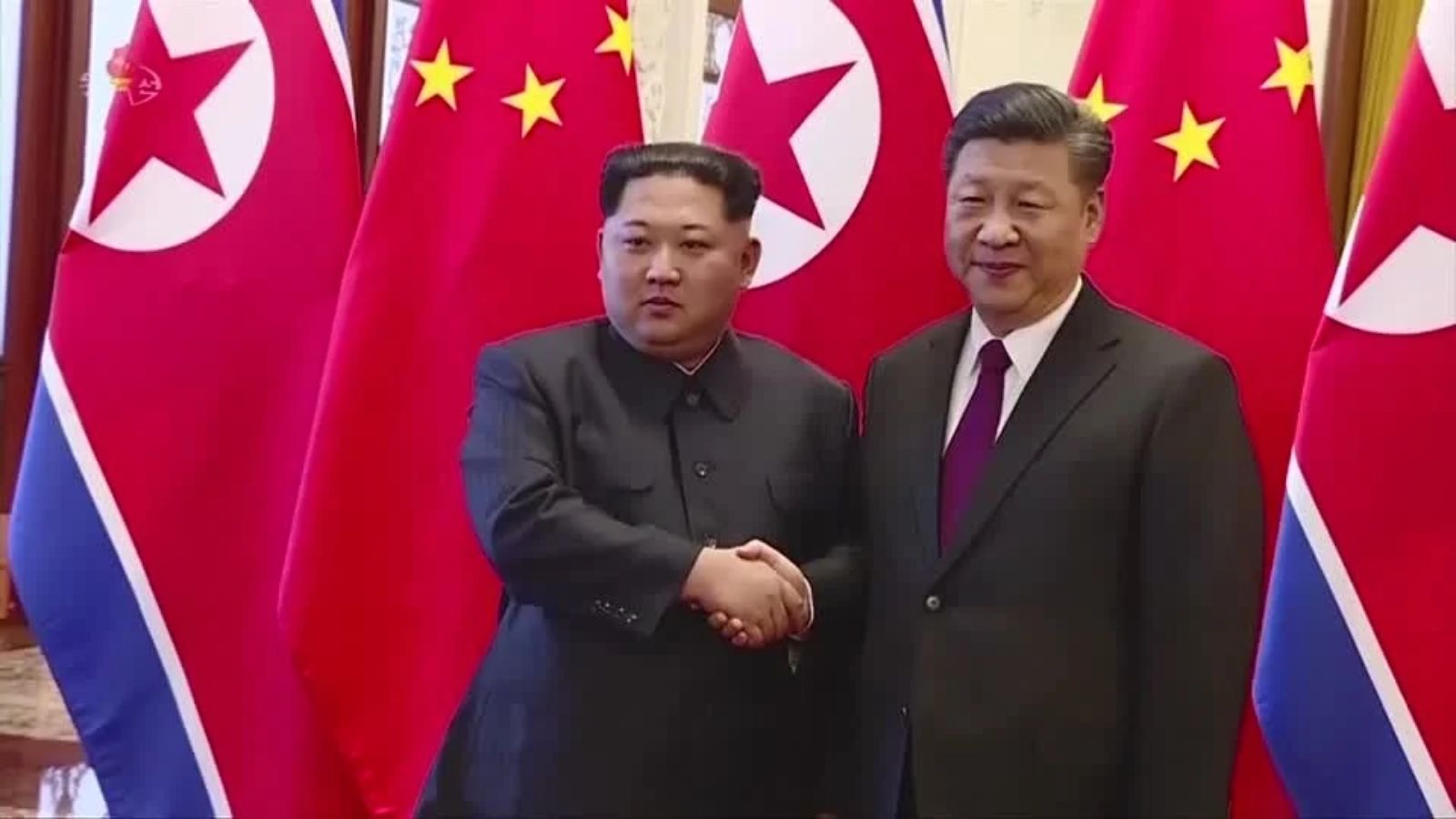


Seoul: North Korean leader Kim Jong Un visited China on Saturday, inaugurating a new bridge that connects the two countries and vowing to expand cooperation with his powerful neighbour.
Kim's visit to China is his latest move in an increasingly assertive foreign policy as he seeks to align Pyongyang with Beijing and Moscow in a united front against the United States under what he portrays as a "new Cold War". It is his first visit in a year.
Also Read:
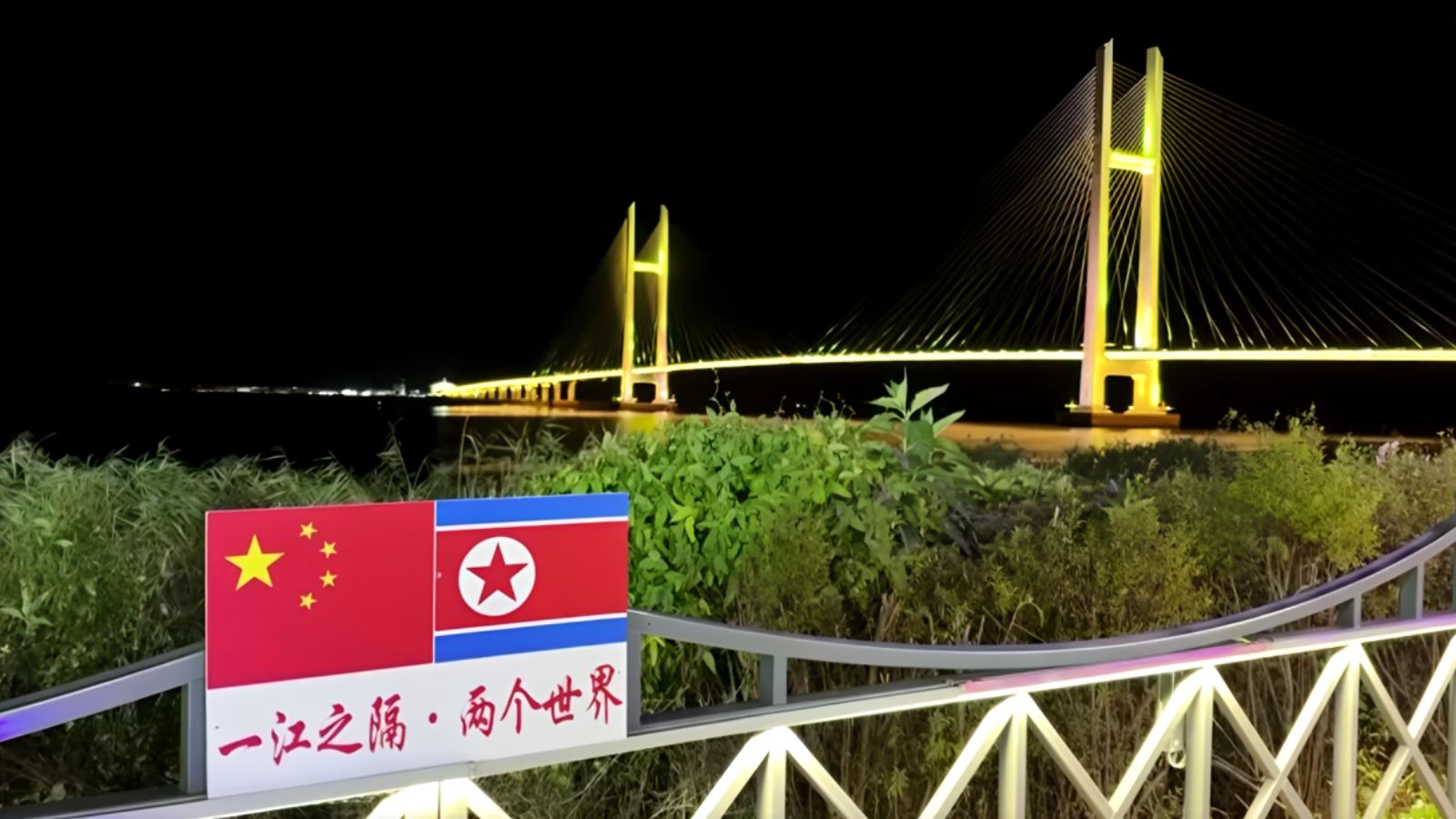
Kim arrived in the Chinese border city of Dandong on Saturday after crossing the newly opened bridge, according to South Korea's Unification Ministry and China's official Xinhua News Agency. Both sides promise to strengthen cooperation
In Dandong, Kim visited a memorial marking China's support of North Korea during the 1950-53 Korean War and met with Wang Huning, a member of the Standing Committee of China's Communist Party.
At the memorial, Kim said that North Korea will "firmly carry forward the invincible DPRK-China friendship forged at the cost of blood all the time," according to the North's official Korean Central News Agency. DPRK stands for the Democratic People's Republic of Korea, the North's official name.
During their meeting, Kim reaffirmed a resolve to develop bilateral cooperation, while Wang conveyed Chinese President Xi Jinping's greetings and said Kim's visit to the memorial was "of great significance" in carrying forward the friendship between the two countries, KCNA said.
The two toured a car factory as well, before Wang accompanied Kim to the bridge to send him off, according to KCNA and Xinhua.
Experts said the opening of the New Yalu River Bridge this month was a key symbol of strengthening ties between North Korea and China and reflected their intent to expand trade, as it is expected to accommodate two-way traffic around the clock, including container shipments and heavy cargo trucks. The bridge was opened after more than a decade of delay.
While returning home via the bridge, Kim said "the bridge would undoubtedly and correctly fulfil its historic mission of linking the two countries and firmly joining the minds of the peoples of the two countries", KCNA reported.
Kim has recently taken steps to bolster ties with China, the North's traditional main ally and economic lifeline, after years of prioritising ties with Russia. China, for its part, has sought to restore its unique influence over North Korea.
North Korea has sent thousands of troops and conventional weapons to support Russian President Vladimir Putin's war in Ukraine, possibly in exchange for military and economic assistance.
Kim's latest visit to China is his sixth since taking power in late 2011 following the death of his father, Kim Jong Il. The visit appears to be timed to underscore the strength of his ties with Beijing ahead of the October 25 anniversary of China's first major victory in the Korean War, which was days after Chinese troops crossed the Yalu River into North Korea in October 1950.
The war began with North Korea's surprise attack on the South in June 1950, prompting a UN-led coalition headed by the United States to intervene and push back the offensive. North Korea was backed primarily by Chinese forces, with assistance from the then-Soviet Union's air force, before fighting ended with a 1953 armistice that left the peninsula technically at war.
Xi travelled to Pyongyang in June for a meeting with Kim. During their summit, Xi expressed Beijing's willingness to expand bilateral cooperation in trade, agriculture, construction and technology, while Kim described ties with China as a top strategic priority.
Kim last visited Beijing in September 2025, when he met with Xi and watched a military parade alongside Putin and other foreign leaders.
Kim has maintained a hard line toward Seoul and has so far rebuffed a proposal from US President Donald Trump to revive their diplomacy, which broke down in 2019 during Trump's first term. Kim's government has called for Washington to abandon its "hostile policy" and drop demands for the North's denuclearisation as a precondition for renewed talks.
South Korea's liberal government, which favours engagement with the North, hopes renewed talks between Washington and Pyongyang will thaw inter-Korean relations, and has also urged China to play a "constructive" role in resolving the standoff. Seoul's spy agency told lawmakers last month that it saw a 50 per cent possibility of a meeting between Trump and Kim on the sidelines of next month's Asia-Pacific Economic Cooperation, or APEC, summit in Shenzhen, China.
"From Seoul's perspective, if North Korea focuses more on economic development than military buildup and threats, that would be positive for diplomacy and security," said Leif-Eric Easley, a professor at Ewha University in Seoul.
"But if Kim can extract ever more benefits from China and Russia, it is unclear what Seoul could offer that would be worth the political risks Pyongyang attaches to exchanges with a more prosperous, globalised and free Korea."