

Rio de Janeiro: Brazilian President Luiz Inácio Lula da Silva has won re-election, according to the country's electoral court, while his opponent, Flávio Bolsonaro, has refused to concede defeat and called for the results to be annulled.
With 100 per cent of the votes counted, the electoral court announced that Lula, who is approaching his 81st birthday, secured 51.8 per cent of the vote, leading Bolsonaro by nearly 4.4 million votes.
The announcement followed confusion at polling stations across Brazil after a last-minute decision to extend voting hours by two hours. On Sunday night, Bolsonaro called the extension unprecedented and said the results were impossible to accept, although both candidates had requested the measure.
Lula's victory comes amid a broader political shift in Latin America, where several right-of-centre presidential candidates aligned with US President Donald Trump have won elections. Brazil and Mexico, the region's two most populous countries, will now have left-of-centre leaders.
Brazil, Latin America's largest economy, has an annual gross domestic product of around $2.6 trillion. Lula's victory also leaves the country positioned to maintain an independent stance towards the United States amid pressure from tariffs imposed by Trump.
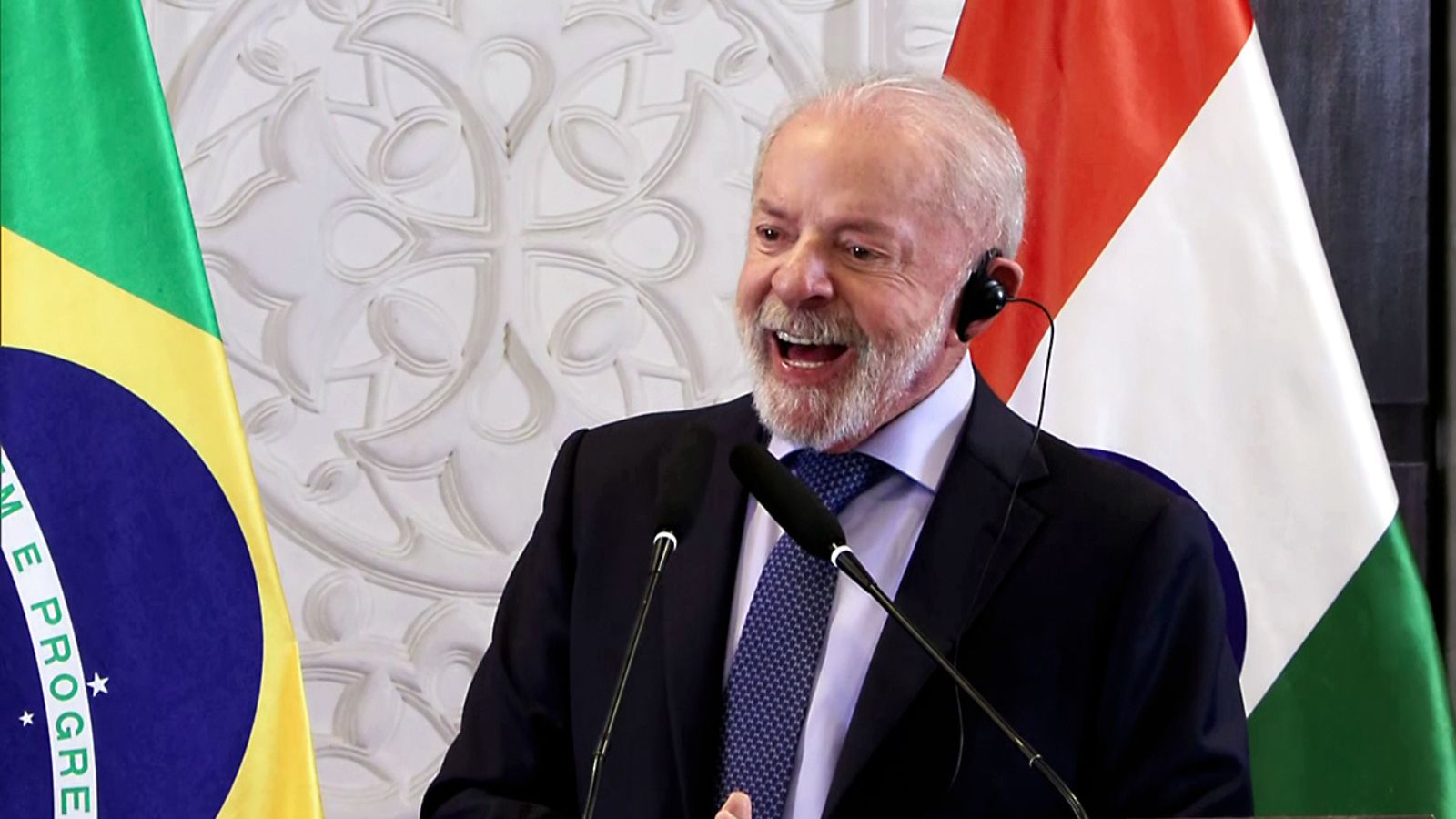
Lula supporters celebrate victory
A video released by Lula's campaign showed the veteran leader celebrating with First Lady Rosângela da Silva and political allies after the electoral court confirmed his victory. Wearing red, star-shaped glasses, Lula kissed his wife as supporters gathered to celebrate.
Hundreds of supporters assembled along São Paulo's main thoroughfare. In Rio de Janeiro, cars honked their horns as people celebrated the result.
A woman dressed in red, a colour associated with Lula's supporters, shouted "You lost! Cry harder!" at four men wearing yellow and green, colours associated with Bolsonaro, as a roar echoed through the street.
However, Bolsonaro supporters expressed concern about the outcome. Rodrigo Valentim, a 51-year-old businessman who backed Bolsonaro, said another Lula government would harm the economy.
"I don't understand how people can vote for Lula," he said. "The country is collapsing."
Voting extension sparks confusion
The electoral court's announcement followed an evening of uncertainty after Brazilian Supreme Court Justice Cristiano Zanin ruled, three minutes before the scheduled close of voting, that polling stations should remain open for another two hours.
Both candidates had requested an extension, but for different reasons. Lula cited problems with buses transporting voters to polling stations in São Paulo and Salvador, two cities that tend to favour the incumbent. Bolsonaro requested an extension because of heavy rain in southern Brazil, where he had stronger support.
In Brasília, volunteers overseeing the vote count at a school debated whether they needed to remain after the extension was announced. Most left 15 to 20 minutes after the scheduled closing time, having provided count information to electoral authorities.
At a polling station in Rio de Janeiro, voting machines had already been switched off and could not be turned back on.
The decision delayed the vote tally by two hours. It remained unclear how many polling stations stayed open beyond the scheduled closing time.
Bolsonaro ally Nikolas Ferreira pointed out that Zanin, who made the decision, had previously served as Lula's lawyer.
A difficult election campaign
Bolsonaro had defeated Lula by more than 2.2 million votes in the first round of the election earlier in October. Lula's victory in the subsequent round marked the first time since Brazil's military dictatorship ended in 1985 that the candidate who finished second in the first round went on to win the presidency.
The election was closely contested amid concerns about the cost of living and public security. Bolsonaro made a tough-on-crime approach central to his campaign and pledged to reduce food prices, while Lula offered costly incentives to attract undecided voters.
Both candidates faced corruption allegations involving family members and political allies. Bolsonaro was implicated in a wide-ranging scandal, while Lula had previously spent more than a year in prison following corruption convictions that were later annulled.
Lula's political comeback
Lula began his political career as a trade union leader in the 1970s and helped found the Workers' Party. After three unsuccessful presidential campaigns, he won the presidency in 2002 and was re-elected in 2006.
He was succeeded in 2010 by his cabinet minister Dilma Rousseff, who won re-election in 2014. Rousseff was impeached in 2016 over accounting practices amid a wider corruption investigation that also implicated Lula.
Also Read:
Lula attempted to run for president again in 2018 but was jailed in March that year after being convicted. He was released after 580 days in prison, and Brazil's Supreme Court later annulled his sentence after messages were found indicating that the judge who convicted him had been biased.
He subsequently became one of former president Jair Bolsonaro's leading critics and narrowly defeated him in 2022.
After finishing behind Bolsonaro in the first round of the latest election, Lula reorganised his campaign, appealed to younger voters and mobilised supporters around democratic values and his political legacy. He also highlighted fears of another Bolsonaro administration and promoted government initiatives.
The victory marks another term for the veteran leader, who, at 80, is among the oldest serving presidents in the Americas, alongside Trump and Nicaragua's President Daniel Ortega.