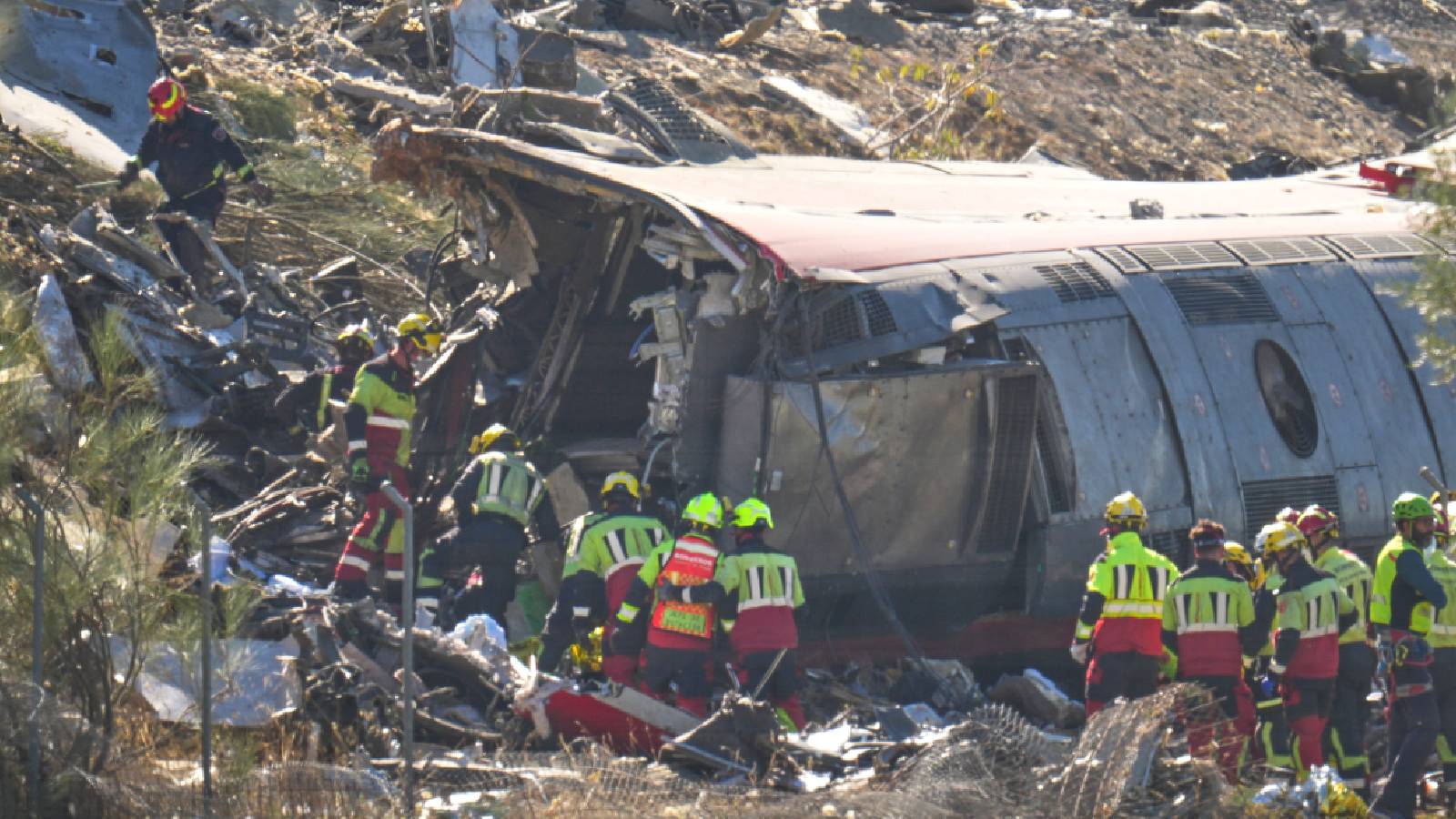


Urda: Families desperately searched for missing loved ones Thursday, more than 24 hours after two high-speed trains collided in central Spain, killing at least 69 and injuring dozens of others.
“I have my father, and I don't know where he is. I hope to find him, oh my Lord," said Cesar Vicente, an actor who travelled 495 kilometres from his native Seville to Toledo in search of his father. He spent the night with many other families at a religious centre converted into a base for those affected by the disaster.
Vicente was with his mother and his aunt, all of whom were looking for Cesar Vicente, who was sitting in seat 13A on the RENFE train that struck another operated by the private company Iryo, which had stopped on the tracks. The family was among those who braved the cold to take a short walk on a chilly morning.
“I don't want this to happen to anyone. This is unbearable,” he added. “This is hell.”
Online, relatives and friends flooded social media with desperate appeals for information on the whereabouts of their loved ones, posting photos or describing the clothes they were wearing when they boarded the trains bound for Seville and details about their physical appearance or the seat in which they were travelling.
In a post on Wednesday on Instagram, Alejandra Marroquin told her followers that her sister Adriana, who was wearing dark blue clothes, was travelling in car 8 of the RENFE train and that they had been unable to contact her.
“We're still praying, we don't know anything,” Marroquín said in a post Thursday morning, as search teams with sniffer dogs continued to look for victims.
“The entire government is working to respond to the victims' families, shed light on the tragedy, and strengthen security so that this never happens again,” Spanish Prime Minister Pedro Sanchez told reporters on Thursday morning.
This was the second high-speed rail disaster this year. In January, 46 people died after one train jumped the track and slammed into the side of another going the opposite way in southern Spain.
The high-speed rail network has been considered one of Spain's crowning achievements. It is the world's second-largest, after China's. Until this year, it had not experienced a deadly crash since coming into service over three decades ago.
The crash set off a wave of solidarity
Life in Urda, a small town of about 2,500 people south of Madrid, was turned upside down early Wednesday.
Residents rushed to help in any way they could: from assisting the injured to preparing sandwiches for the unharmed passengers, many of whom they even carried from the tracks to a nearby sports pavilion in their cars.
David Gomez, a construction worker, was working with his brother and another colleague nearby when they heard the crash and ran to help, he told the newspaper El País.
“People were trying to get out through the windows ... We cut through some fences to access the area and treated people with the first-aid kits we had brought until emergency services arrived," he said.
With 180 people injured, including 110 taken to hospitals, authorities issued a call for blood donations.
The response was immediate: in Castilla-La Mancha alone, the region where the collision occurred, more than 2,000 people volunteered in the aftermath.
“I want to express my personal and very sincere gratitude to everyone who has stepped up, starting with the all-time record number of donations,” said the region's president, Emiliano Garcia-Page, who also thanked the 1,300 emergency service personnel who were mobilized.