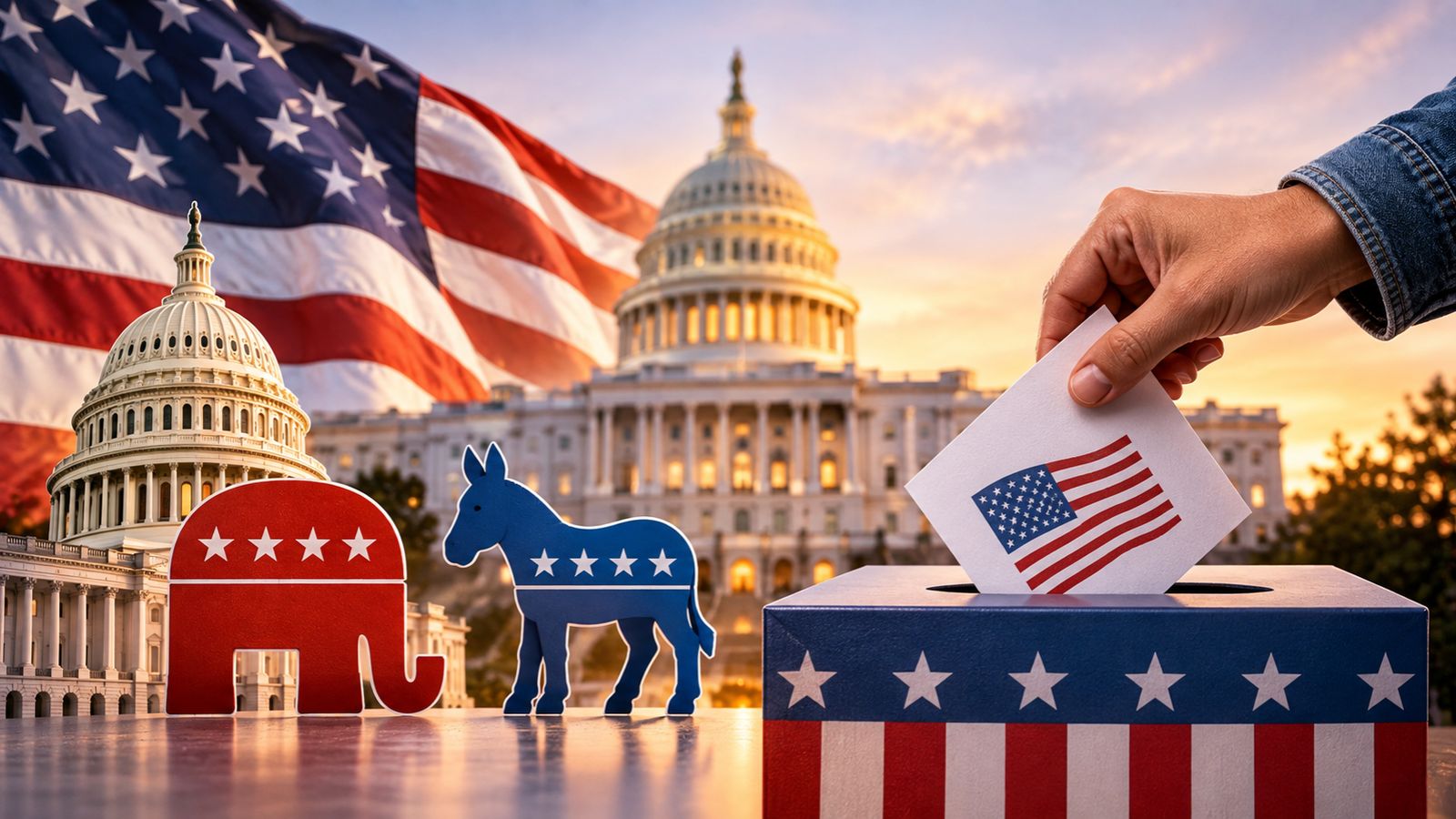


The United States of America is gearing up for its Midterm elections this year on November 3. The wave of elections, which is closely watched to analyse the Trump administration, is a very important political indicator to understand the current government’s performance. But how does the election work, and what does it mean for the 2028 US Presidential Elections? Let’s find out.
What are the US midterm elections?
As the name suggests, US midterm elections are held halfway through a president’s four-year term. The election is held to choose the members of the House of Representatives and the Senate.
Who contests the elections?
To understand it better, we should look deeper into the political scenario in the US.
Congress is the bicameral (two-house) legislative branch of the United States of America.
The two houses/chambers here mean:
- The House of Representatives
- The Senate
The House of Representatives, or the lower chamber of Congress, consists of 435 members, each from a different congressional district. The elections to all 435 seats are held every two years in the mid-term elections. They are directly elected by people from each congressional district. Each congressional district is segregated on the basis of population in each state. For example, California's 3rd Congressional District, New York 14th Congressional District, and others. The elected individuals are termed a congressman/congresswoman or, generally, a member of Congress.
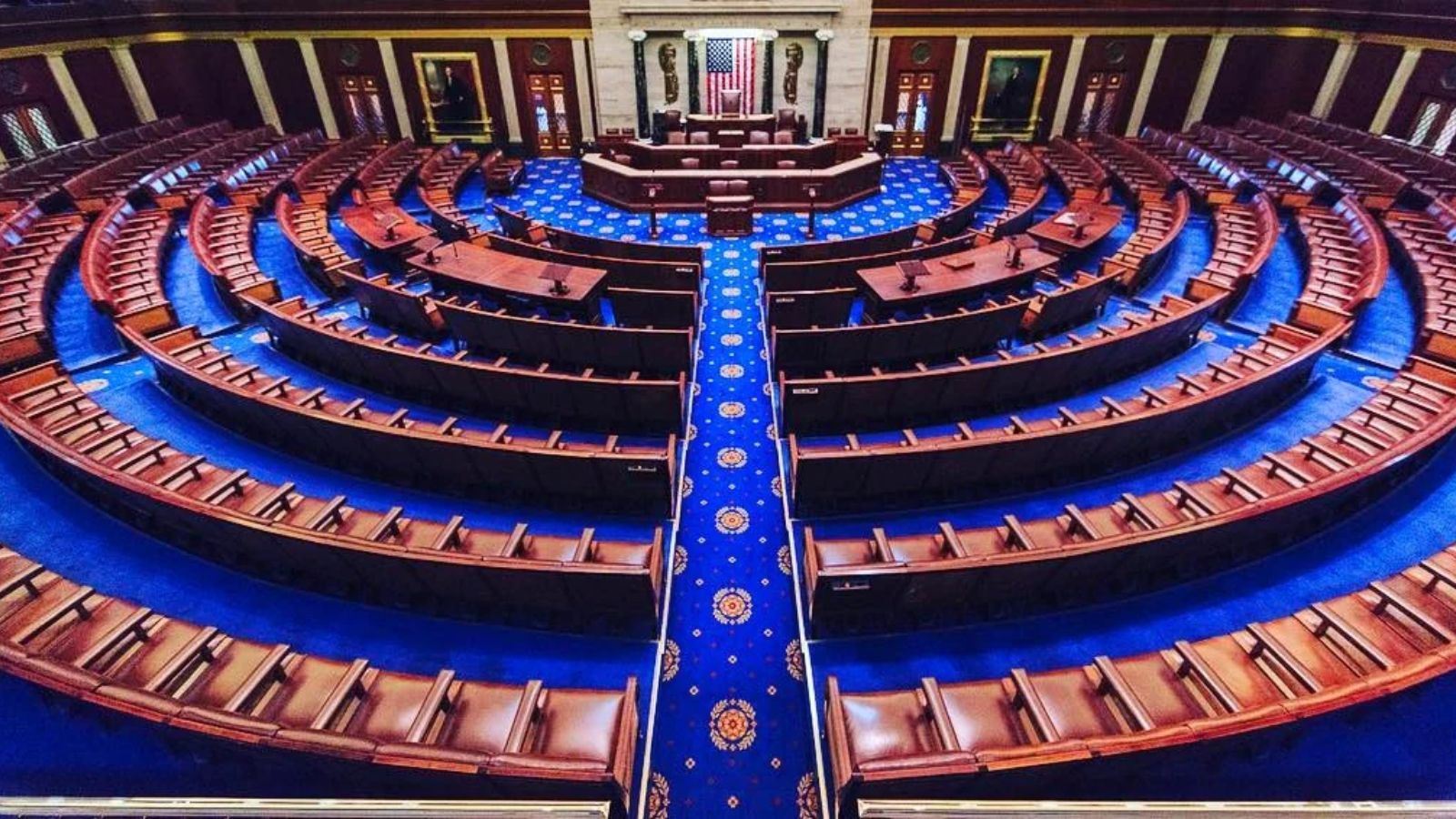
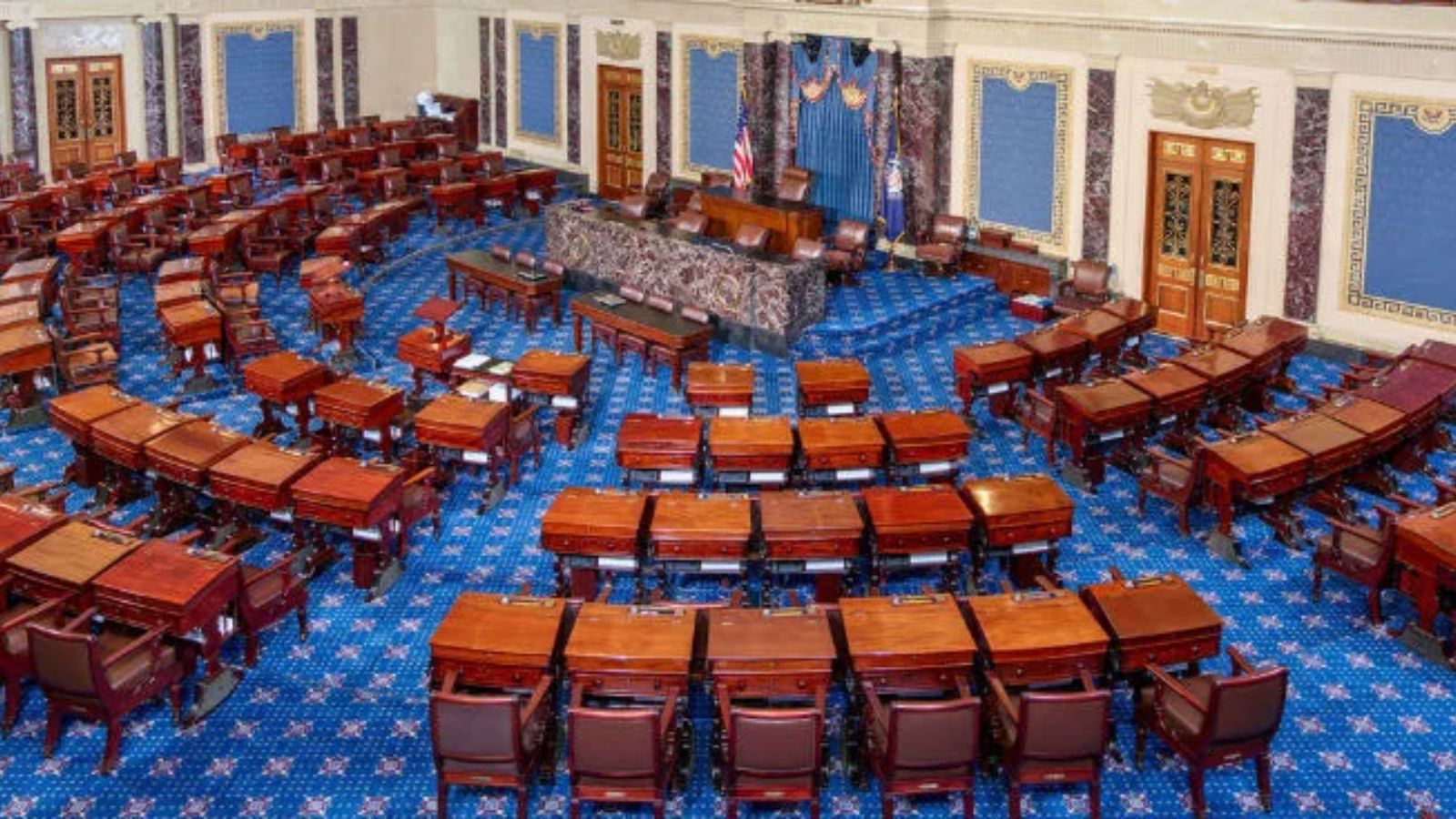
The Senate, or the upper house of Congress, is the legislative body comprising Senators.
In total, there are 100 Senate seats in Congress, two from each of the 50 states.
But unlike House members, a Senator’s term in Congress is six years. The seats for Senate representatives for mid-term elections are decided on the basis of a broader category of Senate classes.
The US Constitution divides the Senate into three groups, known as Class I, Class II, and Class III.
Class I: 33 or 34 seats.
Class II: 33 or 34 seats.
Class III: 33 or 34 seats.
Each group has elections once every six years, but in different election cycles. For the 2026 midterms, the regular election is for Class II, which has 33 seats. Alongside the 33 regularly scheduled Senate elections, two special elections will be held in Ohio and Florida. These will determine who serves the remaining terms of former senators JD Vance and Marco Rubio, who resigned to join the Trump administration as Vice President and Secretary of State, respectively.
Senators complete their term cycles in different years depending on the midterm election cycles.
What power do they hold?
The House of Representatives and the Senate share several powers, including passing federal laws and overseeing the legislative process. However, each chamber also has distinct responsibilities.
For instance, bills to raise federal revenue must originate in the House. The House also has the sole power to initiate impeachment proceedings and plays a key role in overseeing federal spending through investigations.
On the other hand, the Senate can also introduce bills except the revenue-raising ones. Senate reviews, amends, and can reject bills according to its jurisdiction.
But how are they connected with midterm elections?
The midterm elections are held for each of the 435 House of Representatives seats and 33/34/special Senate seats. The election is seen as more of a tug of war between the two parties in the USA: the Republican Party and the Democratic Party.
Whoever is holding the power will try to retain it, while the other one tries to regain the lost seats. Since the Republicans hold the majority in both chambers now, this year’s election will be them trying to hold the power in the House, while the Democrats fight for the lost throne.
Republicans
The supporters of the Republican Party, or the Grand Old Party, are called Republicans and are considered right-leaning conservatives. Their ideologies mostly include preserving the old ideas, having strict border enforcement, and emphasising more military strength and hardcore nationalism. The party is represented by the symbol of an elephant.
Currently, the country is run by the Republican Party headed by President Donald Trump.
Democrats
Supporters and members of the Democratic Party are known as Democrats. The party is generally associated with centre-left and liberal political positions, advocating policies focused on social welfare, civil rights, healthcare access, environmental protection, and inclusion.
They are represented by the symbol of a donkey. The last presidential candidate from the party was Kamala Harris in 2024.
These are broad tendencies, not fixed positions held by every member. Both parties have different ideological factions, and individual candidates can have different views on particular issues.
Who can vote in the midterm elections?
There is no single nationwide voting authority that conducts the entire election. Elections are administered by individual states and local election offices.
US citizens who are at least 18 years old by Election Day and meet their state's residency requirements can register to vote.
Before the main election, political parties hold primary elections or caucuses to select their candidates.
For example, if five Republicans want to contest a particular congressional seat, Republican voters in that state may participate in a primary to select the party's nominee.
The winning candidate then represents the party in the general election.
What does the 2026 midterm election mean?
According to the BBC, the US economy will be the main focus of the midterm elections this year. The inflation level remains above the targeted level by the US Federal Reserve and the recent US-Iran war has caused prices of commodities and fuels to be at high levels.
The midterm elections are like a midway performance review of the incumbent government and of the leader, as of now, President Donald Trump.
Presently, the Republican Party controls both the House of Representatives and the Senate.
House of Representatives
Total number of seats: 435
Republicans: 218
Democrats: 214
Independents: 1(caucus with Republicans); vacant: 2
Senate
Republicans: 53
Democrats: 45
Independents: 2 (both caucus with Democrats)
Retaining this power will be the main objective of Republicans, while gaining more seats will be the objective of Democrats. If the current government loses its majority in Congress, it could mean a public dissent towards the current ruling, putting Congress's power in the hands of the opposition.
The change in power dynamics could raise issues, making the midterms an important part of US politics. Since an individual cannot run for president twice in the US, this makes the midterms the final chance for Donald Trump, and the upcoming elections can decide who might be the next possible successor for the Republicans. Similarly, this can also decide who could be the one fighting against the successor from the Democrats.