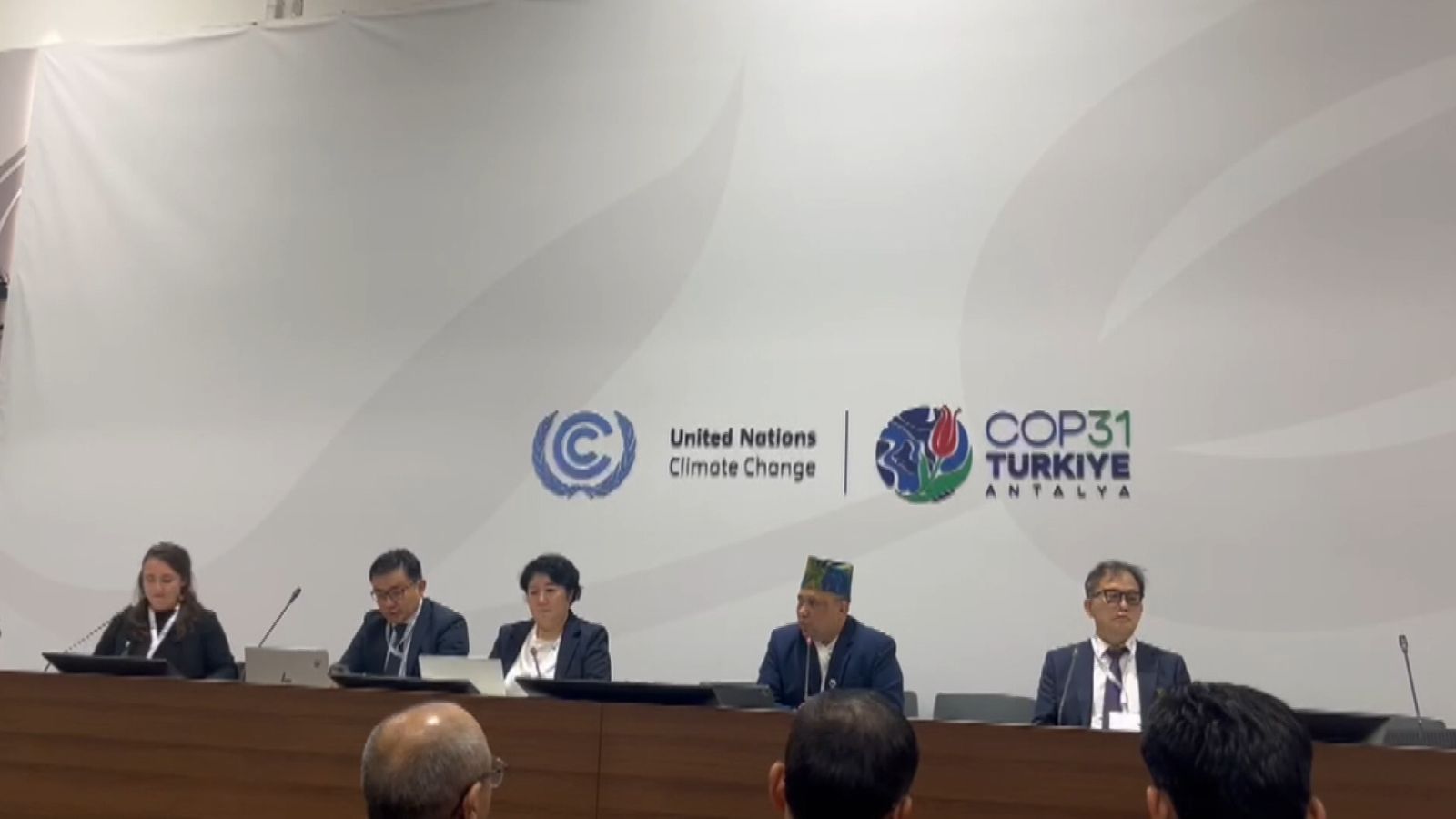


Antalya, Türkiye: Countries seeking to reduce their dependence on fossil fuels that cause climate change will get a roadmap to guide their transition towards renewable energy at the UN climate talks on Tuesday.
Brazil, which hosted last year's UN climate talks, will present its promised roadmap to "transition away from fossil fuels" during this year's conference, COP31, being held in Türkiye.
The document outlines different "levers" that countries can use to shift from coal, oil and gas to renewable energy sources such as wind and solar, which do not release heat-trapping gases that contribute to global warming.
Three years ago, countries agreed to "transition away from fossil fuels" at a landmark climate summit, but the agreement did not provide detailed guidance on how to achieve this goal. Brazil hopes to address that gap.
"What we hope to achieve with the road map is making a big problem — that is transitioning away— translating it into smaller actionable solutions," Brazil's Ana Toni, who was CEO of last year's climate talks, told The Associated Press. "What we want is to be very pragmatic, helping countries move forward."
The roadmap is designed to account for differences between countries, allowing each nation to assess various tools and decide how to reduce its dependence on fossil fuels, Toni said.
She said the document demonstrates that the transition is possible and that a shift towards renewable energy is inevitable, despite concerns that such a change may be difficult to achieve.
"Actually many countries are doing many things already," she added.
Toni said it was important for countries to stop building new fossil fuel power plants and infrastructure to prevent them from becoming "stranded assets".
Another key "foundational" measure, she said, was eliminating subsidies that make fossil fuels cheaper and more accessible.
Brazil, which has significant oil reserves and is a major fossil fuel exporter, relies largely on hydropower for its domestic energy consumption. Toni declined to comment directly on her country's oil exports.
"We'll create a road map that is good not only for Brazil, but for the world," Toni said.
Environmental group Climate Action Network praised Brazil and its president on Monday "for doing something that feels increasingly revolutionary at a climate summit: working out how to deliver what was agreed".
Brazil is also presenting two other roadmaps during the talks. One focuses on deforestation, while the other aims to detail the promised $1.3 trillion in climate finance from wealthy nations to poorer countries.
"The road maps make clear that, although every country has a different starting point, all countries can start their own path," said Stela Herschmann, international policy lead for Observatório do Clima, a network of Brazilian environmental organisations."Brazil has demonstrated the courage and leadership to start this conversation."