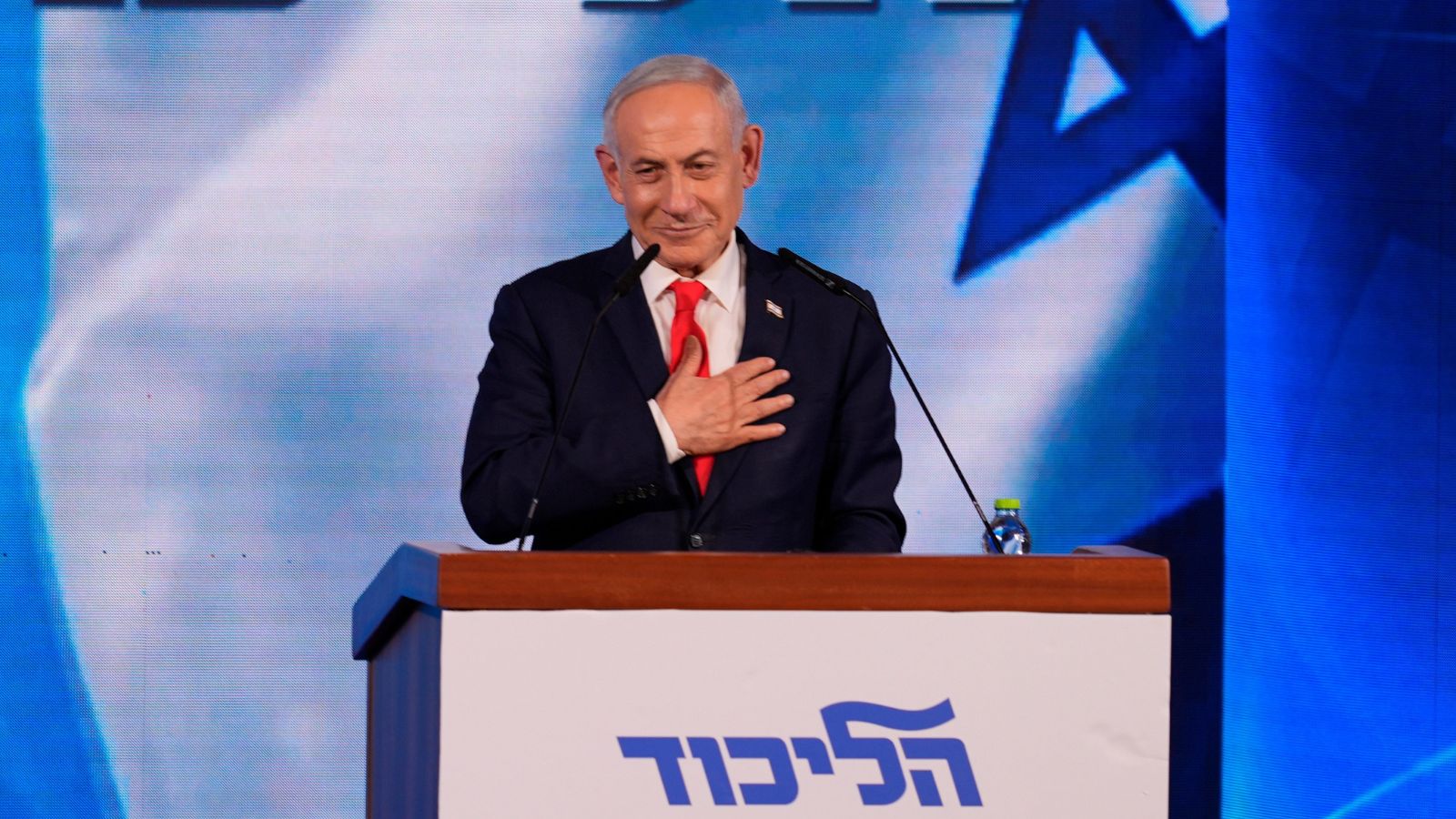


Tel Aviv: Israeli Prime Minister Benjamin Netanyahu has rejected accusations that Israel is delaying the entry of winter supplies into the Gaza Strip, as severe rainfall and flooding worsen conditions for Palestinians living in makeshift tent camps across the enclave.
Netanyahu blamed Hamas for the humanitarian crisis, accusing the Palestinian militant group of refusing to disarm and seizing humanitarian aid for military purposes.
“Hamas alone is responsible for the suffering of the people of Gaza, and it is now cynically exploiting that suffering to shift blame onto Israel once again,” Netanyahu said on Tuesday.
His remarks came after the US-created Board of Peace, established under President Donald Trump's plan to end the Israel-Hamas war and oversee Gaza's recovery, said that Israel's delay in allowing winter supplies into the enclave had “exacerbated the consequences of a foreseeable humanitarian challenge”.
Torrential rain has battered Gaza in recent days, damaging tens of thousands of makeshift tents. Four people, including three children, were killed on Sunday after a large sandstone slab collapsed onto tents during the rainfall.
British Foreign Secretary Ed Miliband described the situation as “intolerable” and called on Israel to end what he termed “arbitrary restrictions” on humanitarian aid. US Senator Brian Schatz also urged Israel to immediately allow winter supplies into Gaza, stressing the need to provide warmth and shelter to children and families affected by the floods.
Meanwhile, Netanyahu is facing a separate political confrontation at home, with Ra’am party leader Mansour Abbas accusing the prime minister of using his position to incite against Israel's Arab community and its political representatives.
Abbas told the Kan public broadcaster that Natan Eshel, a confidant of Netanyahu, had recently contacted him on behalf of the prime minister to discuss his party's position on a proposed law barring criminal defendants from serving as premier and the possibility of joining a coalition to replace the incumbent government.
He also challenged Netanyahu to take a polygraph test after Likud denied that the prime minister had previously told him that he, Netanyahu and then-Hamas leader Yahya Sinwar “understand each other”.
“I am willing to take a polygraph and he can take a polygraph, [to see] who is telling the truth. There were other people in the room,” Abbas said.
The Ra’am leader further accused Netanyahu of using his Tuesday speech to target the Arab community and its representatives through what he described as a campaign of incitement and false accusations.
Netanyahu had earlier accused Arab party members of seeking Israel's destruction and supporting terrorism. In a post on X, he opposed forming a government with Ra’am and the Joint List, describing such an arrangement as dangerous.
Abbas rejected the allegations, reiterating his opposition to terrorist organisations, terrorist acts and political violence. He also defended his decision to remain in the Knesset plenum during the singing of Israel's national anthem on Tuesday, saying his party sought to demonstrate responsibility and statesmanship rather than provoke tensions.
The political confrontation comes amid efforts to form a new government following Israel's October 27 parliamentary elections, which produced a hung Knesset, with neither major political bloc securing the 61 seats needed for a majority in the 120-member legislature.
Netanyahu's Likud-led faction secured 53 seats, while opposition leader Gadi Eisenkot's Yashar alliance won 48 seats. However, Eisenkot received recommendations from representatives commanding 67 parliamentary seats, compared with 46 for Netanyahu, including support from Arab factions Ra’am and the Joint List, which together hold 19 seats.
President Isaac Herzog assigned Eisenkot the mandate to form the next government on November 8.
Meanwhile, the Knesset is preparing to approve the composition of the Arrangements Committee, which will oversee much of parliament's business until a new government is formed. Yashar lawmaker Roy Folkman is expected to chair the committee, whose membership will be allocated proportionally according to the strength of parliamentary factions.
The anti-Netanyahu bloc's majority could allow it to advance key legislative priorities and establish temporary and special parliamentary committees, including the Finance and Foreign Affairs and Defence committees, before a new government takes office.
However, the committee's chairmanship would pass to another faction if Eisenkot fails to form a government and the mandate is subsequently assigned to another lawmaker.
(With agency inputs from ANI and AP via PTI)