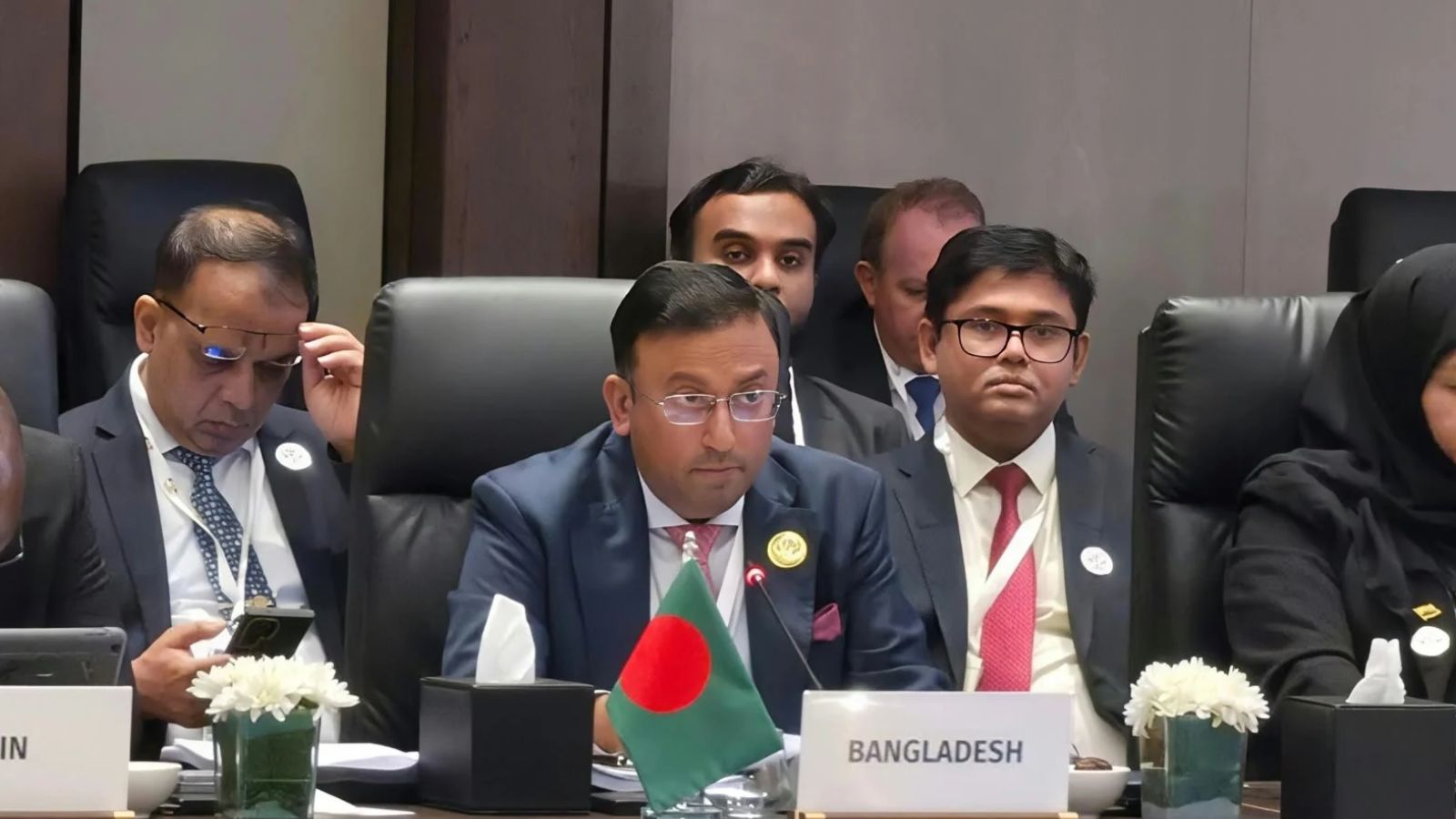


Dhaka: Bangladesh will take firm legal action against those behind recent arson and petrol bomb attacks, State Minister for Foreign Affairs Humaiun Kobir has said, blaming groups linked to the banned Awami League for the violence amid escalating political unrest, according to local media reports.
Kobir said on Friday that law enforcement agencies were working to bring those responsible to justice. He alleged that the Awami League's leadership, including members based abroad, was encouraging the attacks.
"We will go after these terrorists, and the long arm of justice will reach them," he said, responding to reporters on the sidelines of a media briefing, according to the state-run BSS news agency.
Kobir alleged that the Awami League leadership was encouraging the attacks from abroad and that others based overseas were also involved in efforts to instigate violence.
The minister's remarks come amid a spate of political violence and arson attacks across Bangladesh.
At least four people were killed in separate incidents earlier this week, including three leaders of the ruling BNP and its affiliated organisations, and a bus helper who was burnt alive after unidentified assailants set fire to parked buses, the Dhaka Tribune reported.
In separate remarks at the foreign ministry, Kobir described the Awami League, whose political activities remain banned, as a "terrorist organisation". He warned of strong action against those involved in petrol bomb attacks, arson and other violence, The Daily Star reported.
Extradition treaty and Hasina's return
On the return of fugitives from abroad, Kobir said attempts to bring them back from New Delhi through acts of violence would not succeed, as their return would be pursued under the extradition treaty.
"No fugitive terrorist can be brought back to Bangladesh from Delhi even by throwing petrol bombs… That will actually happen through the extradition treaty," he said, according to The Daily Star, without directly naming anyone.
The issue of ousted Bangladesh prime minister Sheikh Hasina's return has emerged as a major source of tension between Dhaka and New Delhi. The latest wave of unrest followed the government's rejection of her request for a fresh passport and national identity card earlier this month.
Hasina's lawyers had approached the Bangladesh mission in New Delhi seeking the documents to facilitate her planned return in December. Her passport and national identity card had been revoked by the interim government after she fled Bangladesh in August 2024 following a student-led uprising that toppled her government.
The Awami League subsequently announced a week-long programme of protests demanding her return, culminating in a nationwide shutdown on November 19. The protests were accompanied by arson, crude bomb attacks and clashes across several districts.
Hasina has been living in India since fleeing Bangladesh in August 2024. Her extradition has remained a point of friction between the two countries, with both the interim administration led by Muhammad Yunus and the subsequent BNP government headed by Prime Minister Tarique Rahman pressing New Delhi to hand her over under a bilateral extradition treaty.
Dhaka has insisted that Hasina, who was sentenced to death in absentia in November 2025 for crimes against humanity over the 2024 crackdown on protesters, must be brought back from India under the bilateral extradition treaty rather than allowed to return as an ordinary traveller.
Hasina has said she intends to return to Bangladesh in December and surrender before a court. She has denied the charges against her.