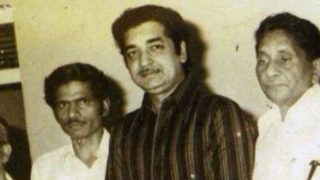


Mammootty turns 75 today, but there is little about his career that suggests he is slowing down.
In a career spanning more than five decades and more than 400 films, the actor has moved between Malayalam cinema and films in several other Indian languages, building a body of work that has repeatedly expanded the possibilities of stardom.
And his 75th birthday comes after a particularly significant year.
In July, he won the National Film Award for Best Actor for his performance in Bramayugam, sharing the honour with Kartik Aaryan, who won for Chandu Champion. It was his fourth National Award for Best Actor, 28 years after his previous win for Dr Babasaheb Ambedkar.
Also Read:
He had earlier won the award in 1989 for Mathilukal and Oru Vadakkan Veeragatha, in 1993 for Ponthan Mada and Vidheyan, and in 1998 for Dr Babasaheb Ambedkar.
Earlier this year, he was also awarded the Padma Bhushan for his contribution to Indian cinema. The Union government described his career as spanning five decades, with more than 400 films to his credit.
But perhaps the most interesting way to look at Mammootty at 75 is not through the number of awards he has won.
It is through the number of times he has been willing to step outside the image audiences already associate with him.
From family entertainers and mass films to psychological thrillers, intimate dramas, social commentary and experimental cinema, his filmography has repeatedly taken unexpected turns.
Here are 12 films that show just how many versions of Mammootty audiences have seen.
Manu Uncle (1988)
Manu Uncle might not be an experimental film, but it created one of his most lovable screen images.
In the film, he plays Manu, an astronomy researcher who gets drawn into an adventure involving a group of children. He is warm, fun and approachable, and it gives the actor the chance to move away from the strong and intimidating characters he often played.
His performance also revealed his natural ability to carry a family entertainer, bringing charm and humour to a character audiences could easily like.
Coming from a man who would go on to play some of the most demanding roles in Malayalam cinema, Manu Uncle is a reminder that his range has always included the ability to simply be lovable.
Mathilukal (1990)
Mathilukal is one of the films that established his ability to carry a performance through restraint rather than star power.
He plays celebrated Malayalam writer Vaikom Muhammad Basheer, who is imprisoned during the pre-Independence period. While in prison, Basheer develops a relationship with a woman named Narayani, who is also an inmate, but the two never actually see each other.
The performance depends heavily on voice, expressions and the ability to convey emotion without conventional physical interaction with the other character.
Vidheyan (1994)
Vidheyan took him into territory far removed from the conventional hero.
He plays Bhaskara Patelar, a powerful feudal landlord who rules over the people around him through violence and fear. Patelar is arrogant, cruel and controlling, making him one of the most morally disturbing characters in the filmography.
Rather than searching for ways to make the character sympathetic, the performance commits fully to his darker side. His voice, physicality and mannerisms become tools for establishing Patelar's authority and menace.
Rajamanikyam (2005)
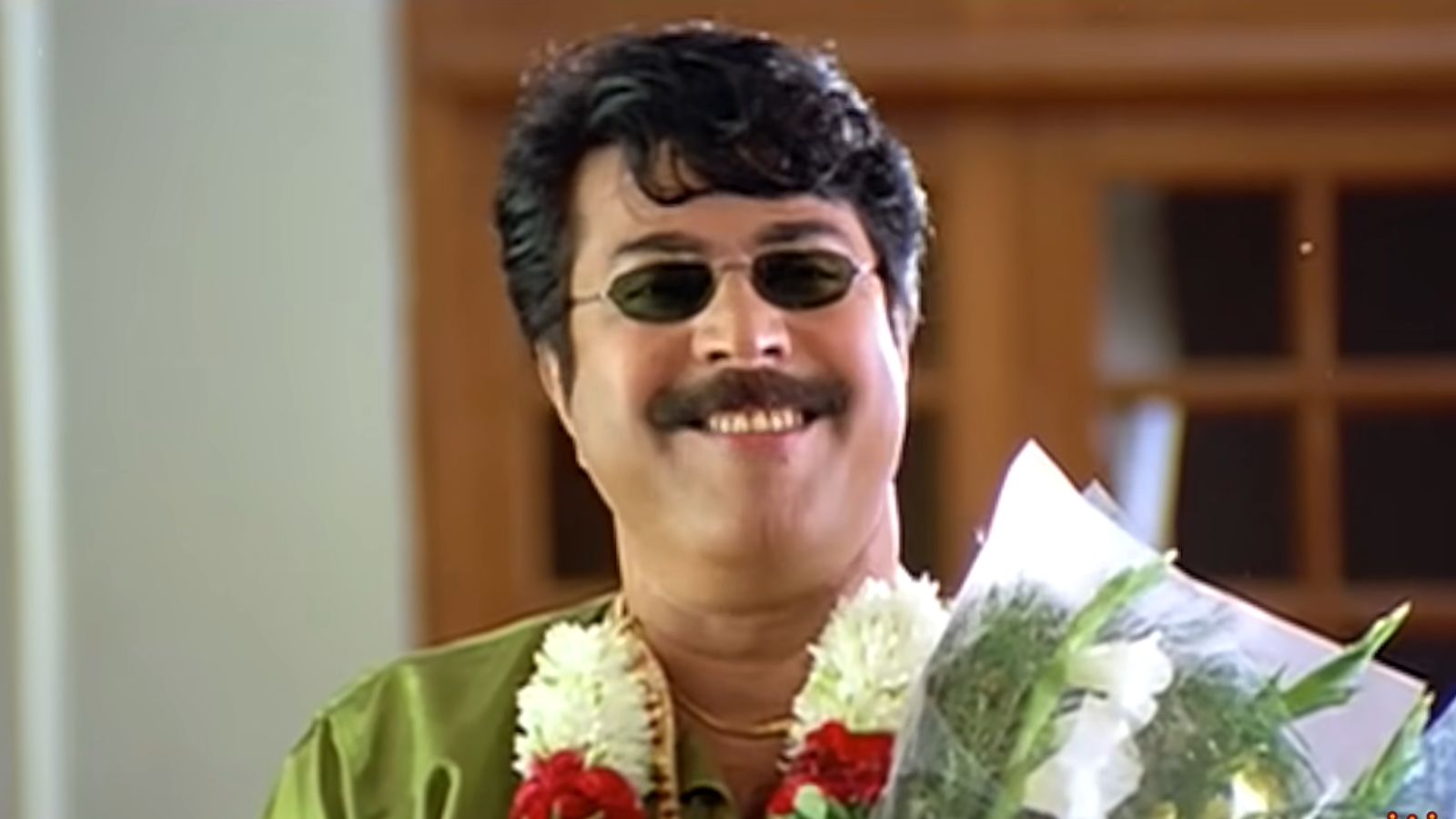
Rajamanikyam may not fit the conventional idea of an experimental film, but it remains one of the clearest examples of creating an entirely new screen persona.
He plays Bellari Raja, a wealthy cattle trader known for his distinctive accent, style and larger-than-life mannerisms. The transformation comes through speech, walk, expressions and comic timing.
The character became hugely popular and turned Bellari Raja into one of the memorable mass characters in Malayalam cinema.
The film also demonstrated that versatility did not have to mean seriousness. A highly stylised character, played for comedy and mass appeal, could be just as effective.
Paleri Manikyam: Oru Pathirakolapathakathinte Katha (2009)
Paleri Manikyam presented a very different kind of challenge, with three characters in the same film.
He plays Ahmed Haji, Haridas and Khalid Ahmed, each with a different personality, appearance and manner of speaking. The challenge was not simply to play three roles, but to make each one distinct enough for the audience to recognise them as separate individuals.
The physical changes are important, but the differentiation also comes through speech, posture and behaviour.
The result is a performance built less around the familiarity of a star and more around the craft of characterisation.
Pranchiyettan and the Saint (2010)
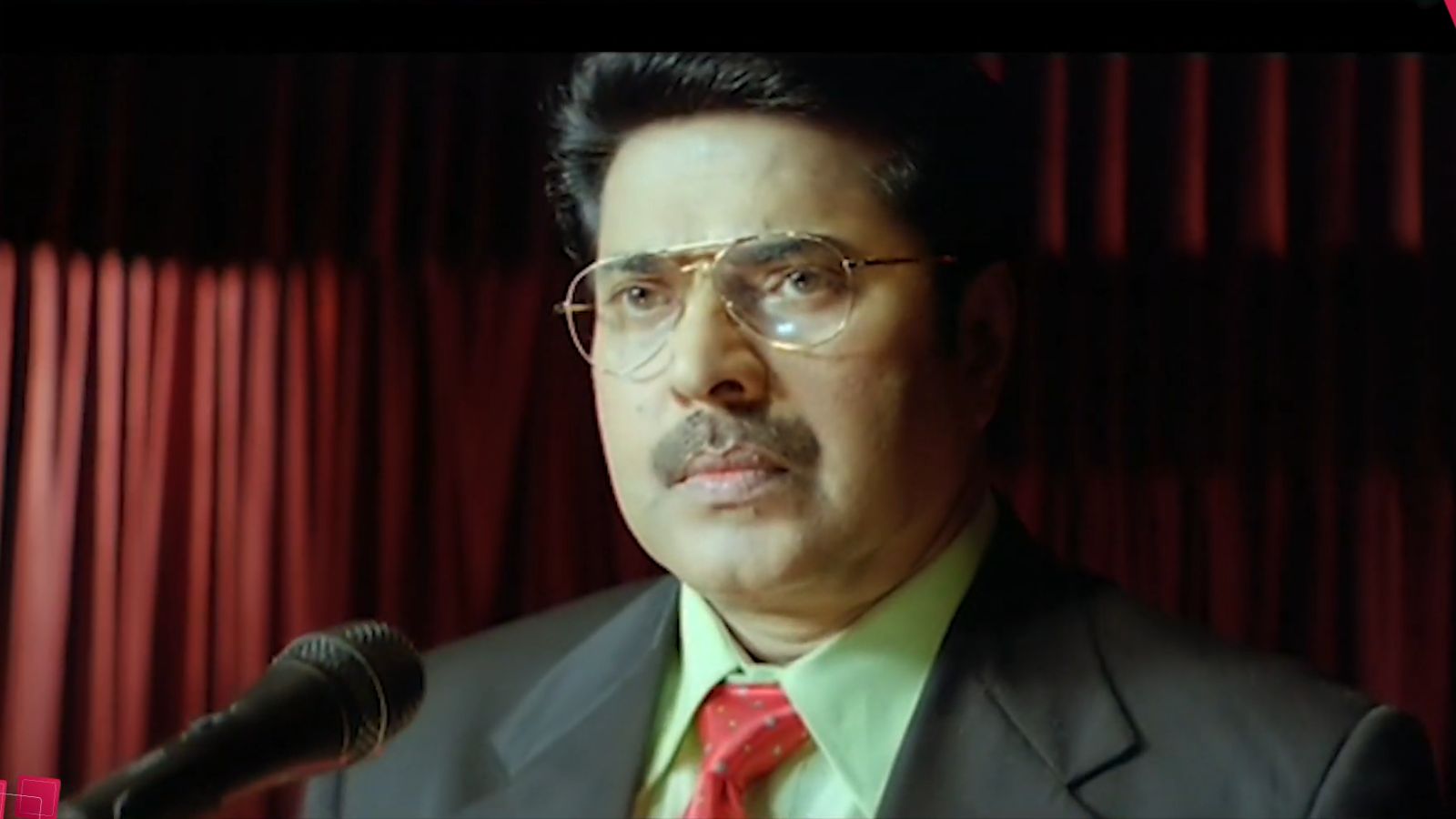
Pranchiyettan and the Saint allowed him to explore a very different kind of character.
He plays C P Francis, popularly known as Pranchiyettan, a wealthy businessman who is ambitious, insecure and eager to be recognised as successful and respected.
Unlike the powerful and confident characters often associated with his screen image, Pranchiyettan is awkward, vain and frequently unintentionally funny.
That willingness to surrender the dignity usually associated with a leading man is what makes the role particularly memorable.
Peranbu (2018)
Peranbu showed him exploring vulnerability through one of his quieter performances.
He plays Amudhavan, a father who becomes the primary caregiver to his daughter, who has cerebral palsy. He transforms emotionally, learning to interpret what she needs and how to cope with his difficulties in taking care of her.
The acting is subtle enough to allow for the expression of doubt, frustration, and love without resorting to melodrama.
There is little of the commanding screen presence associated with many of his earlier roles here. Instead, the film depends on silence, hesitation and small changes in expression.
It is a performance built around tenderness rather than authority.
Puzhu (2022)
Puzhu pushed that departure from the familiar screen persona further.
He plays Kuttan, a controlling and deeply prejudiced man whose worldview is shaped by caste, fear and an intense need for control. He is not a character the audience is expected to admire or root for.
That makes the casting particularly effective. Viewers bring their familiarity with the star into the film, only to watch that association become increasingly uncomfortable.
The performance never asks for easy sympathy. Instead, it allows Kuttan's insecurities and prejudices to make him progressively more disturbing.
Here, the star image is not something to protect. It becomes part of what makes the character unsettling.
Rorschach (2022)
Rorschach represented a different type of experiment, one that was all about intrigue and confusion.
He portrayed Luke Antony, a character who comes into the town saying he is looking for his wife who is missing. However, his intentions become increasingly difficult to understand.
The performance keeps Luke's emotions deliberately controlled, making it difficult for the audience to determine what he is thinking or planning.
Rather than explaining the character to the audience, the film makes him the mystery at its centre.
Nanpakal Nerathu Mayakkam (2022)
Nanpakal Nerathu Mayakkam gave him another unusual challenge by asking him to move between two identities.
He plays James, a Malayali man who suddenly begins behaving as though he is Sundaram, a Tamil man from another family and another life.
The transformation is not presented through an elaborate physical change. The distinction comes through speech, body language, expressions and behaviour.
The performance requires the audience to accept that the same physical person can appear completely different depending on the identity he is inhabiting.
It is a reminder of how much transformation can be achieved through performance alone.
Kaathal: The Core (2023)
Kaathal: The Core presented a different kind of challenge by placing him in a story about sexuality, marriage and masculinity.
He plays Mathew, a middle-aged man whose marriage comes under strain when his homosexuality becomes central to the conflict. The character is not presented as a larger-than-life hero, but as a quiet man dealing with a deeply personal crisis.
The performance is deliberately restrained, allowing silence, hesitation and emotional distance to carry much of the story.
For a leading man whose career has often included powerful and authoritative male characters, Mathew offered a markedly different interpretation of masculinity.
The role's strength lies in how little it tries to announce itself.
Bramayugam (2024)
Bramayugam took him into the world of black-and-white period horror.
He plays Kodumon Potti, an imposing and mysterious feudal figure whose presence dominates the film. His appearance, voice and movements create a character who feels unsettling even before the full nature of the role becomes clear.
The black-and-white visual world adds another layer to the performance, giving the character a stark, almost theatrical quality.
The role has now earned him his fourth National Film Award for Best Actor, nearly three decades after his previous win in the category.
Mammootty has left a mark beyond the borders of Malayalam cinema.
What stands out is not simply the length of his career, but the variety of roles he has taken on along the way. From the familiar star of mainstream entertainers to characters that have challenged expectations of what a leading man can play, his choices have continued to evolve.
His most remarkable achievement may therefore not simply be longevity.
It is reinvention.