


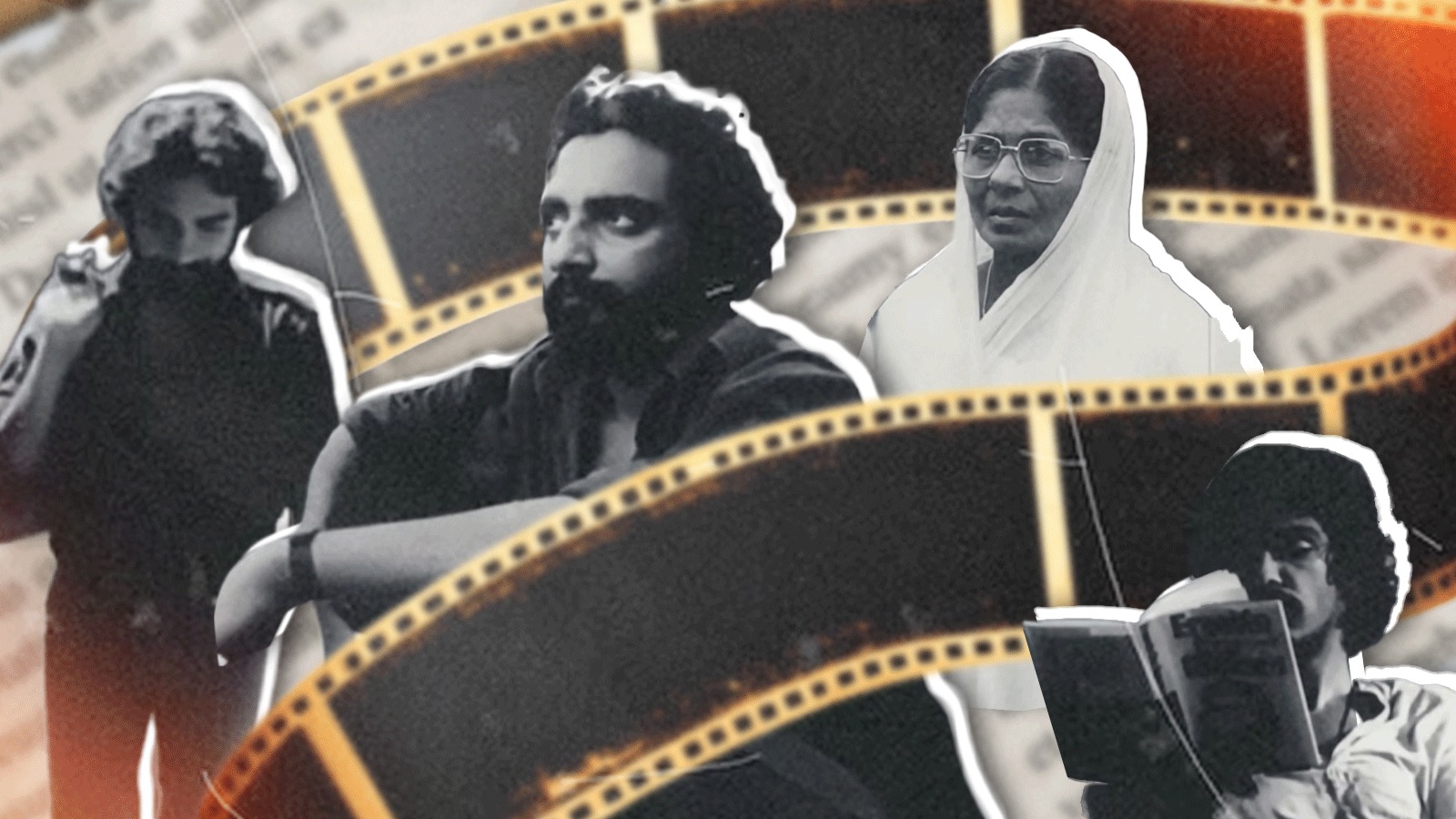


Amma, we have something to tell you. But how do we tell you that your son is dead?
And that is where John Abraham invites us to meet Hari’s mother, amid the voices of protest, the struggles of the poor and their raw, unfiltered stories. Through memories of the 1953 labour riots in Kochi and the impact of the Naxalite movement of the 1960s, Amma Ariyan traces the wounds left by political struggle and social conflict.
This time on Weekend Vines, we revisit this 1986 avant-garde Malayalam film about loss, resistance and the kind of politics that never grows old.
From the screen to the streets
Decades later, people are still gathering, carrying grievances they want the country to hear. From Jantar Mantar to the streets of Mumbai, from students at SRFTI to Lakshadweep and Andaman and Nicobar Islands, the chants of resistance continue. The places may vary, and the demands may differ. But beneath it all lies the same question: when people raise their voices, will those in power listen?
What does it say about a democracy when asking questions can lead to detention or an FIR? If those in power think the streets can be cleared and the slogans muted, history has proven them wrong many times.
The lines from Otto René Castillo’s Intelectuales Apolíticos (Apolitical Intellectuals), quoted in the film, continue to echo today:
“One day the poorest of the poor will question the a-political intelligentsia. They will be asked why nothing was done. When the country was dying like a tiny isolated flame. No one will ask about their fine clothes or their long afternoon siesta. No one will care for their views on nothingness. No one will value their financial positions. They will not be asked about the Greek epics. When a coward amongst them hangs himself, no one will question their contempt for him…”
Amma Ariyan was not a lecture on democracy. It was a journey through the lives of the people who give political struggles their meaning. Perhaps that is why the film feels worth returning to now. Freedom is not merely a word in the Constitution or a right exercised once every few years.
It must also mean being able to question authority, challenge institutions, and take those questions to the streets without having to wonder whether anyone will listen. It is also about the freedom to agree and disagree.
But what happens when a young person begins to fear that their voice may no longer count? What happens when the right to vote, one of democracy’s most fundamental promises, becomes a question mark?
The politics, according to John
Hari was not merely a tabla player who died by suicide. His death sets a journey in motion, but his life raises questions that cannot be buried with him.
His rebellion, his politics and his confrontation with authority are inseparable from the world he inhabited. Before his death, he even plunges a knife into his tabla, striking at an instrument that is part of his identity.
Even his father’s position, privileged enough to observe events from the safety of his window, becomes part of the film’s wider inquiry into class and complicity.
And Purushan? He is a collector of everything people leave behind: memories, the past, loss and grief. He carries these fragments from one person to another, along with the terrible weight of the news he has to deliver.
Through Purushan’s journey, John offers a metaphorical window into how a society begins to raise its voice and demand the attention of those in power. As more friends and acquaintances join him, the journey swells into a massive procession, symbolising a shared sense of responsibility and political grief.
The Berwick Film & Media Arts Festival notes how trauma runs through the movie:
“John presents trauma as neither singular nor plural but a multilateral phenomenon. John frames the Marxist political histories of Kerala in a space in which a historical trauma is on-going and which has impacted the lives of working-class people in debilitating and murderous forms.”
There is the suffering of working-class people, the violence that follows revolutionary dreams and the state’s repression of those who dare to protest.
The film gathers these stories like pieces of a report to a mother. But there is no neat ending, no comforting moment when everything falls into place. What remains is an open wound, a history people are still fighting over and a pain that refuses to become just another chapter in a textbook.
John is careful in showing us Hari’s mother’s reaction when the news finally reaches her. She cannot even cry. She stands there, emotionally emptied. There is no dramatic outpouring of grief, no release. Just a silence that feels heavier than tears.
And there is a deeper meaning the film puts forward: what happens when a society is constantly ill-treated? Like Hari’s mother, it might eventually go numb after witnessing so much violence and oppression, its grief left unexpressed.
John incorporates real-life footage from agitations that shaped Kerala’s political history. The film brings together theatre performers chanting “Free, free Nelson Mandela”, tea garden workers raising slogans such as “Take back dismissed workers” and “Protest against police brutality”, and young protesters who gathered against the Merchants of Kottappuram. These scenes make the film breathe the contemporary politics of its time.
In art and in real life, the resistance goes on. John was himself part of the world he documented, and his film carried those struggles to audiences beyond it. He chose to stand with the oppressed.
Amma Ariyan also asks us to look at the silence of the privileged: at those who mistake it for neutrality and those who can afford to remain spectators while others bear the consequences.
Often, those who are supposed to listen are too busy pretending to be deaf, complaining that their masala chai has gone cold while the world outside burns.
John’s cinematic rebellion did not emerge in isolation. It was shaped in part by his time at the Film and Television Institute of India (FTII), where he was mentored by Bengali filmmaker Ritwik Ghatak. Ghatak’s influence can be seen in Amma Ariyan, particularly in its resemblance to Jukti Takko Aar Gappo. Both films bring together people shaped by political disillusionment and revolutionary struggle.
After John’s death, Odessa continued its collective work, including through the publication of film journals. An article written in 1988 remembered John in vivid terms:
“John was the real man of the streets. He wandered on the lanes and the virtuous paths of the villages, sheltering his lean body in the muddy long clothes; he entertained and enjoyed himself by clapping and singing for people. He asked people to shed the middle-class culture that has begun infiltrating their minds, and to find their real roots. His words would have become sharp at times; his eyes would have shone… He made mockery of their pretentious morality. Often, he screamed at his own audience. That was John: the prophet with a long beard.” (1988)
A report to the nation
The questions raised by the film do not end with the journey. They follow us into the present, where people continue to demand answers from the institutions that shape their lives.
Those in power may hope that fatigue will eventually replace anger, that people will get used to waiting and that headlines will make them forget. But just because people are familiar with injustice does not mean they have stopped seeking justice. A protest does not become irrelevant simply because those in power refuse to answer its questions.
That is where Amma Ariyan returns to us: as a report that is not merely a record of what happened, but an attempt to make someone answer for it. It gives grief an audience and refuses to let the dead disappear into memory.
And then comes the question that refuses to leave us alone:
“How many violent deaths? This is how dreams break, how skulls split open, how hearts are lacerated, and fighters are shattered by guns. Vultures flap and screech over the gallows tree. What do we get in return? An endless chain of violent deaths that offers no hope. Children, perhaps, are more fearless and far-sighted. An entire people can be betrayed by misery and suffering,” as the voice in Amma Ariyan admits, “I do not know.”
Perhaps that uncertainty is what makes the film so difficult to leave behind. It does not promise that every struggle will end in victory or that every story will find justice. It leaves us with the responsibility of listening, remembering and asking what comes next.
Amma, we have something to tell you. And this time, we need the whole country to listen.
(The views expressed in this article are personal.)