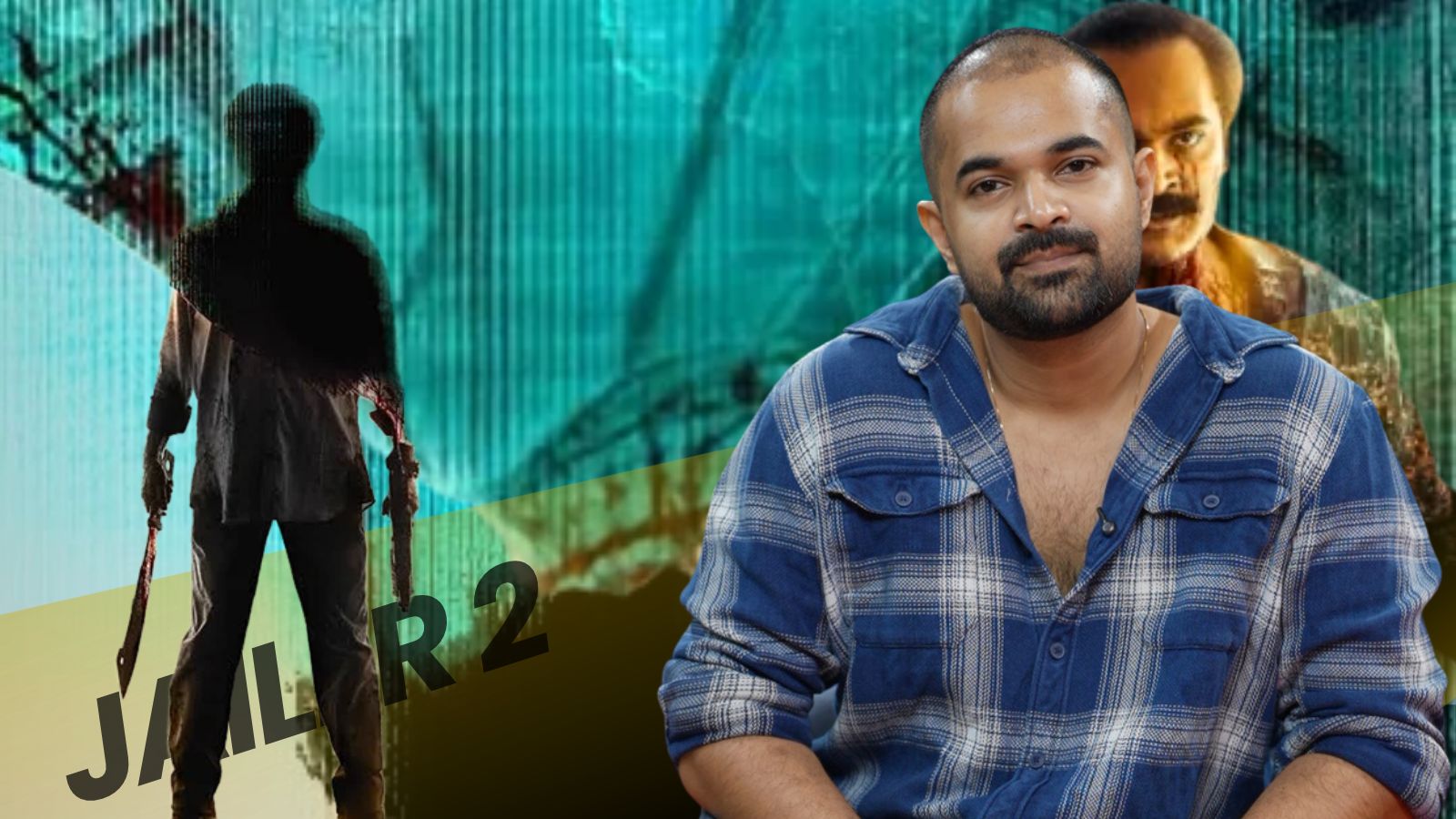
When Chethan Ramshi D’Souza leapt from a 9-to-5 white-collar job into choreographing action for Indian cinema’s biggest stars, he had no safety rope. The bold move landed the Aavesham-fame action director Rajinikanth’s Jailer 2, directed by Nelson Dilipkumar. And he delivered an absolute 'KO'.
For Chethan, working with Rajinikanth was more than another professional milestone. Having grown up watching the Superstar on screen, he describes the experience as surreal. But behind the larger-than-life action sequences were months of preparation, careful choreography and an approach that placed character and storytelling above spectacle.
In an interview with Reporter World, Chethan talks about working with Rajinikanth, the preparation behind Jailer 2’s action sequences, Fahadh Faasil’s transformation into Ranga in Aavesham, the role the late Puneeth Rajkumar played in his career, and his upcoming projects, including Dragon and Fauzi.
Edited excerpts from the interview:
How was your experience working with Rajinikanth in Jailer 2?
First of all, I feel very blessed to have worked on this project. I've been watching Rajinikanth sir on the big screen since childhood, and to go from being someone who watched him to actually working with him was a surreal experience.
I made a lot of memories during the shoot. Every day was a learning experience, whether we were shooting action sequences or simply spending time discussing our personal journeys, his approach to life or spirituality.
One of the biggest takeaways for me was his simplicity and humility. The way he carries himself is something that can make anyone feel grounded.
And when he stands in front of the camera, the camera just loves him. The small nuances, his looks, his walk and the little moments he creates are remarkable. He owns the frame, and he knows exactly what he is going to do with it.
Even at 75, audience's expectations surrounding Rajinikanth's action sequences haven't changed. How challenging was that for you?
He may be 75, but he is extremely fit. He follows a disciplined lifestyle, with proper sleep, workout, and good food. He is always active, and the energy he brings to the set makes us feel that we can do a lot with him.
Of course, safety is a major consideration. We have to take several factors into account, including the character. With Jailer (2), the character was already established in the first film. So whatever action we designed for the sequel had to fit that image.
We wanted the movements to be minimal but explosive on screen. With some actors, you need a lot of physical movement to convince the audience. But with Rajinikanth sir, the audience is already convinced. He doesn't have to move much or do too much.
With him, minimal is maximum.
Also Read:
How was safety ensured during Jailer 2's dangerous stunts, for example, the all-girls action sequence?
When Nelson sir explained the concept, the first thing we did was look for performers who could execute it.
We went through hundreds of profiles before selecting four talented women for the sequence.
They already had their own set of skills, but we had to train them to make their movements convincing on screen. We spent around one and a half weeks training them. Even before they arrived, I had sent them tutorials and choreography videos so they could prepare mentally for what they would be doing.
This wasn't a sequence where they could simply come to the set and perform. It required physical preparation because it was going to be one of the highlights of the film.
Training is important not just for the performance but also to reduce injuries.
When it comes to safety, we make sure the performers have protective padding wherever there is a possibility of impact, whether it's the ankles, knees or elbows. The flooring is also padded, and the person receiving an impact is protected as well.
My team and I worked on the choreography and presented it to Nelson sir.
Initially, it was supposed to be a 30-second sequence. But after watching what we had designed, he felt it was coming out well and suggested making it longer.
We eventually choreographed a sequence of around one minute. And then we executed that when the actors were on the set.
How did Jailer 2 happen for you? Were you approached by Nelson?
I had worked on Aavesham, starring Fahadh Faasil and directed by Jithu Madhavan. The film became a hit.
I'm originally from Karnataka and had worked on several projects there. I had put the same effort into those films, but my work hadn't received much recognition.
Aavesham was the film that took my work beyond regional boundaries. People started recognising what I was doing, and Nelson sir was one of them.
He initially called me to work on the Jailer 2 announcement promo. At that point, I wasn't part of the actual film.
They liked my work, my approach to action, and the involvement I brought to the project. I think Nelson sir saw something in my work that he had also noticed in Aavesham.
That's how I became part of the film. He eventually asked me to handle all the action sequences in Jailer 2.
You started your career in the corporate world before moving into cinema. What made you take that leap, and how difficult was the transition?
I started practising karate in 2002. By 2006, I had realised that I wanted to do something with it.
I used to tell my brothers that I would either become an action star or direct action sequences.
But even after completing my bachelor's degree, I had no exposure to the film industry. I didn't know how films worked. I'm from Udupi, and when I moved to Bengaluru, I had to earn a living. So I started working at Accenture. At the same time, I continued pursuing my passion.
It took me around 12 years to build my skills. I trained in martial arts, parkour, calisthenics and freerunning. I also started making videos to understand the cinematic and technical aspects of shooting action.
I made several videos, but one of them brought together all these skills. I sent it to a director who had watched my short film The Wrong Move, and he liked my work.
He called me for his film U Turn, which became my first project. Even after that, I continued balancing my corporate job and film work.
There were days when I worked day and night without sleep. I would travel by public transport, bike or autorickshaw, sometimes going straight to a film set wearing formal clothes and leather shoes, carrying my laptop bag. Those experiences taught me patience.
I knew I had to keep working on my craft for as long as it took. Eventually, I reached a point where I had to choose between my stable corporate career and cinema.
It was a difficult decision. I had already invested 12 years in developing my skills, and I knew that if I wanted to take my passion further, I had to give it my complete attention.
So I took that leap. I had confidence that I would be able to do something with the skills I had spent years developing.
You worked with the late Puneeth Rajkumar. What was that experience like, and what memories do you have of him?
We call him Appu sir. He first noticed my work through a promotional video I had done with his nephew. After watching it, he asked me to work on one of his advertisement shoots, followed by James, which became his last film.
Over time, I also got to know him personally. We spent a lot of time together. He had visited my gym, Chaos Factory, where we train people in parkour, calisthenics and freerunning.
We had even discussed opening another branch together. Unfortunately, that remains an unfulfilled dream. I have so many memories of him, and I will always be thankful for everything he did for me. It's because of him that I'm here today, giving this interview to you.
Fahadh Faasil wasn't traditionally associated with mass action, but Ranga in Aavesham became a phenomenon. How did you approach choreographing his action sequences?
I first met Fahadh Faasil during Dhoomam, which was directed by Kannada filmmaker Pawan Kumar. He was also the director who gave me my first project, U Turn.
Through Dhoomam, I got to know Fahadh, and later Aavesham happened. For Aavesham, we had to train him specifically for the action sequences.
There was a weapon we used called a karambit, a small curved knife. He had to learn how to handle it. There were also physical combat sequences that required training.
He would travel around 20 kilometres to Chaos Factory in HSR Layout for training, then return to shooting and continue the process. He put in a tremendous amount of effort.
The challenge with Ranga was that the people around him were already performing impressive action sequences. There were younger characters and an older character, and they were all doing great work. But Ranga was their boss. So when he finally fought, he had to do something different.
We wanted the audience to keep wondering whether he would fight at all. And when he finally did, the moment had to create that impact. Every movement was rehearsed, planned and executed carefully.
We didn't use high-frame-rate shooting or unusually fast camera movements to make the action look better. We shot it normally. There were no gimmicks.
Fahadh performed the movements extremely well, but more importantly, he brought the character into the action.
When you watch those scenes, you're not watching Fahadh Faasil fighting. You're watching Ranga fighting. That's what made the difference.
I think we spent around 15 days shooting the final fight sequence. He had trained for at least two or three weeks, probably longer. He also kept the karambit with him for about a month so he could practise the movements every day.
The reason is simple. When you are completely familiar with the movements, your acting comes naturally. Otherwise, you'll be so focused on executing the action that you'll forget about the performance. You need to perfect the movements first. Only then can you bring the acting into them.
What are your upcoming projects after Jailer 2?
There's a film with Suriya sir and Nazriya that is coming up. Then there's Dragon with Jr. NTR, and Fauzi with Prabhas sir. I might also work on another project in Kerala, Karate Chandran, with Fahadh Faasil again. Several other discussions are happening as well.
Sometimes, scheduling becomes a challenge. There have been projects I wanted to do but couldn't take up because of date clashes. But I love working in the Malayalam film industry, and I'm looking forward to more opportunities there.