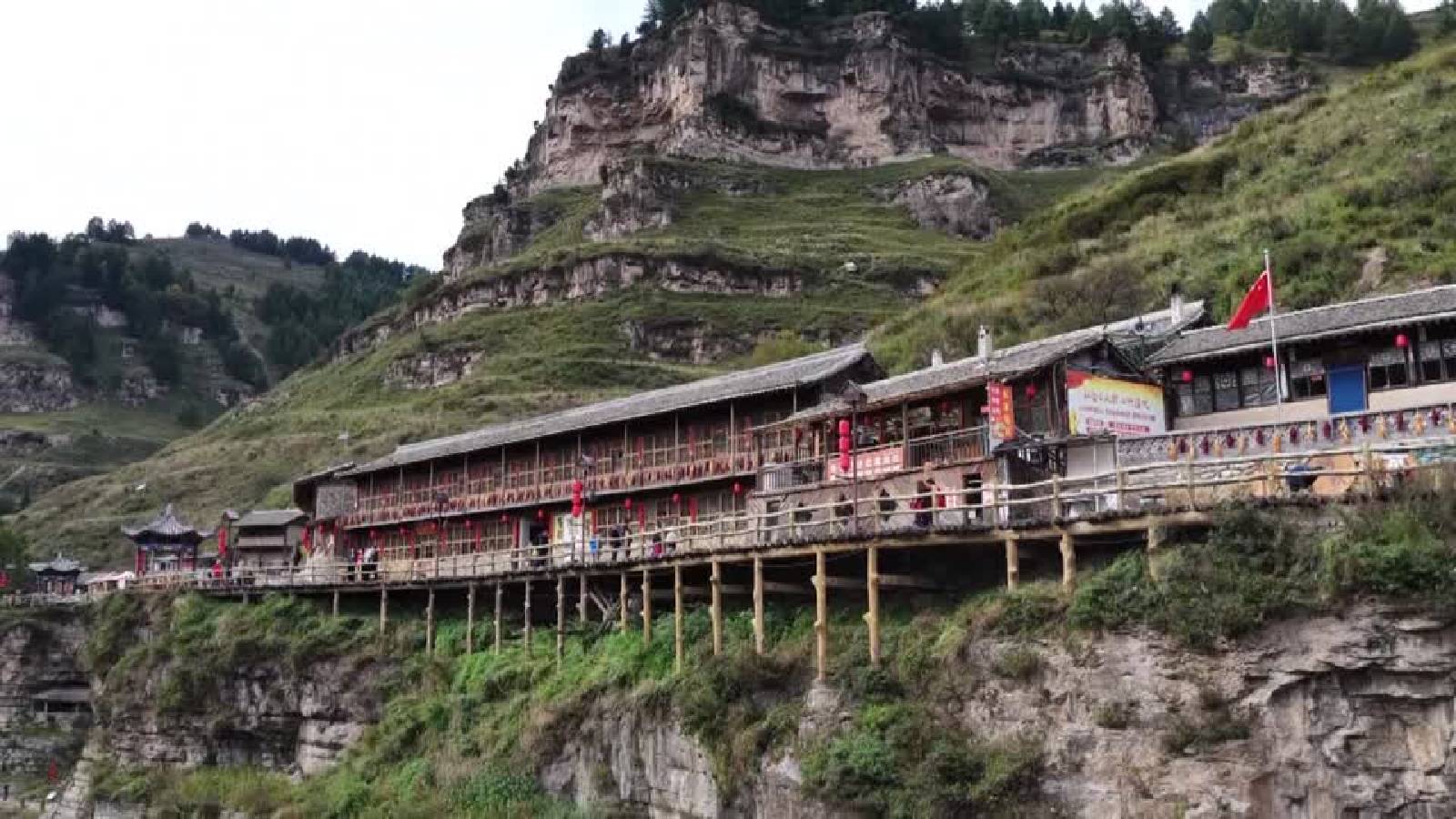


At an altitude of around 2,300 metres in Xinzhou, Shanxi Province, Wanghuagou Village has earned the striking nickname of the 'hanging village ' because of the unusual way its homes cling to a cliff more than 100 metres high.
Seen from above, the village seems almost suspended between the mountain and the open air. Its traditional houses are built mainly from stone and wood, with the front sections extending over the cliff and supported by wooden posts, while the rear portions are embedded directly into the rock.
The result is a remarkable settlement stretching for roughly 500 metres along the mountainside, with a narrow passageway known as a “sky street” running through it.
For travellers, Wanghuagou offers more than a dramatic view. Its architecture reflects how generations of residents adapted to an unforgiving mountain landscape, turning the cliff itself into part of their homes.
The village's elevated setting also offers a striking perspective over the surrounding mountains, making the journey there as much about the landscape as the destination itself.
Recognising its historical and architectural value, Wanghuagou Village was included in the fifth batch of China’s Historical and Cultural Villages in 2010.
Today, the “hanging village” stands as an unusual meeting point of history, architecture and mountain scenery, a place where the boundary between a home and a cliff seems to disappear.- title, subtitle, caption, keywords