


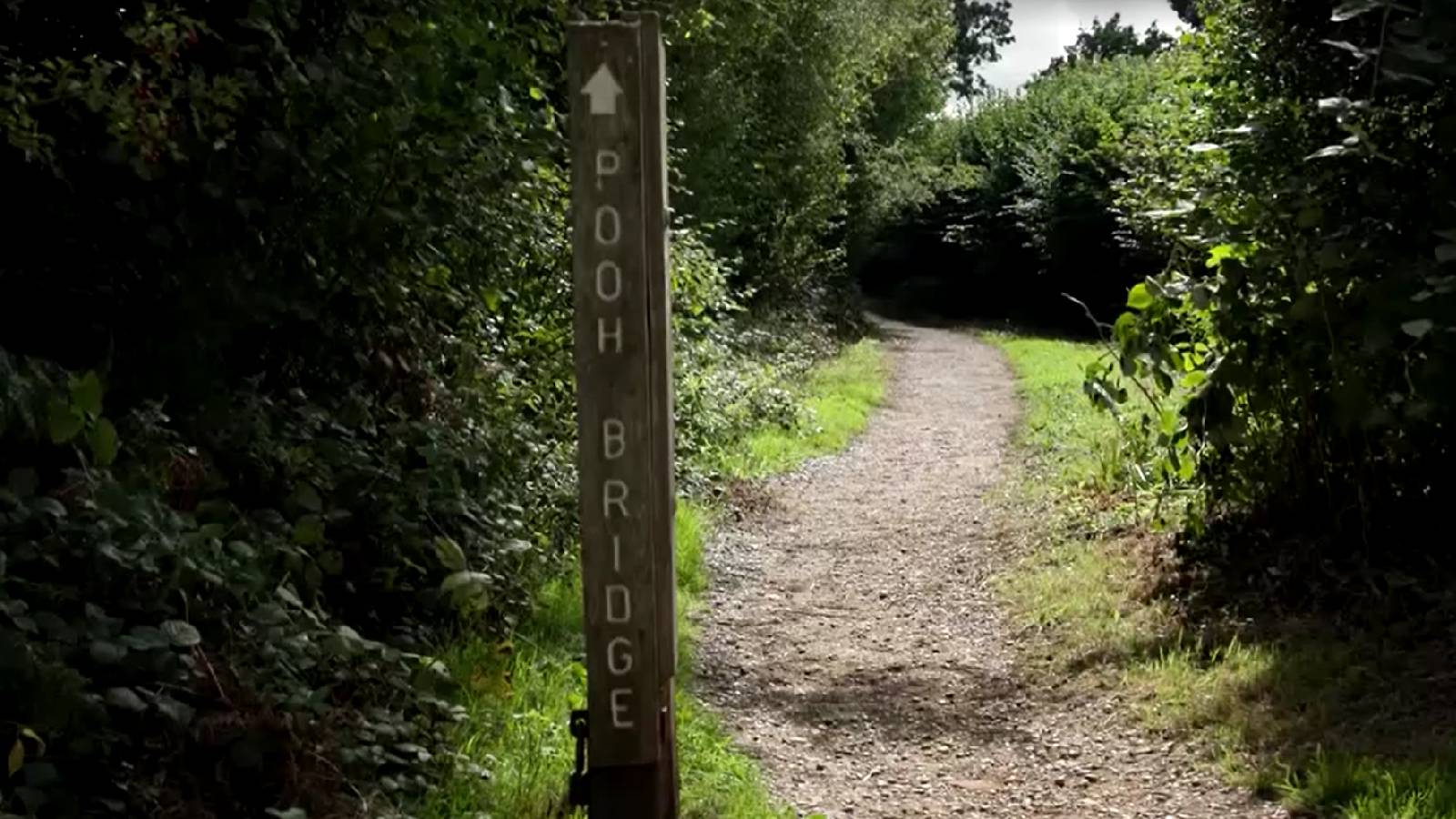


Planning a Pooh pilgrimage? Explore the forest that inspired the Hundred Acre Wood.
A walk through Ashdown Forest in southern England can take Winnie-the-Pooh fans straight into the world of the honey-loving bear. A century after A.A. Milne’s Winnie-the-Pooh was published, visitors still travel to the landscape that inspired the fictional Hundred Acre Wood, following in the footsteps of Pooh and his friends.
In Ashdown Forest, a vast heathland in southern England, visitors can explore the places that inspired the fictional Hundred Acre Wood and the adventures of Pooh and his friends. From Pooh Sticks Bridge to the Enchanted Place, where Christopher Robin bids farewell to his friend, the landscape offers a chance to step into the world of the much-loved stories.
Milne lived on the edge of the forest and drew inspiration from walks with his son, Christopher Robin, who became a character in the books. Winnie-the-Pooh himself was inspired by Christopher’s toy bear, named Winnie after a bear the father and son visited at London Zoo.
Milne’s character first appeared in a story published in London’s Evening News on Christmas Eve 1925. The book Winnie-the-Pooh followed on October 14, 1926, with The House at Pooh Corner published in 1928. Together, the stories introduced generations of readers to Pooh, Piglet, Eeyore, Rabbit, Owl, Kanga and Roo.
Ashdown Forest covers more than 10 square miles. Although its landscape has changed over the years, visitors can still see places that inspired Milne and were illustrated by E.H. Shepard. These include Galleon’s Lap, Roo’s Sandy Pit, the Heffalump Trap and the Enchanted Place.
“The amazing thing is Milne worked so hard to bring the forest into the book,” said Neil Reed, owner of the Pooh Corner museum, gift shop and tea room in the village of Hartfield, near Milne’s country home.
“By reading the book, you really get a sense that the Ashdown Forest is part of the story, part of the journey... And Shepard really worked hard to make sure that he captured it in the right way. So the forest really is the glue of the piece,” Reed said.
One of the most popular stops for visitors is Pooh Sticks Bridge, where fans can try a game created by Milne and Christopher and featured in The House at Pooh Corner. The original bridge where father and son played was dismantled because of deteriorating conditions and replaced with a new one.
The game is simple: players stand on the upstream side of the bridge, drop two sticks into the water and cross to the other side to see which one floats through first.
Milne and Christopher initially used pinecones before the author adapted the game for his books, Reed said.
“So, it really was something that started out as a joyous thing for the family, that then the world now travels thousands of miles to visit,” he said.
The forest continues to draw Pooh fans from around the world, including a new generation of followers after Disney acquired the rights to the character in 1961. Alongside welcoming visitors, a team works to protect and conserve the forest’s natural landscape.
Reed said maintaining the landscape was essential to preserving its place in the stories, and he hoped people would still be visiting in another 100 years.
As Winnie-the-Pooh marks its centenary, Ashdown Forest remains more than the setting for a beloved book. For visitors, it is a chance to follow the paths that inspired Milne, discover the places brought to life by Shepard’s illustrations and take part in a family game that travelled from a forest stream into the pages of a story — and then around the world.
(With agency inputs from Reuters)