

Newcastle (UK): Homer’s 'Odyssey', with its fabulous monsters and intense tale of human endurance, was a natural candidate for Christopher Nolan’s latest Hollywood blockbuster. But amid all the fantasy and heroic human drama, there are two far more homely scenes in the poem which remain among the epic’s most memorable. Both involve animals.
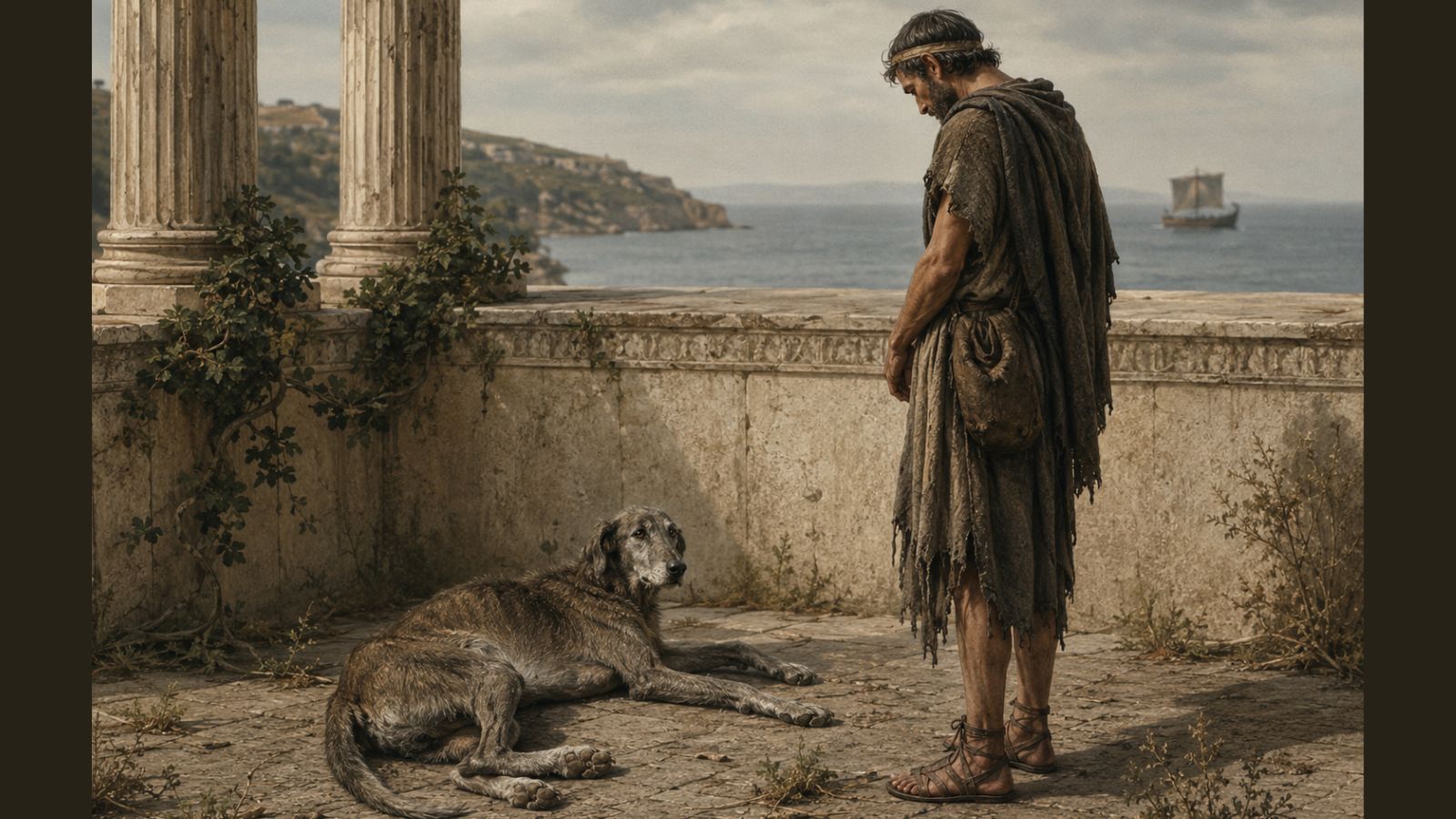
One is the touching, tragically brief reunion of the hero (played in the film by Matt Damon) with his faithful dog Argos. It is a deceptively low-key episode which reflects powerfully on the epic’s themes of patience, loyalty and loss.
The other is the man-eating cyclops’s sudden display of a softer side. He addresses his favourite ram as Pepon, a term of endearment elsewhere applied to close friends and relatives. The cyclops wonders aloud if the ram is grieving for his master’s lost eye, or sharing his desire for revenge.
Both episodes demonstrate Homer’s remarkable capacity to ground the heroic world in the whole range of human experience, and to stress the essential links between humans and the natural world.
Human-animal bonds in ancient Greek poetry
The bonds between humans and animals, whether working or otherwise, are richly represented throughout ancient Greek culture.
Odysseus’s wife, Penelope, has pet geese which she describes as 'warming her heart' when she sees them. Penelope weeps for them when, in a dream, they are killed by an eagle.
In Homer’s 'Iliad', Hector calls on his chariot horses to remember the sweet mash his wife used to feed them. Achilles’s horses also weep when his friend Patroclus is killed.
Human-animal bonds in ancient Greek art
Research documents the widespread depiction of both working dogs and lapdogs in vase painting and sculpture. The Beazley Archive pottery database in Oxford lists well over 1,400 examples of dogs in vase paintings from 700–200 BC.
Dogs appear in scenes of warriors bidding farewell to their families, domestic settings and funerary monuments. While hunting dogs may figure as status symbols, other depictions suggest a close affectionate bond. In classical Athenian funerary reliefs, dogs frequently accompany young people and children.
One example is the grave monument for a young girl named Euchalia, which depicts her with her family and a small dog poised on its hind legs and pawing at her knees.
What Argos symbolises
Dogs were not universally viewed positively in the ancient world. 'Dog' is also a derogatory term applied to both women and men in the epics. But Argos’s fidelity is a marker of the value of Odysseus’s relationships and the society to which he is returning.
The Argos episode contrasts with the start of Book 14, where Odysseus’s own guard dogs fail to recognise him and prepare to attack. His son, Telemachus, is greeted with affection by the same dogs. This is a sobering marker of how long Odysseus has been away, and how alien he and his home have become to one another.
Argos is too feeble to move towards Odysseus, despite his pricked ears and wagging tail. Odysseus, although moved, dares not show recognition for fear of disclosing his identity.
The faithful companion gets to see his master one last time before he dies. But there remains a sense of frustrated fulfilment that highlights the darker side of Odysseus’s story, all that can never be recovered after long absence, despite all that is regained.
Heroism and heroic achievement are highly valued in the Homeric poems. But these poems also celebrate and mourn the everyday relationships with man, woman and beast alike, which in this story are of equal and perhaps more lasting value.