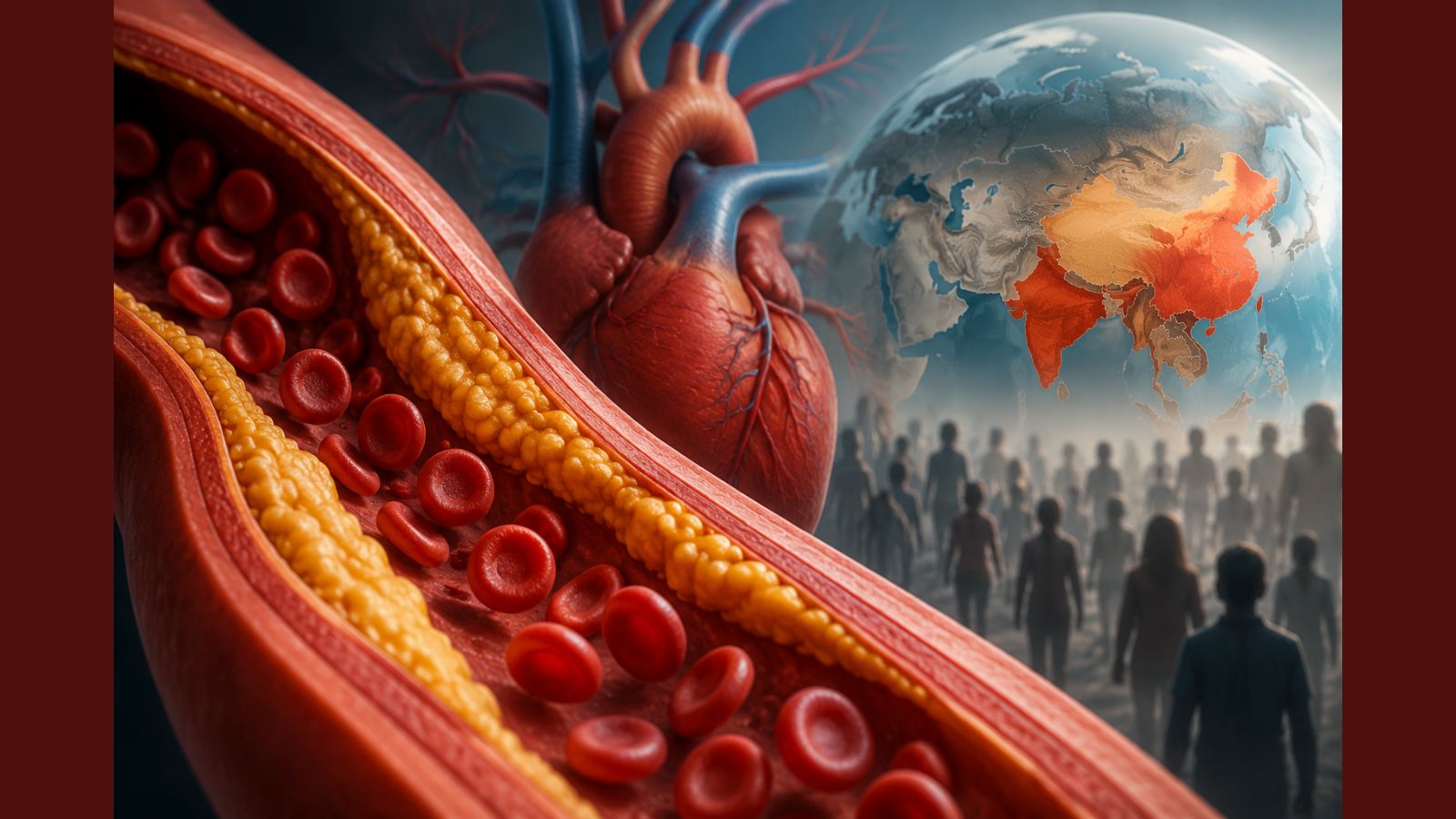


New Delhi: High low-density lipoprotein (LDL), or "bad", cholesterol was linked to 3.6 million deaths worldwide in 2023, accounting for 6 per cent of all deaths, according to a study published in the Journal of the American Medical Association (JAMA).
The study also estimated that elevated LDL cholesterol (LDL-C) resulted in 90.7 million disability-adjusted life years (DALYs) lost in 2023, with one-third of the global LDL-C burden occurring in India and China.
The findings, published by the Global Burden of Disease (GBD) 2023 LDL Cholesterol Collaborators, show that the absolute burden of high LDL cholesterol has increased since 1990 because of demographic changes and has shifted towards middle-sociodemographic countries, driven largely by population growth and ageing.
"Despite declining age-standardised rates, the absolute LDL-C burden has increased since 1990 due to demographic changes and has shifted toward middle-sociodemographic countries," the researchers wrote.
"In 2023, elevated LDL-C accounted for 3.6 million deaths (6.0 per cent of global mortality) and 90.7 million DALYs (3.2 per cent of total DALYs)," they said.
One disability-adjusted life year (DALY) represents the loss of one year of healthy life.
Using data from the GBD 2023 study, researchers assessed the health burden attributable to elevated LDL cholesterol among adults aged 25 years and older across 204 countries and territories between 1990 and 2023.
The study estimated that the number of adults aged 25 years or older with LDL cholesterol levels of 54 milligrams per decilitre or higher increased from around 2.5 billion in 1990 to 4.6 billion in 2023.
Age-standardised average LDL cholesterol levels in 2023 were lowest in Burkina Faso, Lesotho, Somalia and Rwanda, at below 80 milligrams per decilitre, and highest in Serbia, Slovenia, Russia, Norway and Austria, at above 135 milligrams per decilitre.
The researchers found that elevated LDL cholesterol was the second-leading risk factor for cardiovascular disease mortality and among the top 10 contributors to the global burden of disease in 2023.
That year, high LDL cholesterol accounted for 6.0 per cent of all deaths, 8.1 per cent of deaths from non-communicable diseases and 18.9 per cent of deaths caused by cardiovascular disease.
High LDL cholesterol was also linked to nearly one-third of deaths from ischaemic heart disease (2.7 million) and 27 per cent of ischaemic stroke deaths (0.87 million). Ischaemic heart disease occurs when blood flow to the heart muscle is reduced.
The researchers said statins remain the cornerstone of LDL cholesterol management, but their real-world impact is limited by underuse, even in places where they are widely available.
They identified barriers including the absence of symptoms in people with high cholesterol, low public awareness, the cost of testing and treatment, inconsistent medicine supply, health system inefficiencies and concerns about side effects.
The team said addressing these challenges will require stronger primary healthcare systems, improved access to affordable diagnostic services and medicines, and wider implementation of standardised, guideline-based treatment.