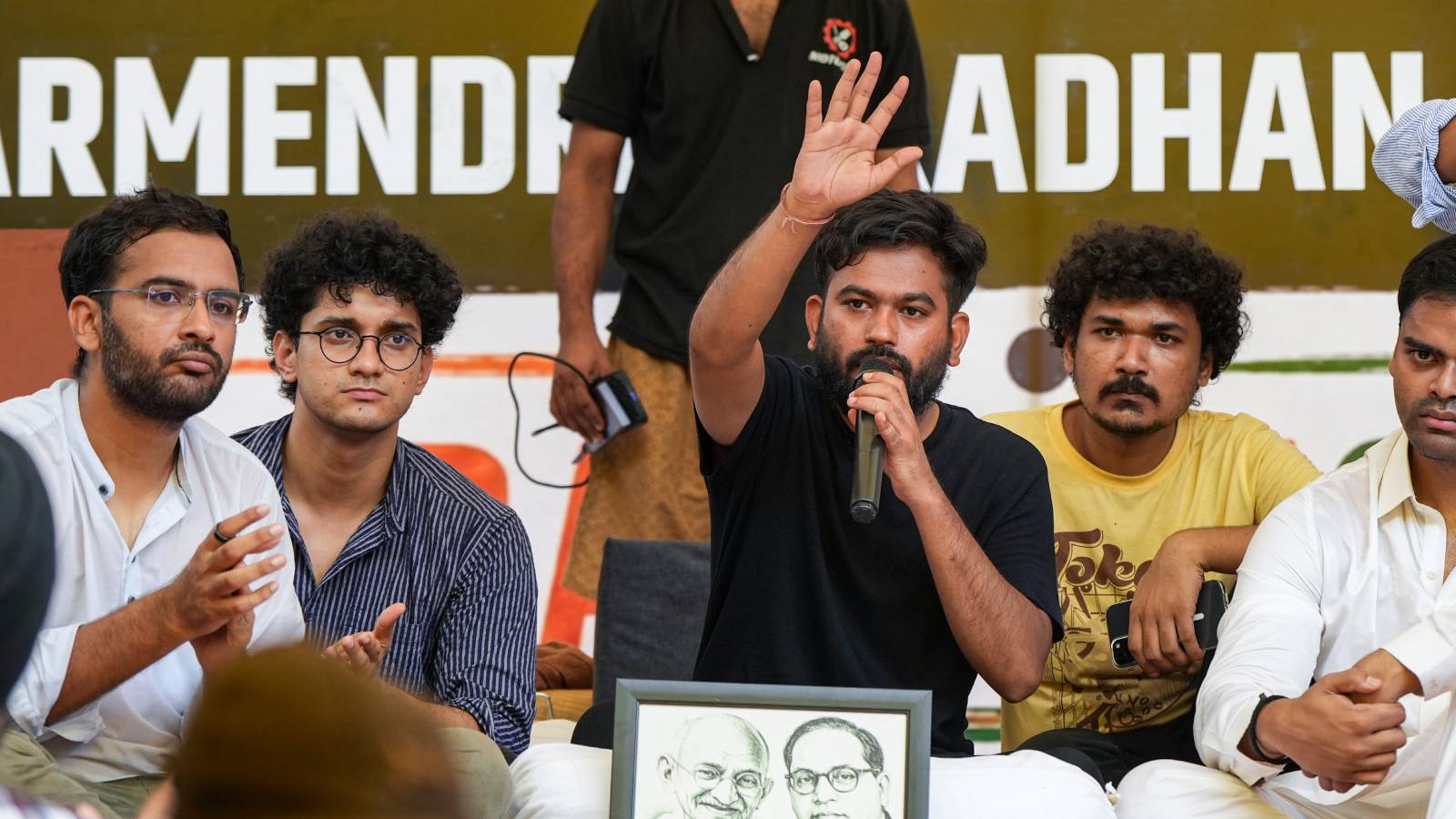


Cockroach Janta Party (CJP), founded by Abhijeet Dipke as a satirical social media page in response to Chief Justice of India Surya Kant's remark, has now evolved into a movement led by students seeking educational reforms in India. The protesters are demanding the resignation of Union Education Minister Dharmendra Pradhan, holding him accountable for the NEET paper leak scam and alleged irregularities in CBSE examinations.
Except for Pradhan's resignation, CJP's other key demands were agreed in principle to provide compensation to the families of students who died by suicide and to withdraw FIRs registered against peaceful protesters.
As the Gen Z protest completes 35 days, here's a look at the major developments.
Cockroach movement over NEET paper leak
On June 6, 2026, Abhijeet Dipke returned to India from the United States and launched CJP's first protest in Delhi. Dipke's call for a protest seeking the Union Education Minister's resignation received a widespread response from Gen Z, with thousands gathering at Jantar Mantar even before his arrival.
India witnessed an unusual protest that day, with demonstrators wearing cockroach masks while carrying portraits of BR Ambedkar and copies of the Constitution of India.
Also Read:
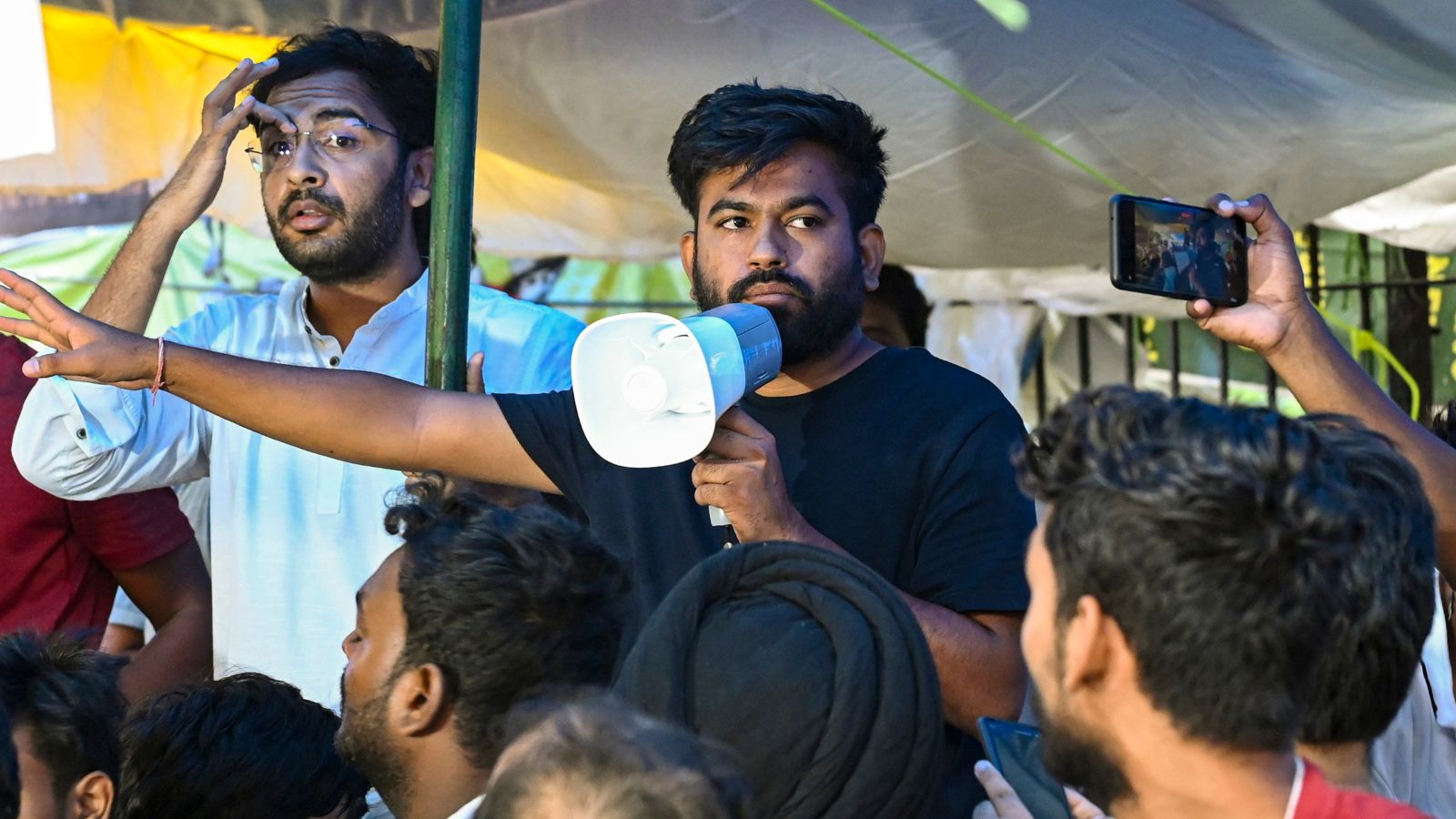
CJP's indefinite sit-in at Jantar Mantar began on June 21, condemning what it described as the Union Government's apathy in addressing issues such as the NEET paper leak and alleged irregularities in CBSE examinations, which it said had left students in the lurch.
In an open letter to Prime Minister Narendra Modi, Dipke demanded accountability from the government while expressing concern over India's education system.
The next phase of the agitation began on June 27 with Dipke's nationwide call for the 'Pradhan Go Back' campaign, demanding the Education Minister's resignation. He appealed to students, farmers and civil society to join the protest at Jantar Mantar on June 28.
Hunger strike by Wangchuk and students
Sonam Wangchuk, an activist, engineer and education reformer from Ladakh, joined the movement on June 28 and began an indefinite hunger strike along with six students representing the All India Students' Association (AISA).
The students included Danish Ali, joint secretary of the Jawaharlal Nehru University Students' Union; Hrishikesh, president of Barak Hostel at JNU; Aameen, a former Dr BR Ambedkar University Delhi student council member; Neha, AISA's all-India president; Manish, AISA Uttar Pradesh president; and Deepak, vice president of the AISA Delhi University unit.
Also Read:
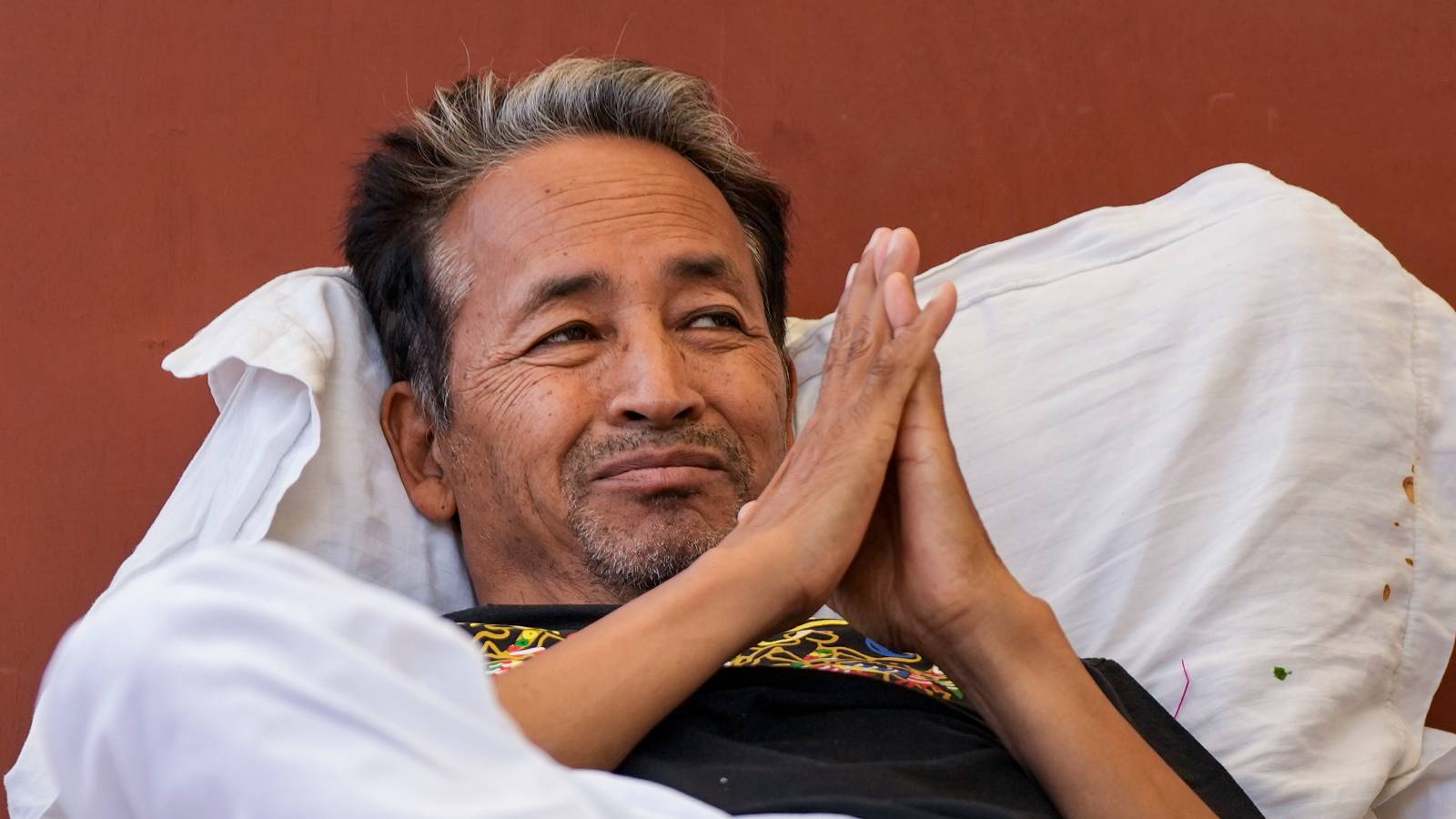
However, only Aameen, Manish and Neha continued the fast for 23 days. They ended their hunger strike on July 20 after a delegation comprising parliamentarians Manoj Jha and Rajaram Singh, along with actors Prakash Raj and Shabana Azmi, appealed to them.
Sonam Wangchuk, however, continued his fast for 26 days after being removed from the protest site by Delhi Police on July 18 and shifted to Safdarjung Hospital. He remained determined to continue his indefinite hunger strike at the hospital until Pradhan resigned.
July 20 'Chalo Sansad' march and police action
On July 20, a large police contingent was deployed at Jantar Mantar as students gathered to participate in CJP's Parliament march, 'Chalo Sansad'. Tear gas, pellet guns and batons were used during the police action against the protesters. A large number of students were reportedly injured and detained.
According to Delhi Police, 15 FIRs were registered against student protesters in connection with the violence.
Notably, the police action took place while CJP leaders Saurav Das and Ashutosh Ranka were holding talks with Union Minister J.P. Nadda.
Condemning the police action, politicians, activists, celebrities and members of the public staged protests in solidarity with the Jantar Mantar demonstrators. Similar protests spread to several states, including Maharashtra, Chhattisgarh, Tamil Nadu, Kerala, Rajasthan and Karnataka.
Political parties back students
The Congress, Aam Aadmi Party, Shiv Sena (UBT) and several other political parties also threw their weight behind the students and demanded action against police personnel allegedly involved in the assault.
In a surprise move, the Congress staged a sit-in outside Prime Minister Narendra Modi's official residence on July 21. Rahul Gandhi, the Leader of the Opposition in the Lok Sabha, along with other Congress MPs, including Priyanka Gandhi, was detained by Delhi Police during the protest.
The following day, the Congress launched protests in Parliament, disrupting proceedings in both Houses for five consecutive days.
Wangchuk ends fast
On July 24, Sonam Wangchuk ended his 26-day hunger strike after Union Ministers JP Nadda and Jitendra Singh, along with other officials, visited him and assured him that no action would be taken against CJP protesters.
In a written communication to Wangchuk, the government also assured that adequate compensation would be provided to the families of the suicide victims and that the NEET paper leak issue would be discussed in Parliament.
₹1 crore compensation, no cases against CJP protesters
Amid mounting political pressure, the Union Government invited CJP leaders for a second round of talks in an effort to end the protest.
During the meeting held on July 24, the Union Government agreed to provide ₹1 crore in compensation to the families of NEET candidates who died by suicide following the paper leak.
According to CJP spokesperson Saurav Das, the government also agreed to withdraw all 15 FIRs registered against the Jantar Mantar protesters.
However, CJP refused to call off the protest as the government sought more time to decide on Pradhan's resignation.
Anti-paper leak bill on the cards
On July 24, the Union Cabinet approved the Public Examinations (Prevention of Unfair Means) Act Amendment Bill amid growing concerns over the government's response to the paper leak issue. The Bill proposes a minimum punishment of five years' imprisonment for individuals involved in paper leaks, with imprisonment of up to 10 years and a maximum fine of ₹10 crore in cases involving organised paper leak rackets.
Sources said the Bill also provides for time-bound investigations and a statutory mandate for trials in fast-track courts, with a provision requiring investigations to be completed within three months.
Pradhan quits as Education Minister
When the protest intensified across India on July 25, Dharmendra Pradhan resigned as Union Education Minister and announced it on his social media pages. CJP welcomed the decision as a victory of democracy and student power. In his resignation letter, Pradhan claimed that he is stepping down in the larger interest of students by taking moral responsibility for the NEET paper leak. Later, the government appointed Prahlad Joshi as the new union education minister.
Following this, the CJP called off its 36-day indefinite protest after holding talks with Union ministers J P Nadda and Jitendra Singh. CJP representatives Saurav Das and Ashutosh Ranka told the media that the government had agreed to all their key demands, including providing compensation, in accordance with the rules, to the families of students who died by suicide and ensuring the withdrawal of all FIRs registered against protesters. Pradhan's resignation marked a major victory for the CJP and the students, who refused to back down despite facing a police crackdown during the July 20 protest.