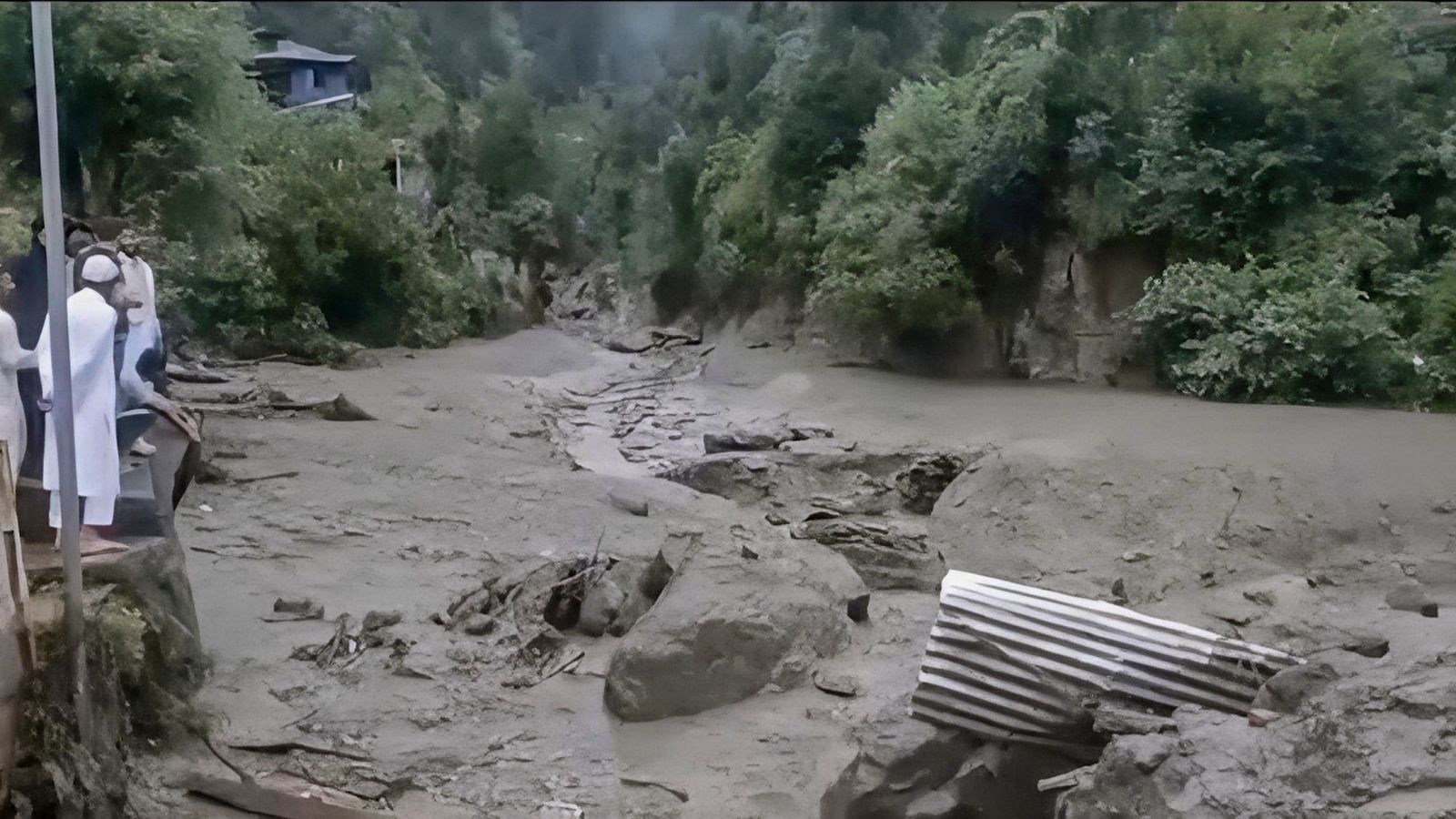


Jammu: Flash floods hit the Chatroo area of Kishtwar district of Jammu and Kashmir early Saturday, officials said. The flood was triggered after a cloudburst, which resulted in damaging many shops, two cars and two residential houses.
The cloudburst struck Chatroo at around 2.30 a.m., resulting in the sudden deluge.
Persistent rain has also disrupted normal life across the Chenab valley, prompting authorities to close schools in Kishtwar, Doda and Ramban districts.
Officials said the schools have been instructed to conduct online classes.
It also inundated the main market with boulders, mud and slush, and rendered the Kishtwar–Chatroo–Sinthan National Highway out of bounds. However, the road was later restored by the concerned authorities after several hours of hectic efforts.
The officials said Kishtwar Deputy Commissioner Pankaj Kumar Sharma immediately mobilised agencies and departments concerned to carry out rescue, damage assessment, and restoration operations.
All the affected persons have been evacuated to safe locations, the officials said, adding assessment of structural damage to houses, shops, roads and drainage is underway.
The deputy commissioner has appealed to residents to follow official advisories, avoid approaching drains, unstable water channels, and cooperate with authorities for their safety.
Earlier during the day, Union Minister of Atomic Energy Jitendra Singh said he spoke to the deputy commissioner shortly after receiving reports of the cloudburst.
The minister said affected shopkeepers and business owners would be provided compensation in accordance with the government's relief norms.
He said the government has strengthened disaster preparedness in the district following last year's devastating Chasoti cloudburst that left 63 people, mostly devotees visiting Machail Mata shrine, dead. Around 30 people who went missing after the incident are still to be traced.
Singh said the Union Ministry of Earth Sciences has installed one Early Warning System (EWS) each in Kishtwar and Machhail to improve advance weather monitoring and provide timely alerts during extreme weather events.