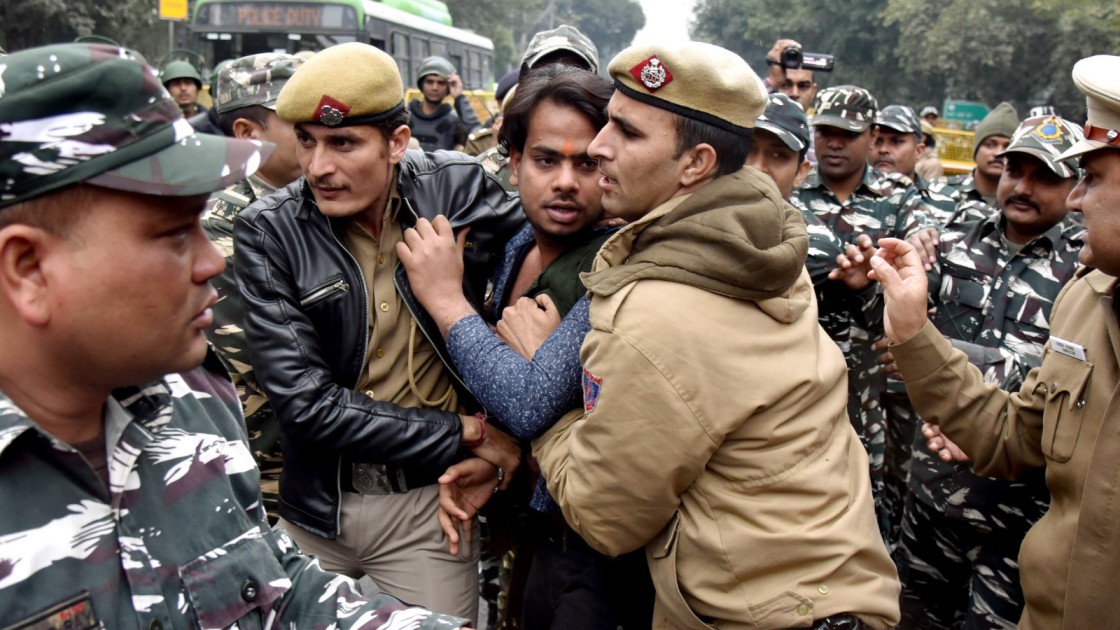


If you are a protester and police stop you, ask you to accompany them, prevent you from leaving or take you to a police station in a police van, you may be detained even if you have not been formally arrested.
Knowing the difference between detention and arrest and what to do in either situation can help you understand and assert your legal rights.
Also Read:

Detention and arrest: Know the difference
Detention and arrest are legally distinct. Detention generally restricts a person's movement, while a formal arrest places them in police custody and triggers additional constitutional and statutory safeguards.
If police prevent you from leaving, you can ask whether you are free to leave and why you are being detained. Avoid physical resistance, but you can ask questions and assert your legal rights.
Once formally arrested, safeguards include being informed of the grounds of arrest, having a relative or friend informed, access to medical care and production before a Magistrate.
Know where you are being taken
If police move you from a protest site to a police station, it is important that someone knows where you are.
Under Section 48 of the Bharatiya Nagarik Suraksha Sanhita (BNSS), once a person is arrested, police must inform a relative, friend or another person nominated by the arrested person about the arrest and place of custody.
Protection against self-incrimination
Article 20(3) of the Constitution protects an accused person from being compelled to testify against themselves.
This does not prevent lawful investigation, but it protects against compelled self-incrimination. Where questioning concerns suspected criminal conduct, legal advice may be appropriate. Read documents carefully before signing them.
Medical needs and examination
Section 56 of the BNSS requires the person having custody of an accused to take reasonable care of their health and safety.
Medical conditions, regular medication, injuries, disability or other urgent needs should be brought to the police's attention. A medical examination can also document injuries or allegations of excessive force.
The law also contains specific provisions governing the search of women.
What changes after a formal arrest?
Once detention becomes an arrest, additional safeguards apply.
Grounds of arrest: Section 47 of the BNSS requires a person arrested without a warrant to be informed of the particulars of the offence or the grounds of arrest. Where applicable, they must also be informed of their right to bail.
Inform someone: Section 48 requires information about the arrest and place of custody to be communicated to a nominated relative, friend or other person.
Production before a Magistrate: Article 22(2) requires an arrested person to generally be produced before the nearest Magistrate within 24 hours, excluding necessary travel time.
The law also contains specific safeguards concerning the arrest and search of women.
Also Read:

Additional safeguards for women
Section 43 of the BNSS generally prohibits the arrest of a woman between sunset and sunrise, except in exceptional circumstances and subject to prescribed procedures, including a written report by a woman police officer and prior permission from a Magistrate of the first class.
What about children?
Children in contact with the criminal justice system are governed by the juvenile-justice framework rather than exactly the same procedures that apply to adults. The applicable process depends on factors including the child's age and the nature of the alleged offence.
Takeaways
So, if you are ever detained, remeber your key rights:
- Clarify your status: Ask whether you are free to leave and, if not, why.
- Know your location: If moved elsewhere, ensure a trusted person knows where you are.
- Know the grounds of arrest: Once arrested, you must be informed of the grounds as required by law.
- Know your constitutional protection: Article 20(3) protects against compelled self-incrimination.
- Report medical needs: Inform police about injuries, medication and urgent medical conditions.
- Know the 24-hour safeguard: An arrested person must generally be produced before a Magistrate within 24 hours, excluding necessary travel time.
- Seek legal assistance: Legal advice may be important if detention develops into an arrest or criminal questioning.
Detention does not automatically amount to formal arrest. However, restrictions on liberty remain subject to legal limits, and a formal arrest triggers additional safeguards under the Constitution and BNSS.