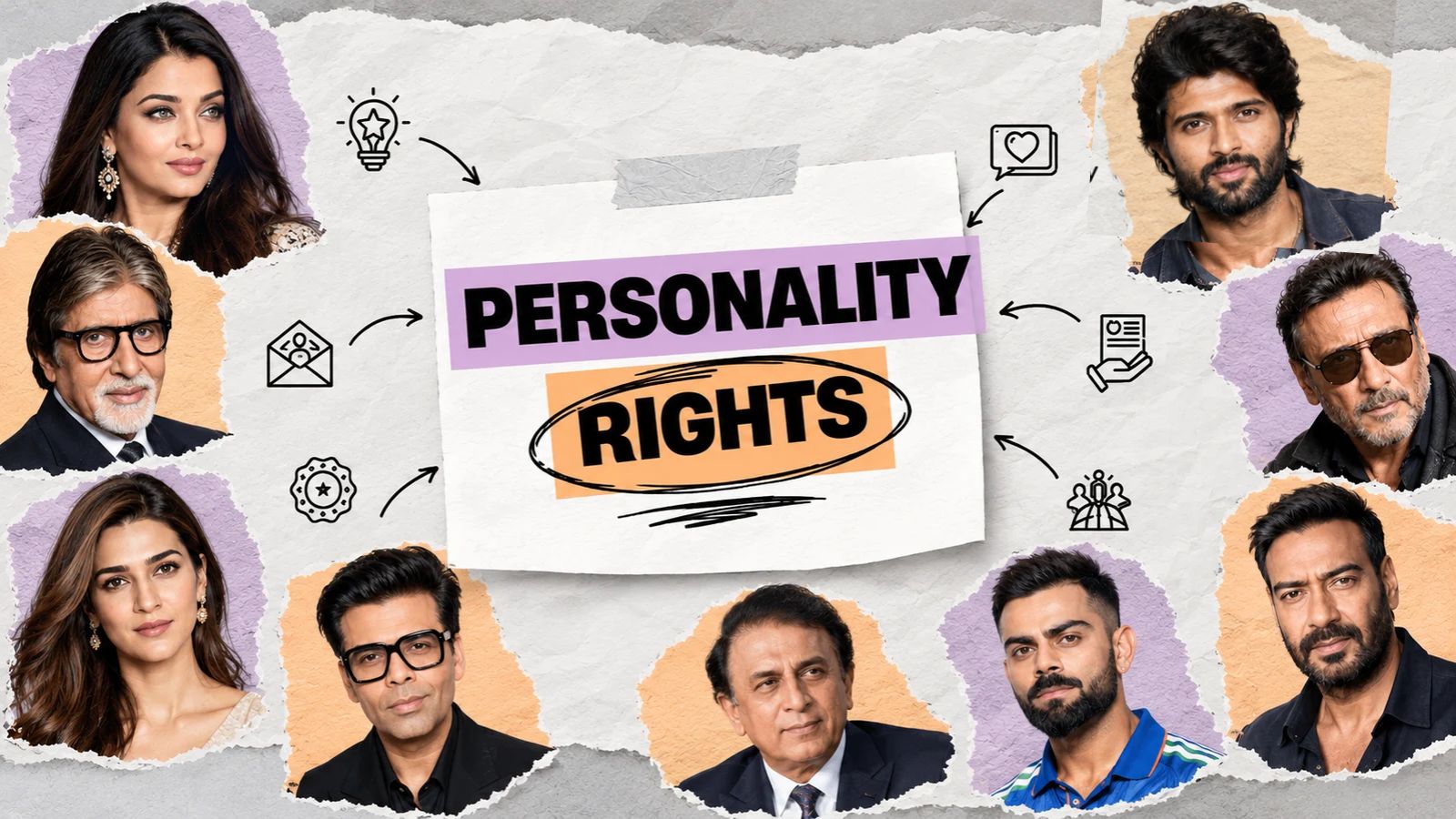


From the Bachchans to the Khans, Kapoors and Chopras, Bollywood celebrities have increasingly turned to the courts to protect their personality rights.
The latest names to join the list are actors Kriti Sanon and Vijay Deverakonda, highlighting growing concerns over the unauthorised use of celebrities’ names, images, voices and likenesses in the digital age.
Others who have sought legal protection include Karan Johar, Jackie Shroff, Ajay Devgn among others. The trend extends beyond the film industry, with sports personalities such as Virat Kohli and Sunil Gavaskar also seeking to protect their identities from unauthorised use and commercial exploitation.
But why are celebrities seeking legal protection?
One of the primary concerns is the unauthorised commercial use of a celebrity’s identity. Businesses may use their names, images or voices in advertisements, merchandise and products without permission, profiting from their popularity.
Artificial intelligence (AI) has made the issue more complex by enabling the creation of realistic deepfakes, fake endorsements and chatbots that impersonate public figures. Such content can mislead audiences, promote fraudulent schemes or falsely associate celebrities with political messages they have not endorsed.
Unauthorised or manipulated content can also damage a celebrity’s reputation, dignity and professional career, while undermining legitimate endorsement opportunities. These concerns have brought personality rights into focus at the intersection of privacy, commercial interests and freedom of expression.
What are personality rights?
Personality rights protect individuals against certain unauthorised uses of identifiable aspects of their identity, including their name, image, voice, signature and distinctive mannerisms. They broadly encompass two aspects: the right to privacy, which protects against certain intrusions into private life, and the right of publicity, which concerns the commercial exploitation of a person’s identity.
India has no single, comprehensive law specifically governing personality rights. Instead, courts have developed protections through constitutional principles, including the right to privacy and dignity under Article 21, common-law principles and relevant provisions of existing legislation, such as the Copyright Act, 1957, and the Trade Marks Act, 1999.
Celebrities may approach courts to seek protection against such unauthorised uses, including misleading endorsements, impersonation and AI-generated content that exploits their identity without consent.
What can courts do?
Celebrities commonly seek injunctions to prevent websites, advertisers, platforms and individuals from continuing to use their identities unlawfully. Depending on the circumstances, courts may order the removal or blocking of infringing content, including fake profiles, unauthorised advertisements and AI-generated material.
Courts may also issue orders against unidentified individuals responsible for misuse, direct action against impersonation websites and accounts, or require platforms to disclose information that could help identify anonymous infringers. Damages or compensation may be awarded where the legal requirements are met and harm is established.
However, these remedies do not give celebrities unlimited control over every reference to their identity. Courts must assess each dispute under the applicable law.
Where do personality rights end and freedom of expression begin?
A central challenge is distinguishing unlawful exploitation from legitimate public expression.
An AI-generated version of an actor’s voice used to sell a product without consent is different from a comedian imitating the actor’s mannerisms in a satirical performance. Similarly, a fake advertisement falsely suggesting an endorsement raises different concerns from a news report or a clearly humorous, non-commercial meme.
News reporting, public-interest discussion, biographies, documentaries, criticism, satire, parody and artistic work may have strong grounds for protection under freedom of speech and expression. Using a celebrity’s name or photograph does not automatically amount to infringement simply because the person has not consented.
Courts must consider the purpose and context of the use, whether it is commercial or expressive, whether audiences could be misled, and whether it causes legally recognisable harm.
Broad injunctions can also raise concerns if they restrict large categories of online content. Platforms may remove lawful material out of caution, potentially affecting journalism, satire, fan culture and creative expression.
The challenge is to protect individuals from deception and exploitation without giving them control over ordinary public discussion merely because it is critical or unflattering.
Are ordinary people equally protected?
Personality and privacy concerns are not limited to celebrities. Ordinary individuals can also face impersonation, fake accounts, unauthorised commercial use of photographs and harmful AI-generated deepfakes.
Depending on the circumstances, they may seek remedies under privacy, defamation, data-protection, copyright or criminal law.
However, the practical ability to enforce these protections can differ. Celebrities often have established commercial identities and the resources to pursue urgent court orders, while ordinary individuals may struggle with legal costs, identifying anonymous perpetrators and obtaining timely action from platforms.