


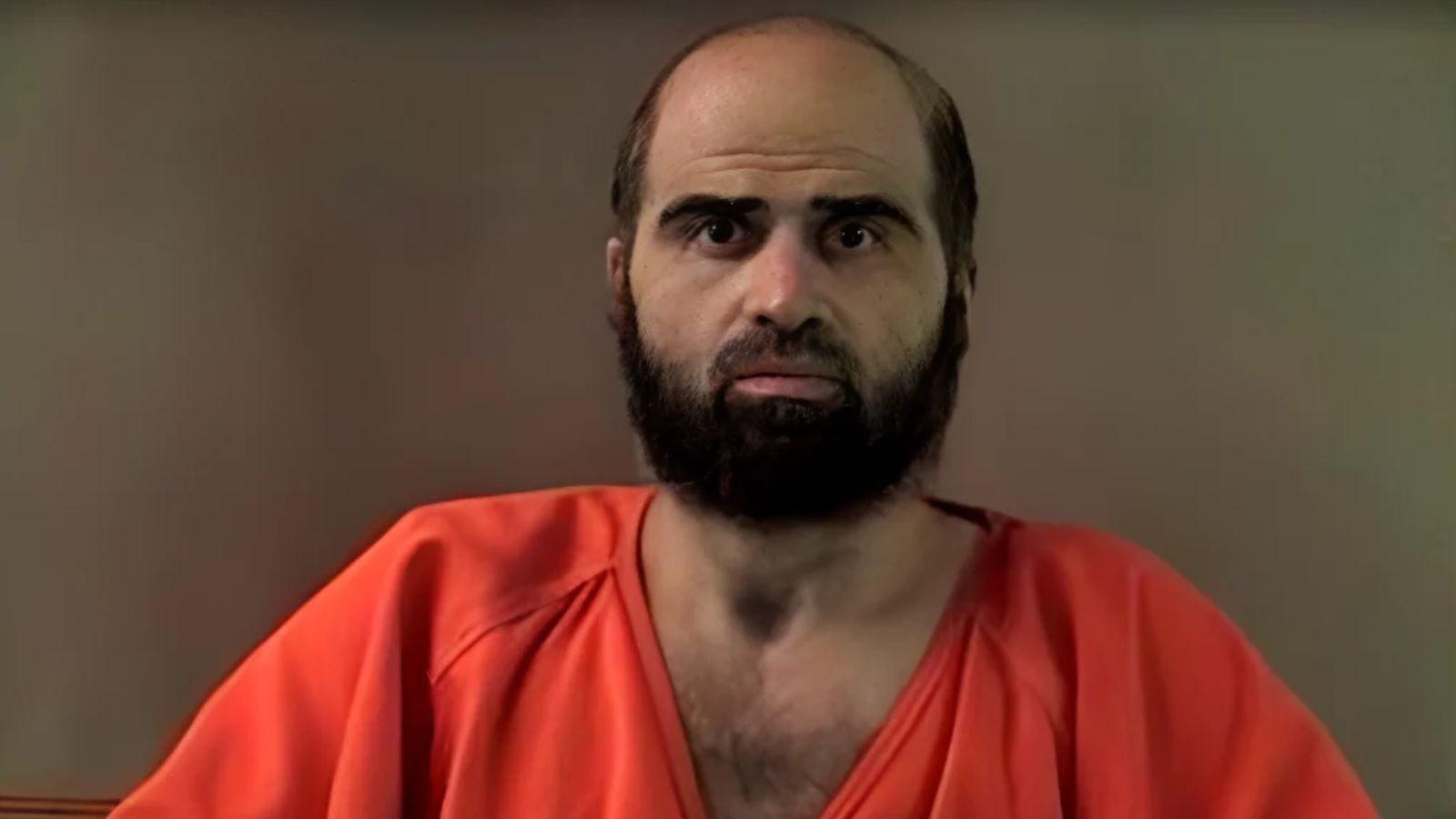


Washington: The Pentagon says the firing squad execution of Fort Hood shooter Nidal Malik Hasan will be livestreamed after US Defence Secretary Pete Hegseth said the execution would be made public.
Hasan is scheduled to be executed at Fort Hood on December 3. He was convicted of killing 13 people and injuring 32 others in a shooting at the Texas military base in 2009.
“We'll make sure that people are able to watch it, that it's public,” Hegseth told conservative outlet Real America's Voice News on Wednesday.
Asked whether Hasan had made any final requests or contacted the Trump administration, Hegseth replied: “Don't care. We'll see him on December 3rd.”
Pentagon officials clarified on Thursday that the execution would be livestreamed, adding that further details would follow. The White House referred questions about the livestreaming plans to the Pentagon.
Pentagon spokesperson Sean Parnell said on Monday that US President Donald Trump had approved Hasan’s execution. Under US military law, a president must authorise an execution by firing squad. The Pentagon said Trump approved it on Hegseth’s recommendation.
Hegseth said the military had not executed a servicemember by firing squad since World War II. A Pentagon official, speaking on condition of anonymity, also confirmed that the execution would be livestreamed but did not provide further details.
Hegseth told the Human Events Daily podcast that he planned to make the execution public, according to a video of his comments posted on social media on Thursday. He described the decision to carry out the execution by firing squad at Fort Hood on a Thursday at 1 pm, approximately matching the time, day of the week, and location of Hasan’s shooting, as a “no-brainer”.
A military jury sentenced Hasan to death in August 2013 after finding him guilty of 45 counts of premeditated murder and attempted premeditated murder. He opened fire with a laser-sighted handgun inside a medical facility at the sprawling military base in central Texas.
The shooting occurred weeks before Hasan, now 56, was scheduled to be deployed to Afghanistan. He was left partially paralysed and confined to a wheelchair after being shot by police during his arrest.
The group Death Penalty Action, which opposes capital punishment, said Hasan’s execution would be the first military execution since 1961. On April 13 that year, Army Private John Bennett was executed by hanging.
The Death Penalty Information Center said the last known executions by US military firing squads took place in 1945. At least five US states have firing squads as an execution method under their laws, according to the centre. In 2025, South Carolina carried out the first firing squad execution in the United States in 15 years.
The move prompted criticism from some commuters at a train station in California. One called the plan "disgusting", while another said broadcasting it live would be "inhumane".
An expert on military law in the US on Thursday (October 8) said he sees no intrinsic legal barrier to livestreaming the death by firing squad of convicted mass murderer Nidal Hasan if President Trump approves it, but lamented it would return the US to a long ago era of executions as public spectacle.
"However people happen to feel about Major Hasan's case or how they feel about the death penalty as a whole, the idea of conducting a public spectacle is really very unfortunate and I would like to think that the administration would reconsider this," said Eugene Fidell, a lawyer, author and military law expert who lectures at Yale Law School.
Media have sought to televise US executions in the past but have been blocked by the courts. No other country is known to televise or livestream a legal execution, experts said.
"An execution 300 years ago or 200 years ago would have been public," said Fidell. "It would have been a spectacle. People would have brought picnics. We've gone way beyond that. And today, with very rare exceptions, countries don't have executions in public…North Korea does public executions. Iran does public execution. This is not company that we wanna be in."
Also Read:
Extrajudicial lynchings in the United States, often by white mobs targeting Black Americans, were public spectacles well into the 20th century. The last legally sanctioned public execution in the United States was conducted in 1936, death penalty experts said. Thousands watched that 1936 hanging of a young Black man who had been convicted of raping a white woman.
Fidell said the position of the Human Rights Council of the United Nations is that public executions are forbidden because they violate the dignity of the individual, but the US Congress has not signed onto the UN covenant that contains the ban.
Fidell said Hasan could challenge his planned execution by firing squad, though not the livestream, under a provision of US law known as habeas corpus that lets prisoners directly appeal to the courts, which could tie up his case for years. But Fidell said Hasan has not actively sought to avoid the death penalty in the past and may not in this case.
The White House declined to say whether Trump supported the livestream, referring questions to the Pentagon.
(With inputs from AP via PTI and Reuters)