


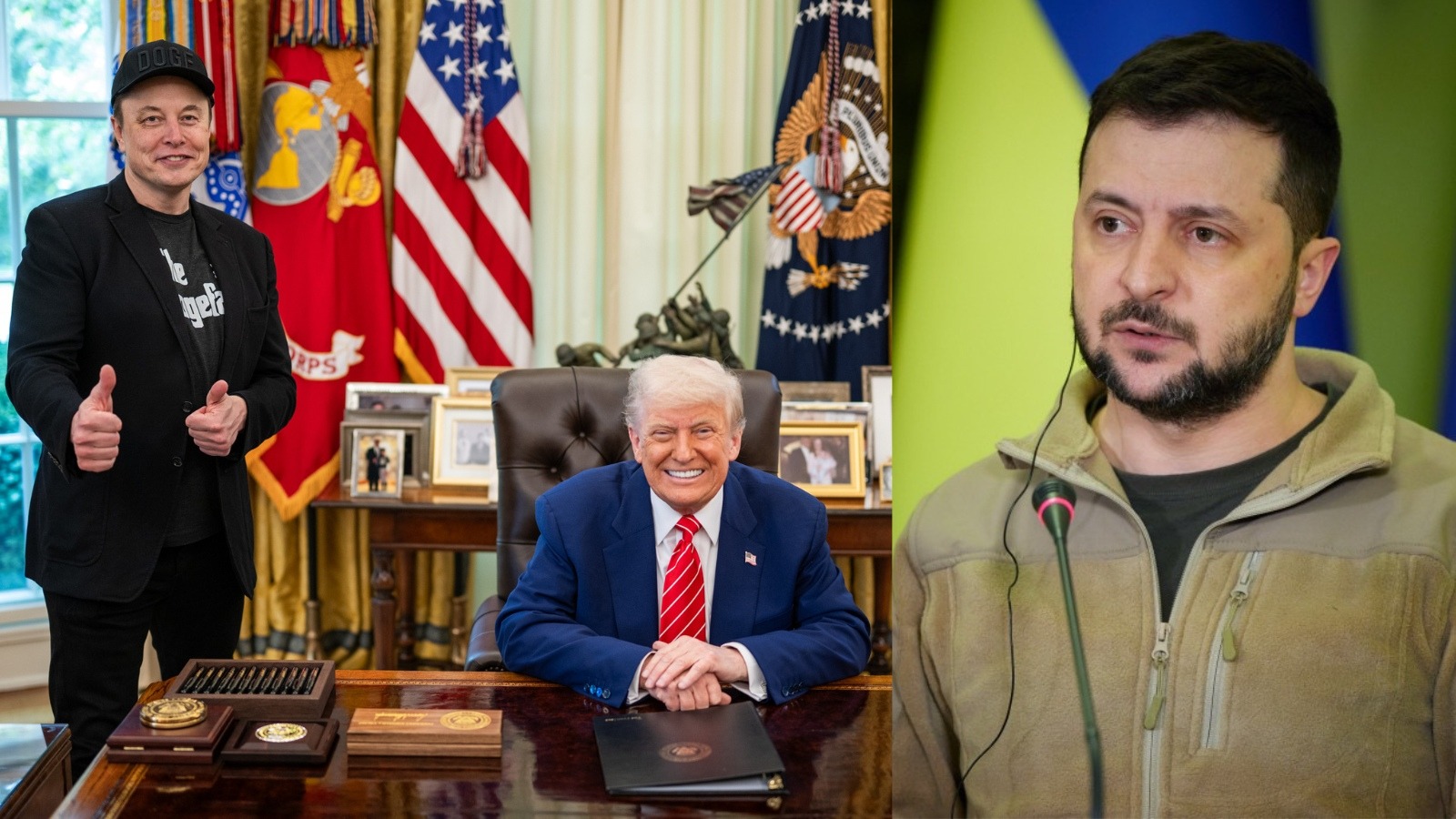


More than four years into Russia’s full-scale invasion, Ukraine’s reliance on US military and intelligence support and SpaceX’s satellite technology has raised questions about how much influence external actors have over its ability to fight.
Recent reports of restrictions affecting military satellite connectivity have brought this dependence more into focus, highlighting the different kinds of leverage Washington and Elon Musk may have over Kyiv’s war effort.
How Starlink became critical to Ukraine’s war effort
Since war began in February 2022, Starlink has helped Ukrainian forces maintain communications in areas where conventional networks have been damaged or are unavailable. The satellite internet service has also supported military drone operations, including reconnaissance, interception and strikes.
This has made satellite connectivity an important military resource, but also a potential vulnerability. Disruptions can affect operations that depend on reliable communications, although the precise impact depends on which systems are affected and how extensively access is restricted.
What happened with Starlink?
On October 14, Ukrainian officials reported restrictions affecting satellite connectivity used in military operations, including drone missions. Reports by Axios and other news organisations said the disruption raised concerns about Ukraine’s ability to conduct drone interceptions and other operations.
However, the exact scope of the restrictions, the systems affected and the full operational consequences need to be distinguished from the broader concerns raised by Ukrainian officials and media reports.
Musk addressed the controversy on X, distinguishing between Starlink and Starshield, SpaceX’s government- and military-oriented satellite service.
According to Musk, Starlink is a commercial service owned and controlled by SpaceX, while Starshield systems are owned and controlled by the US government. He said decisions on speed and usage limits for Starshield rest with the US military and ultimately the President.
Musk has also described Starlink as intended for civilian and defensive uses rather than offensive military action. This reflects his stated position and should not be taken as proof that the service cannot support military operations.
The distinction matters because operating satellite infrastructure and authorising restrictions on a particular system are not necessarily the same thing. Musk’s statements point to a role for the US government in decisions concerning Starshield, but the available information does not independently establish who authorised the specific reported restrictions or whether they were politically motivated.
The US factor: Military aid and intelligence
Washington’s influence over Ukraine extends beyond satellite connectivity. US military assistance and intelligence cooperation have played important roles in Ukraine’s defence, giving the American government leverage through decisions concerning weapons, intelligence and advanced technology.
The satellite controversy emerged amid tensions between US President Donald Trump and Ukrainian President Volodymyr Zelenskyy. Zelenskyy said Ukraine had received no warnings from its partners before Russian ballistic missile attacks on Kyiv on successive nights.
The US position on continued assistance and intelligence cooperation also needs to be distinguished from independent confirmation of the scope of any operational changes.
Is the war being controlled by Washington and Musk?
Neither Washington nor Musk determines every development in the war. Russia continues to conduct its own military campaign, while Ukraine retains its leadership, armed forces and operational command.
However, the US government’s role in military assistance and intelligence, combined with SpaceX’s role in satellite communications, can influence the conditions under which Ukrainian forces operate. The distinction between Starlink and Starshield also shows why the sources of that influence must be examined separately.
The broader question is one of strategic independence: how much freedom does a country have on the battlefield when critical communications depend on technology operated or controlled outside its borders?
The reported restrictions do not establish that Washington or Musk controls Ukraine’s war.
However, they do highlight how decisions made by governments and technology providers far from the front lines can shape the capabilities available to a country at war.
(Compiled by Sabitha)