


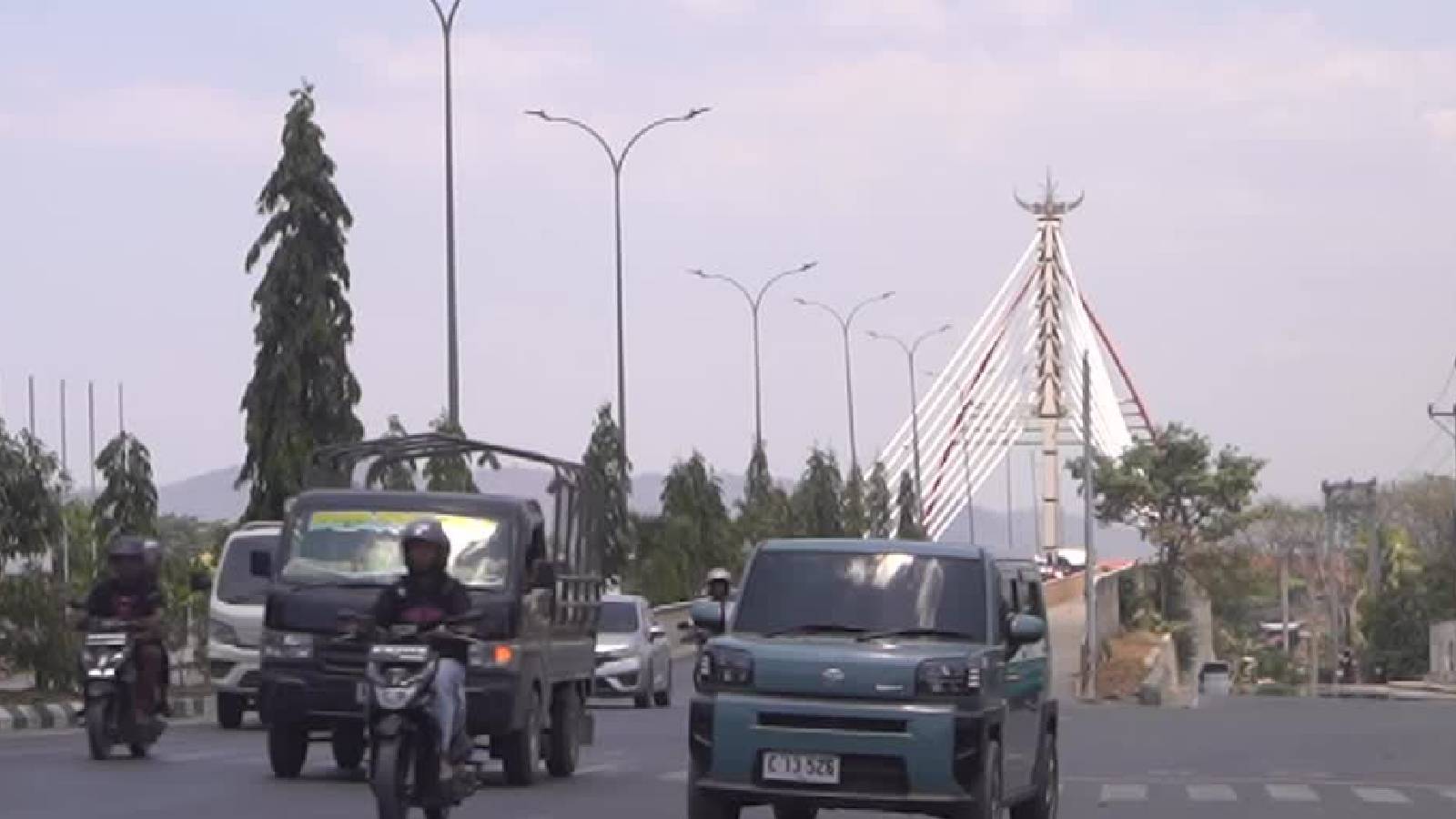


Schools in East Timor’s capital, Dili, stood empty after authorities suspended face-to-face classes for three days as worsening haze from wildfires in the region raised concerns over air quality and students’ health.
The government said in a statement that in-person learning would be suspended from Thursday “due to contamination by pollutant particles from wildfires in neighbouring regions or countries”.
Although East Timor did not identify Indonesia as the source of the haze, the country shares an island with Indonesia’s East Nusa Tenggara province, where several wildfire hotspots have been reported.
At Junior High School 30 Agosto in Dili, classrooms, corridors and the basketball court were deserted after the closure took effect.
Teacher Remigio Ximenes da Cruz said the haze had persisted for three days, affecting both students and teachers. Many children had suffered from coughs, flu-like symptoms and nasal congestion as smoky conditions reduced their access to fresh air, he said.
Indonesia is battling its most intense wildfire season in 11 years, with fires fuelled by El Niño-related dry conditions. The blazes, concentrated mainly on the islands of Borneo and Sumatra, began in July and could continue until November, the government has warned.
The resulting haze has sharply worsened air quality across the region and triggered a spike in respiratory illnesses in Indonesia. Several Malaysian states have also been forced to close schools.
Emissions from Indonesia’s fires have been the highest in the world for a month, accounting for almost half of the global total over the past seven days, according to Fire Emissions Watch, a portal developed by the European Union’s Copernicus climate monitoring service.
Indonesia’s air pollution index has recorded levels above 1,000 in some areas of Borneo and Sumatra, while readings of 300 or higher are already classified as hazardous.
In Singapore, the one-hour PM2.5 reading reached 284 micrograms per cubic metre in the western part of the island on Wednesday (October 14), entering the National Environment Agency’s “very high” band for the first time this year.
The wildfires have also threatened wildlife in Indonesia. In the jungles of Indonesian Borneo, a rehabilitation centre is taking in more orangutans as fires sweep through the forest habitats of the critically endangered animals.
The fires and haze have shrouded parts of Borneo, which also includes the Malaysian states of Sarawak and Sabah, in hazardous smog. The pollution has spread to Singapore and the Malaysian peninsula, contributing to school closures and respiratory illnesses.
Yayasan Inisiasi Alam Rehabilitasi Indonesia (YIARI), an orangutan rehabilitation centre in the Ketapang region of West Kalimantan province, is currently caring for 90 orangutans after rescuing 49 since August, foundation spokesperson Heribertus Suciadi said.
Karmele Llano Sanchez, the foundation’s co-founder, said staff had been trained to help fight the fires. The centre still had room to rescue more orangutans, but it was difficult to estimate how many animals might need to be rescued and evacuated, she said.
Sanchez, who has worked in Indonesia for more than 20 years, said the scale of the potential rescue effort remained uncertain.
The world’s three orangutan species are native only to Borneo and Sumatra.
Sampurna, an orangutan encountered by Reuters in August, was found gasping for air and writhing on the ground in a palm oil plantation. The forestry ministry said the animal died on August 30.
Sanchez, who performed the necropsy, said Sampurna died less than 12 hours after being rescued. The animal’s lungs were very dark because of respiratory problems, she said, comparing their condition to that of a heavy smoker’s lungs.
From January to July this year, fires burned around 202,000 hectares (500,000 acres) in Indonesia. Although official figures for the following months have not been released, non-governmental organisations estimate that fires have burned at least another 600,000 hectares.
West Kalimantan is the hardest-hit province.
(With agency inputs from Reuters)