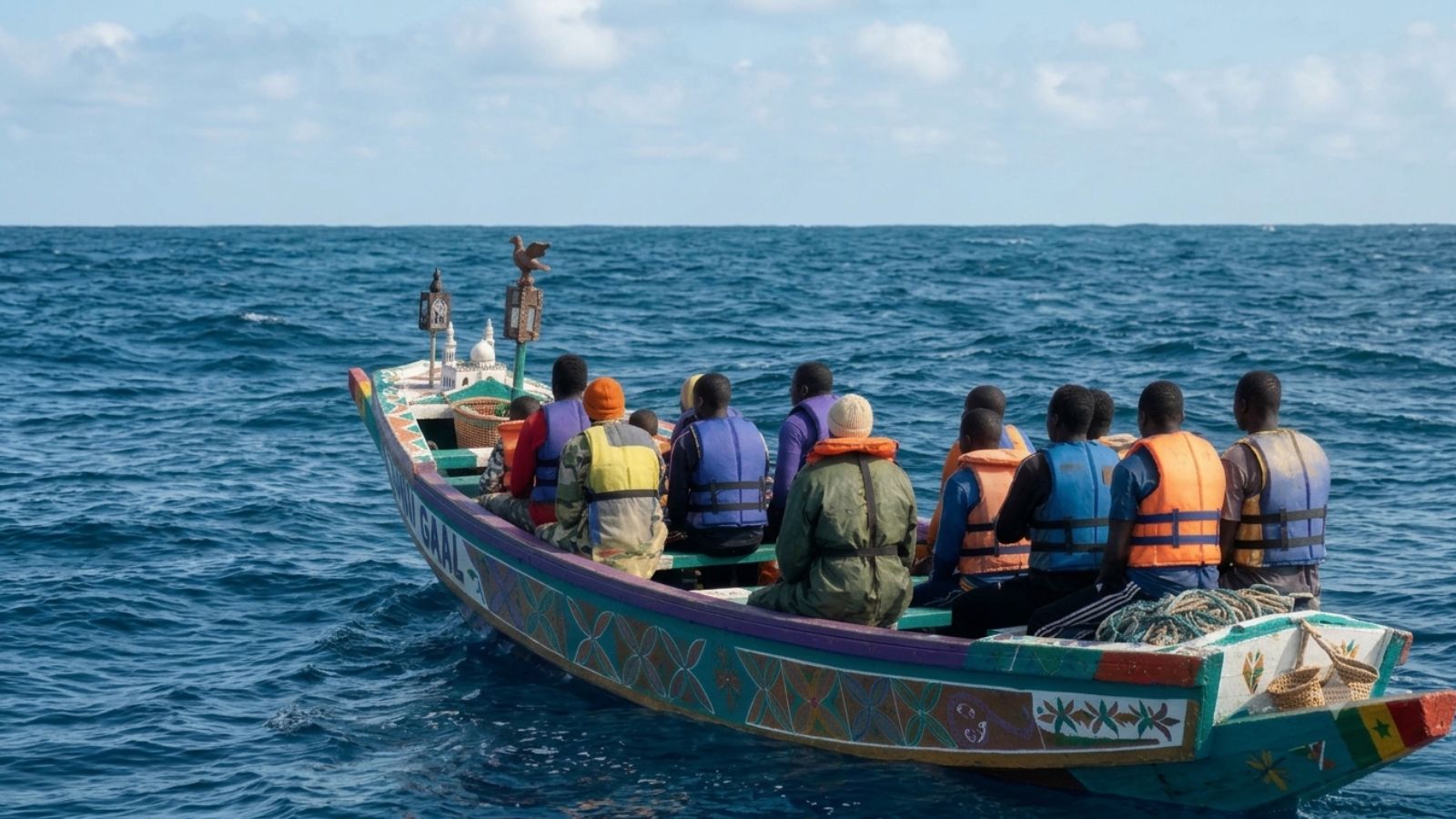


The Atlantic migration route has become one of the deadliest pathways for African migrants attempting to reach Europe. For many fleeing poverty and conflict, the journey presents a difficult choice: risk their lives at sea or remain in their home countries amid worsening living conditions.
Unlike the semi-enclosed Mediterranean Sea, the Atlantic route stretches across vast expanses of open ocean, where monitoring and rescue operations are limited. Migrants travelling along this route face dangerous conditions, including the risk of running out of food and drinking water, with little hope of assistance. Some journeys involve crossing approximately 1,000 miles of open water.
Despite these dangers, thousands of migrants, particularly from Senegal, Mauritania and The Gambia, attempt the crossing each year, hoping to reach Europe through Spain’s Canary Islands.
What drives so many people to undertake such a dangerous journey, despite the risk of losing their lives?
Many factors contribute to this, and in West African nations like Senegal, Mali, and Gambia, families have depended on artisanal fishing for generations. Today, massive commercial fleets have dominated, forcing local fishermen into severe financial ruin. The region's population is overwhelmingly young. Unfortunately, local economies lack the systems or industries required to provide jobs for this rising generation. Other factors like crop failure, climate change, and violent conflicts pave the way, too.
Spain’s Canary Islands are seen as the first step for these migrants to enter the European Union. Because the Canary Islands are legally part of European Union territory, when migrants enter there, they can formally apply for asylum or international protection under EU law.
Is this the only route towards Europe from Africa?
The answer is NO.
There are two other main pathways besides the Atlantic route. They are: the short Moroccan route and the Mauritanian route.
Moroccan route is a simple and direct path to Europe. But they have strict patrols most of the time, making access difficult.
In the case of the Mauritanian route, the European Union has funded the country to prevent migrants from entering the border. Because they are aware of the fact that their laws grant permission to migrants to formally seek asylum or to apply for international protection under EU law.
These places are guided by massive digital surveillance, making it difficult for people to cross the digital wall.
So people choose the Atlantic route, which has no patrol or proper monitoring, because of its vastness.
Human smuggling is another big factor, where people are paid millions, turning it into a multi-million-dollar industry. The migrants will be getting a seat in a pirogue, providing them with fuel, and GPS. And of course, there are people who made it to the island. Statistically, tens of thousands of people are entering there a year.
Recently, a boat capsized while trying to cross the Atlantic route, leaving 21 people dead. According to data compiled by the Spanish migrant rights organisation Walking Borders (Caminando Fronteras), at least 635 migrants died or disappeared while attempting the dangerous sea crossing in the first five months of this year alone.
So what happens when Canary gets flooded with migrants?
Since Canary is a small isolated island, the local communities won’t be able to provide facilities for a huge population. The situation in the Canary Islands gets worse as they do not have the infrastructure to support such a massive influx.
The president of the Canary Islands, Fernando Clavijo, has repeatedly urged the EU to take emergency steps as the crisis intensifies. Meanwhile, residents increasingly feel their home is being transformed from a peaceful island community into a permanent border refugee camp.
Ultimately, this migration route is not just about migrating to another country; it's about survival, hope, and a desire to live. People knowingly accept the risk because they desperately need a space to earn a living. They are dreaming of a place where they can secure a safe, dignified future, even if they have to cross an ocean to find it.