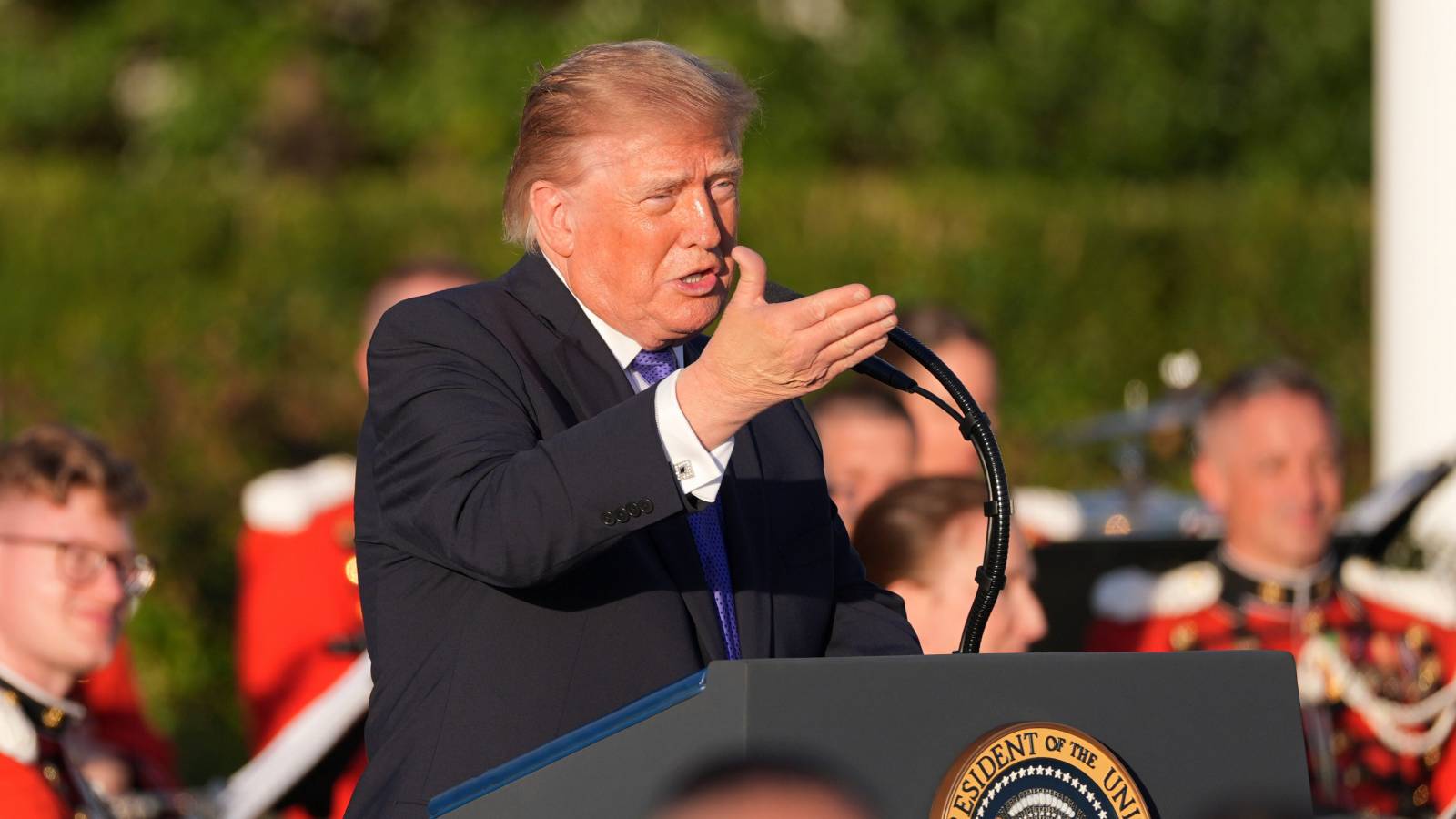


Washington DC: US President Donald Trump has invoked India’s economic growth to renew his criticism of the Federal Reserve, arguing that lower interest rates could help the American economy expand much faster.
Speaking to reporters at the White House on Friday, Trump pointed to India’s approximately 7 per cent growth and its monetary policy, claiming the US could achieve annual GDP growth of 14-20 per cent if the Federal Reserve reduced borrowing costs.
"If you look at India, they have low interest rates, and they have a 7 per cent GDP. We'd have a 14%, 15%, maybe even a 20% GDP," Trump said.
He accused the Federal Reserve of following a political approach to monetary policy, alleging that it raised interest rates when the US economy reported strong economic figures.
Trump argued that stronger economic performance should encourage the central bank to lower interest rates rather than increase them.
"Interest rates are too high because we have a very political Fed. I'm not blaming the chairman, but the fact that we have a very political Fed. Whenever we announce good numbers, they raise the interest rates. They do that for a reason. It should be the opposite," he said.
Also Read:
He also claimed that lower borrowing costs would improve the country's credit position, accelerate economic expansion and help the US repay its national debt.
"We do just the opposite. We do it to destroy the country. When we have these great numbers, you shouldn't keep raising the rates. You should lower rates because we're a better credit. We would have a GDP of 15 or 20 per cent, not 4 per cent. We'd pay off the debt very rapidly," Trump said.
He further argued that the US should have the lowest interest rates globally, claiming that its economic strength contributed to the success of other countries.
India comparison: What do the interest rate figures show?
Trump's comparison between India and the US needs some context.
India recorded real GDP growth of 7.8 per cent in the April-June quarter of 2026-27, according to the Ministry of Statistics and Programme Implementation. The Reserve Bank of India has projected full-year growth at 7.1 per cent.
However, the suggestion that India has lower policy interest rates than the US does not match the latest central bank figures.
The RBI's Monetary Policy Committee raised the policy repo rate by 25 basis points to 5.5 per cent in October. Meanwhile, the US Federal Reserve maintained its federal funds target range at 3.75-4 per cent at its October 28 meeting.
Also Read:
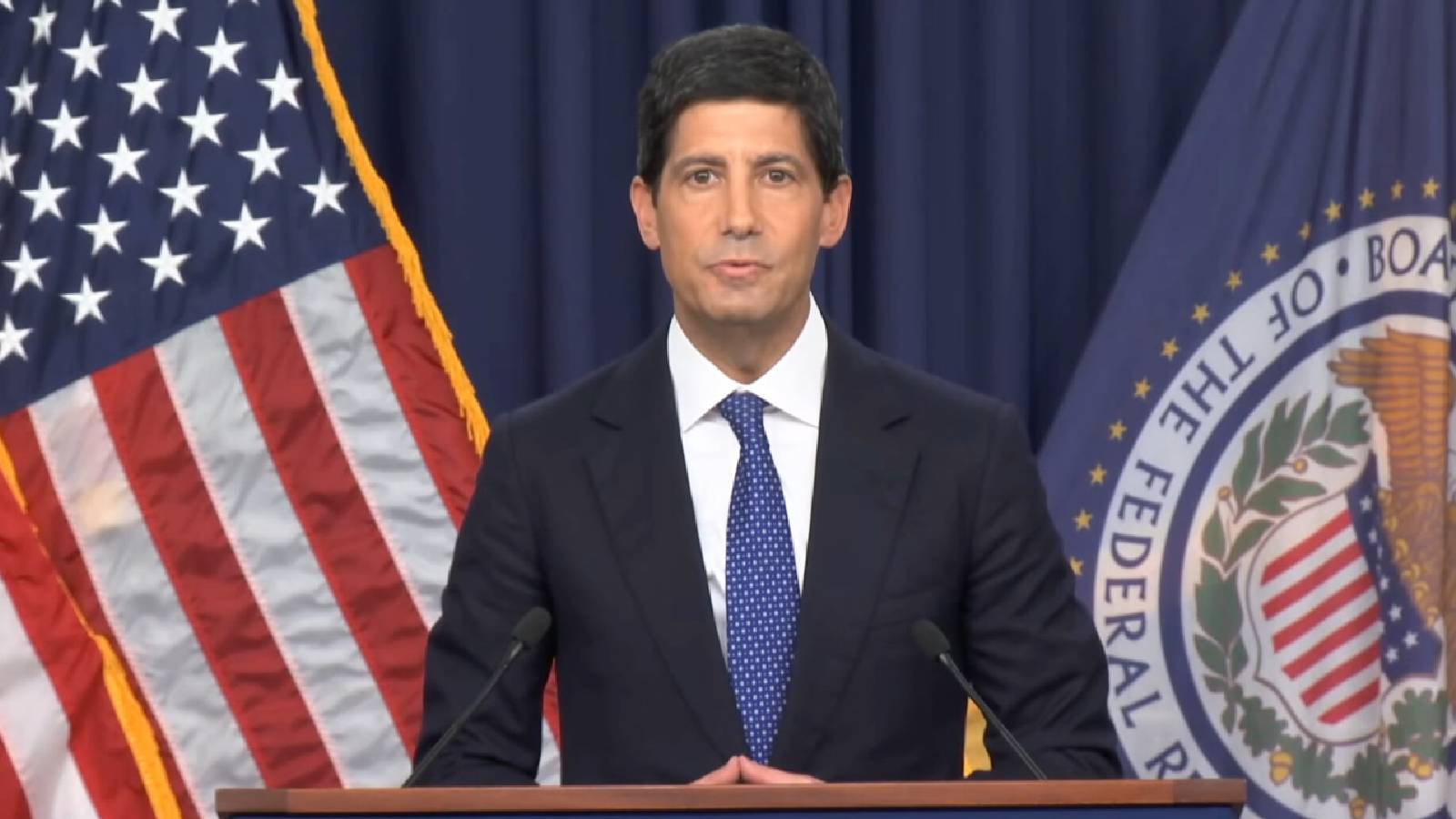
These are benchmark policy rates rather than the actual borrowing rates paid by every household or business. Nevertheless, the figures show that India's current policy repo rate is higher than the US federal funds target range.
Inflation remains a key concern for the US Fed
The Federal Reserve's decisions are guided by its dual mandate of supporting maximum employment and maintaining price stability. Its long-term inflation target is 2 per cent, measured using the personal consumption expenditures (PCE) price index.
US inflation remains above that target. According to the Bureau of Economic Analysis, the annual PCE inflation rate stood at 3.6 per cent in September 2026, while core PCE inflation, which excludes food and energy prices, was 3.1 per cent.
In its October policy statement, the Federal Reserve said inflation remained elevated and maintained its benchmark interest rate range while assessing the economic outlook.
Trump's latest remarks add to his repeated criticism of the central bank's approach to interest rates. His claim that lower borrowing costs could lift US GDP growth to 15-20 per cent, however, is a presidential assertion rather than an economic forecast established by the Federal Reserve or other official institutions.