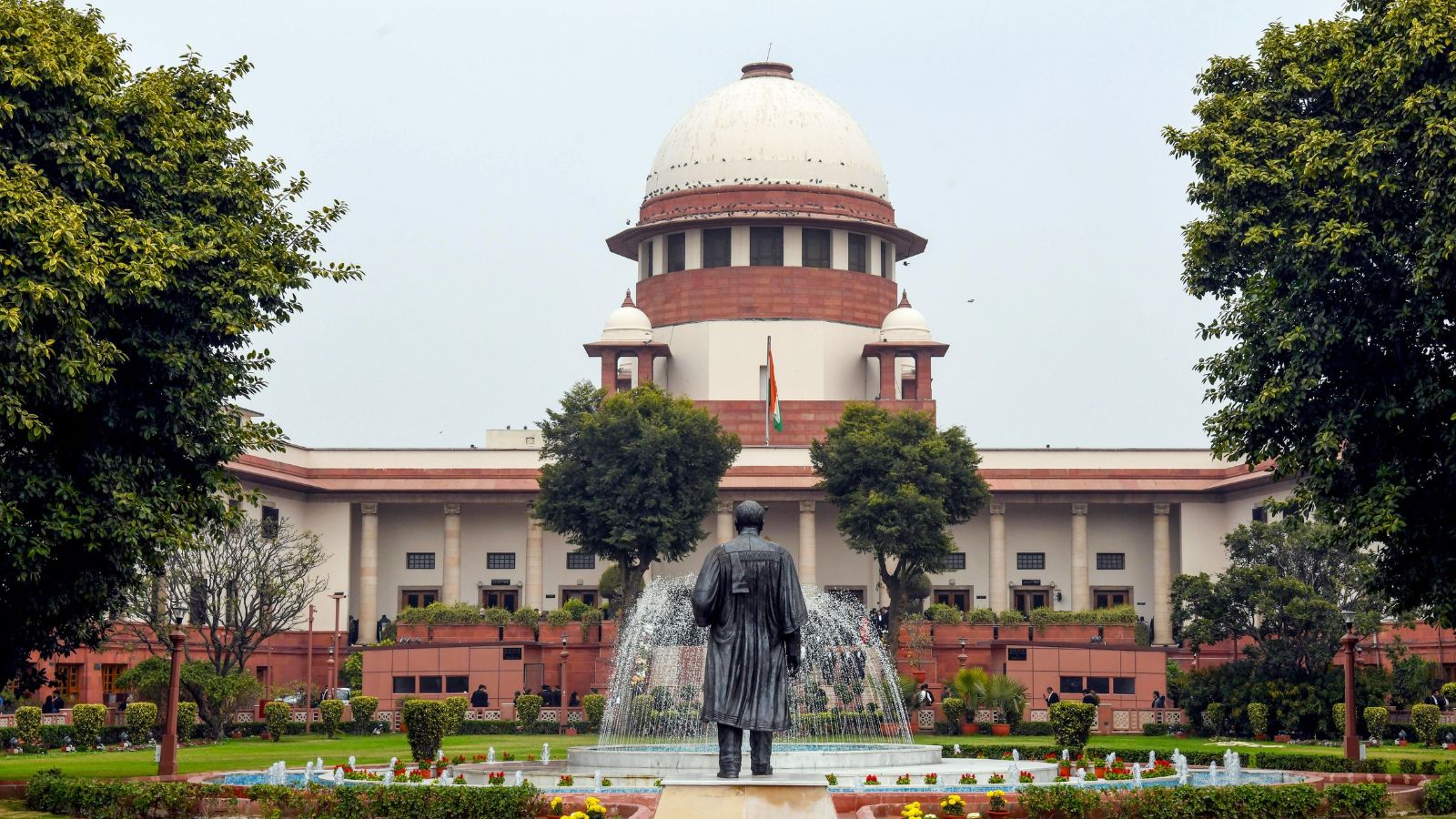


New Delhi: The Supreme Court on Monday asked the Union government, state governments and Union territory administrations to submit fresh status reports on the progress made in establishing 449 special courts to hear cases involving heinous offences under the Narcotic Drugs and Psychotropic Substances (NDPS) Act.
A bench comprising Justices Joymalya Bagchi and V Mohana took note of submissions by Additional Solicitor General Aishwarya Bhati, appearing for the Union government, that little progress had been made in implementing the court's recent directions on setting up the special courts.
"This is a three-judge matter also," Justice Bagchi said, referring to the unavailability of Chief Justice of India Surya Kant for the hearing.
The bench said it would take up the suo motu case concerning the creation of exclusive special courts for speedy trials under the National Investigation Agency (NIA) Act and the NDPS Act after a few weeks, preferably before the winter vacation in December.
Also Read:

It directed the Union government, states and Union territories to file fresh status reports detailing the progress made in establishing special courts for the early disposal of pending cases under both laws.
Earlier, the bench had expressed concern over the sharp increase in narcotics-related offences across the country and the growing pendency of cases under the NDPS Act.
On September 7, the court had directed the Union government, state governments and Union territory administrations to expedite the establishment of exclusive special courts, preferably within six weeks.
According to an affidavit filed by the Union government, 449 exclusive NDPS courts had been identified as necessary across the country to address the growing backlog of cases. The government had informed the court that 176 of these courts were already operational.
Taking note of the figures, the bench had observed that the existing pendency and the "unfortunate, alarming increase" in offences under the NDPS Act made it imperative to establish all the identified courts at the earliest.
The bench had directed the Union government, states and Union territories to provide the required infrastructure and appoint adequate staff so that the remaining courts could become operational, preferably within six weeks.

Apart from NDPS cases, the bench also reviewed the progress made by states in establishing exclusive special courts for trials under Section 11 of the NIA Act, 2008.
It noted that its earlier directions, aimed at ensuring day-to-day hearings and completing proceedings within a maximum period of one year, had been largely implemented.
Most states with more than 10 pending cases had established exclusive courts, with a general allocation of no more than 10-12 cases per court to facilitate time-bound trials, the bench said.
However, it identified several states where additional courts were still required.
Karnataka informed the bench that three exclusive NIA courts would be established in Bengaluru, Chikkamagaluru and Udupi.
Tamil Nadu said one of its two proposed courts was already operational and the second would become functional within a few weeks.
Kerala assured the bench that two exclusive courts would be established.
Assam was directed to expedite the establishment of two additional proposed courts within the same period. The state informed the bench that one exclusive NIA court was already functional.

West Bengal was directed to establish three additional exclusive NIA courts, taking the total number to five.
The direction followed a clarification by counsel appearing for the Calcutta High Court that 50 cases under Section 11 of the NIA Act were pending in the state, rather than the 21 reflected in the NIA's status report.
The bench noted that only two exclusive courts were currently operational in West Bengal.
Jammu and Kashmir had informed the bench that four exclusive courts were required in view of 47 pending cases, although only one had been notified.
The bench had earlier emphasised that the speedy disposal of such cases was necessary to balance the rights of the accused and those of victims, while ensuring timely outcomes from the criminal justice system.
The suo motu proceedings were initiated amid concerns that trials in cases investigated by the NIA were remaining pending for years.