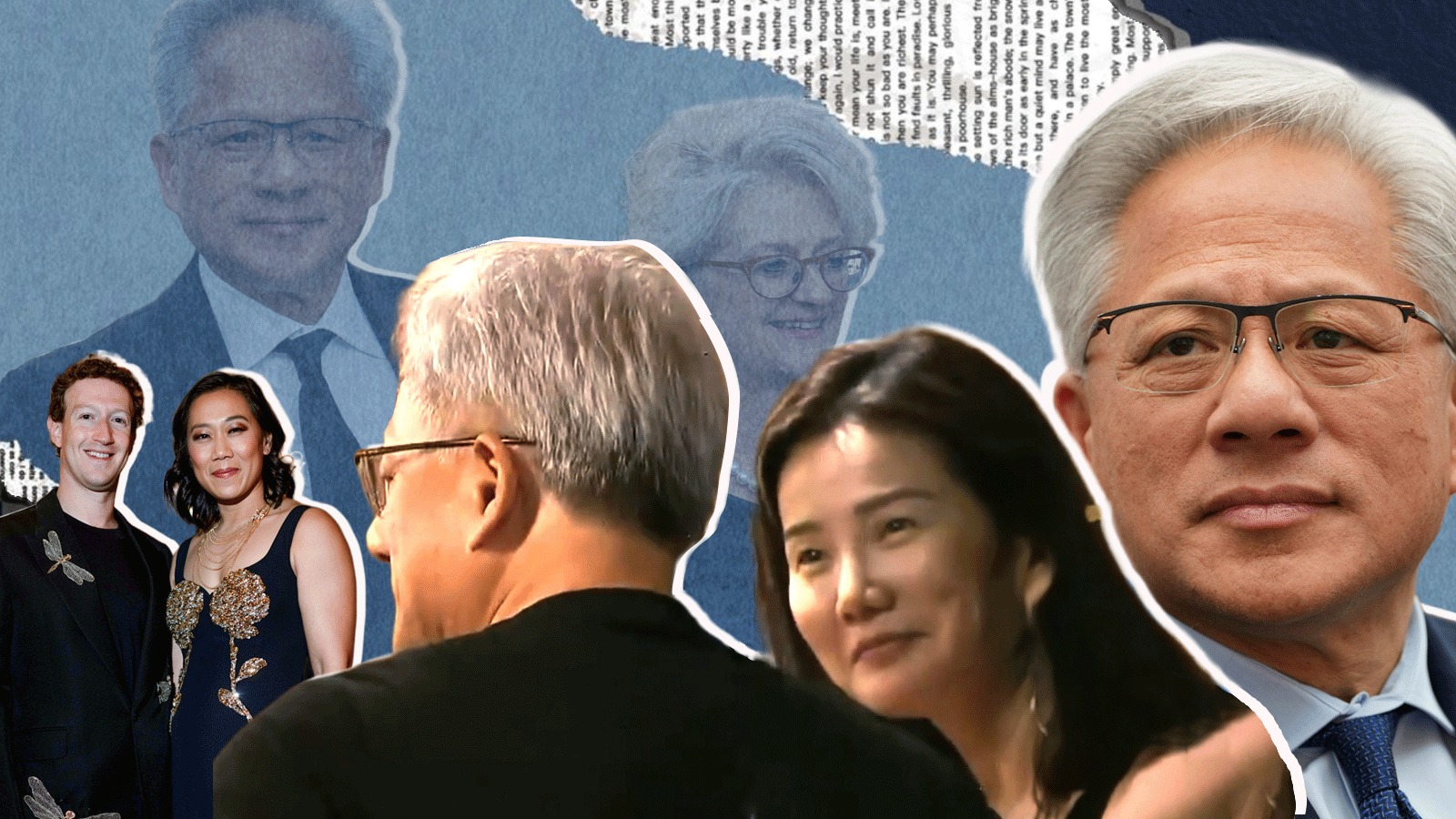


Using personal relationships to gain access or influence has long been one of the tactics associated with espionage.
The subject has caught the attention of the media and captured the imagination of social media users, with Alice Huang, a former senior executive at Megaspeed, reportedly suspected by US intelligence of spying for China. She has also been linked to a reported relationship with Jensen Huang, the billionaire Nvidia co-founder and its then-CEO.
Also Read:
Soon, one allegation was not enough for the internet. Users began scrutinising celebrities rumoured to have, confirmed to have, or simply associated with Asian partners. Social media platforms were flooded with misinformation, racial humour and our generous appetite for absurdity.
Time to fact-check
If there were a worldwide fact-checking department for the internet, its employees would have gone crazy.
And not just this time. They would have been exhausted long ago, ever since we decided to doomscroll through the vast sea of misinformation on the internet.
You could say the dolphin you saw was flying, and trust me, at least one person would believe it and share it.
But the game changes when things involve real people.
Open an AI tool, add a prompt. Done.
Also Read:

Realistic-looking photographs and spiced-up stories are ready to fuel the internet. After all, photographs are often treated as silent evidence. And sometimes, AI-generated images look so real that you won't be able to tell the difference.
Or dig up an old event that has absolutely nothing to do with the current one, make up a new story and put it online. Another way to keep the internet entertained.
And that is what is currently going on: cooking up Jensen Huang and serving stories that are part real and part fiction. There are real issues here, like espionage, national security and geopolitics. But for the internet, it is always about fun and entertainment, flavoured with racism, sexism, and so on.
In the meantime, imagine being roasted using the very technology your company helped bring to the world.
In short, this is business. More clicks, more views, more followers, and potentially more advertising revenue. You know the art of going viral. And you have the globe connected. All you need is a prompt and an internet connection.
The photographs, of course!
These were always going to be part of the spectacle. The number of fake and misidentified photographs circulating online was wild. Some even involved photographs of other women being passed off as Alice Huang.
Also Read:
The internet collective was at work here. Someone from one end of the world dug up a photograph, while others, continents away, played their part as storytellers. The global village worked!
One photograph, in particular, went viral. It showed Jensen signing a fan's tight-fitting top. Suddenly, she was Alice.
And the funny part? The woman wasn't Alice at all. According to the South China Morning Post, she was a fan who approached Jensen for an autograph during his visit to Taipei.
And this photograph wasn't even new. It dated back to June 4, 2024, when Jensen attended the Computex exhibition in Taipei. The photograph had circulated before, but the current controversy gave it an entirely different context.
Once again, an old photograph had shapeshifted into a totally different story. It will keep changing when something else comes along. And yes, things are a bit more flexible here.
Then came the sexualised images circulating under Alice's name. And there's a distinction worth making here. Approaching a public controversy with sarcasm is one thing; vulgarising real people is quite another.
Not everything becomes humour simply because someone has turned it into a meme. Also, sexualising women is not fun.
Is your girlfriend a spy too?
Alice Huang – the name, the face, everything is sus now! There are internet vigilantes, just making sure nobody is getting cheated.
Also Read:

They have found something in Harry Potter. Remember Cho Chang? A Ravenclaw student who was romantically involved with Harry? Apparently, she too has found herself dragged into this billionaire drama. Asian women, it seems, were becoming characters in a story they had nothing to do with. The internet is always rich with racial and sexist jokes.
According to these ‘theorists’, Cho Chang could also be a ‘spy’, supposedly trying to steal things from Harry Potter. Apparently, nobody has quite explained what exactly she is trying to steal.
Funny, isn't it? How little it takes for someone to connect one person to an entire race.
And why stop at a fictional character when there are real people to investigate?
Then the vigilantes turned their attention to the wives and former partners of billionaires. They returned happy. Priscilla Chan, wife of Zuckerberg; Jolin Zhu, wife of Oracle co-founder Larry Ellison – they were presented as perfect matches, with similar racial features and ‘potential problems’.
The list went on. Nobody was spared: Wendi Deng, former wife of media mogul Rupert Murdoch; Nicole Shanahan, former wife of Google co-founder Sergey Brin...
The internet had seemingly found a pattern and was busy connecting the dots.
BTW, do you have an Asian face they are talking about? Be careful, or you will be a spy the next day.
Racial stereotyping is not a new invention, though. It has always been around, ready to make an appearance whenever someone does something stupid, commits a crime or does anything considered unacceptable. One person's actions somehow become an excuse to stereotype an entire community.
The internet's facial recognition system must seriously need a background check of its own. Apparently, all Asians are doppelgängers!
Also Read:
But, bro, people across South Asia, East Asia, Southeast Asia and West Asia come from different backgrounds and have different identities.
They are not interchangeable, nor do they all share the same features.
If you still see the same person in all of them, despite their different lives, personalities and names, I think you need to step away from the screen!
This time, the controversy surrounding Alice offered a double opportunity for stereotyping: she was Asian, and she was a woman. A double bonanza, apparently.
Yet, why do we share?
Well, we are not innocent passers-by in this whole circus. This content is generated because we are here to consume it.
In the CEO's case, the internet was obsessed. Nobody would have imagined him in such a scene. He was almost synonymous with AI in the public imagination.
But for the internet, that was the fun part: the shock! It was the Nvidia co-founder, a figure closely associated with the AI boom, at the centre of a story involving alleged espionage and an alleged affair.
Moreover, there was suspicion, jealousy, espionage, alleged affairs and racial stereotypes. These are precisely the kinds of subjects that can provoke an immediate reaction. So, see yourself and show others.
Also Read:

And it is not just this time. It happens almost every time. Here is some science.
A 2025 study published in Nature Human Behaviour, titled ‘Sharing without clicking on news in social media’, analysed more than 35 million public Facebook posts containing links shared between 2017 and 2020.
It found that around 75% of the links were shared without users clicking on them first. Just a snippet and a title were enough.
And it was not just about sharing. The algorithm is shameless. It doesn't care if you were laughing, crying, defending or feeling weird about a piece of content. You stop scrolling, look at it and engage. Another engagement added!
Such a crazy world.
A scandal, a rumour or a conversation is no longer just something to discuss and move on from. It can become a content strategy. Connect all the dots, real and unreal, and keep making content over and over again.
The billionaires may have the money, but the internet knows how to make money out of their drama. That's all.