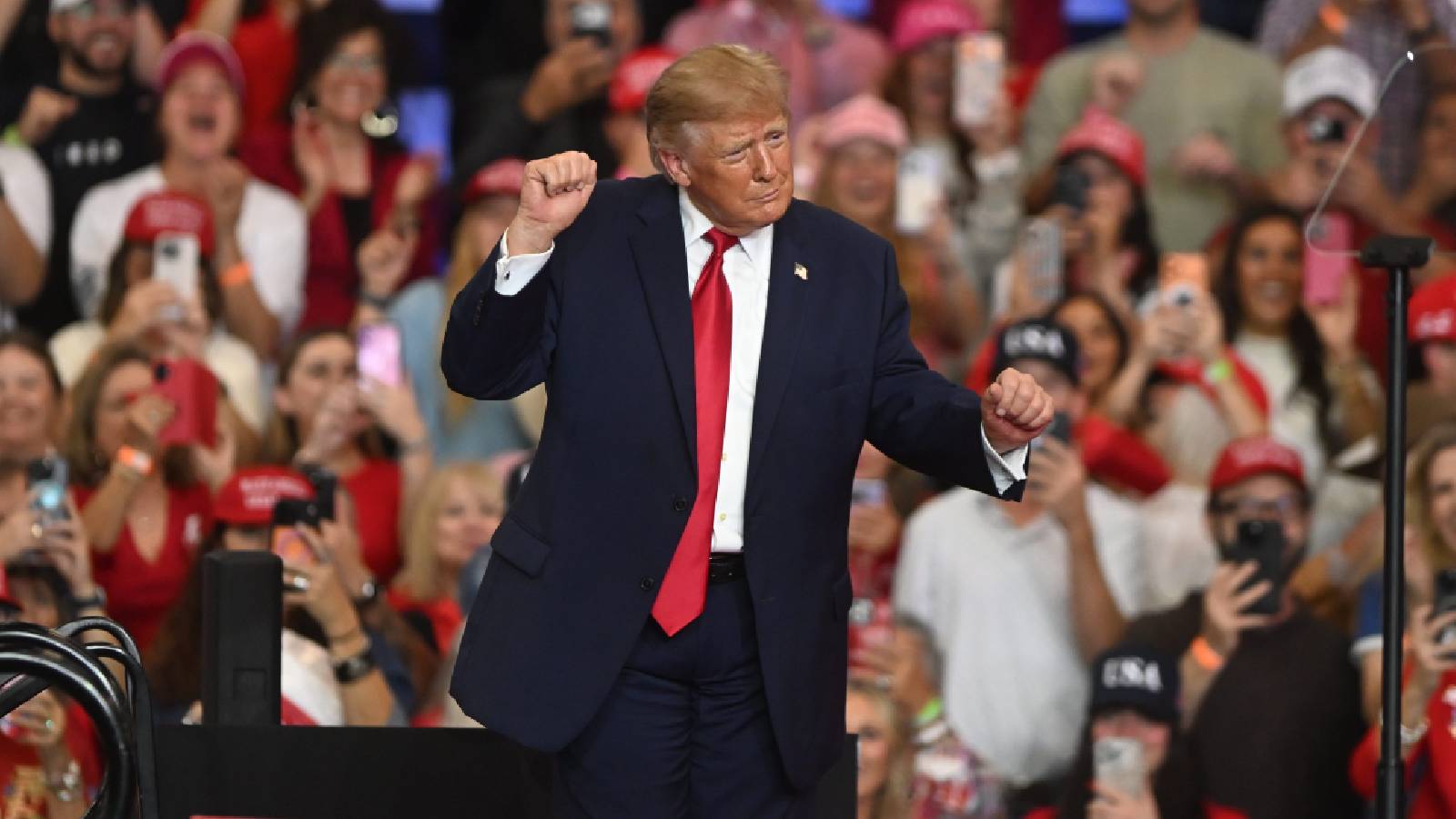


Washington: Americans are voting on Tuesday in high-stakes midterm elections widely viewed as a referendum on President Donald Trump's second term, with the results set to determine whether Republicans retain control of Congress or Democrats secure a majority in at least one of its two chambers.
Also Read:

The elections come amid a prolonged war involving Iran, rising inflation, trade tensions and deep divisions within American society. A Democratic victory in either the House of Representatives or the Senate would constrain Trump's ability to advance his legislative agenda during the final two years of his presidency and increase congressional scrutiny of his administration.
All 435 seats in the House of Representatives, 35 of the 100 Senate seats and 36 governorships are being contested. Opinion polls have indicated that Democrats could gain control of the House, although the Senate contest presents a more difficult challenge. Republicans currently hold both chambers by narrow margins.
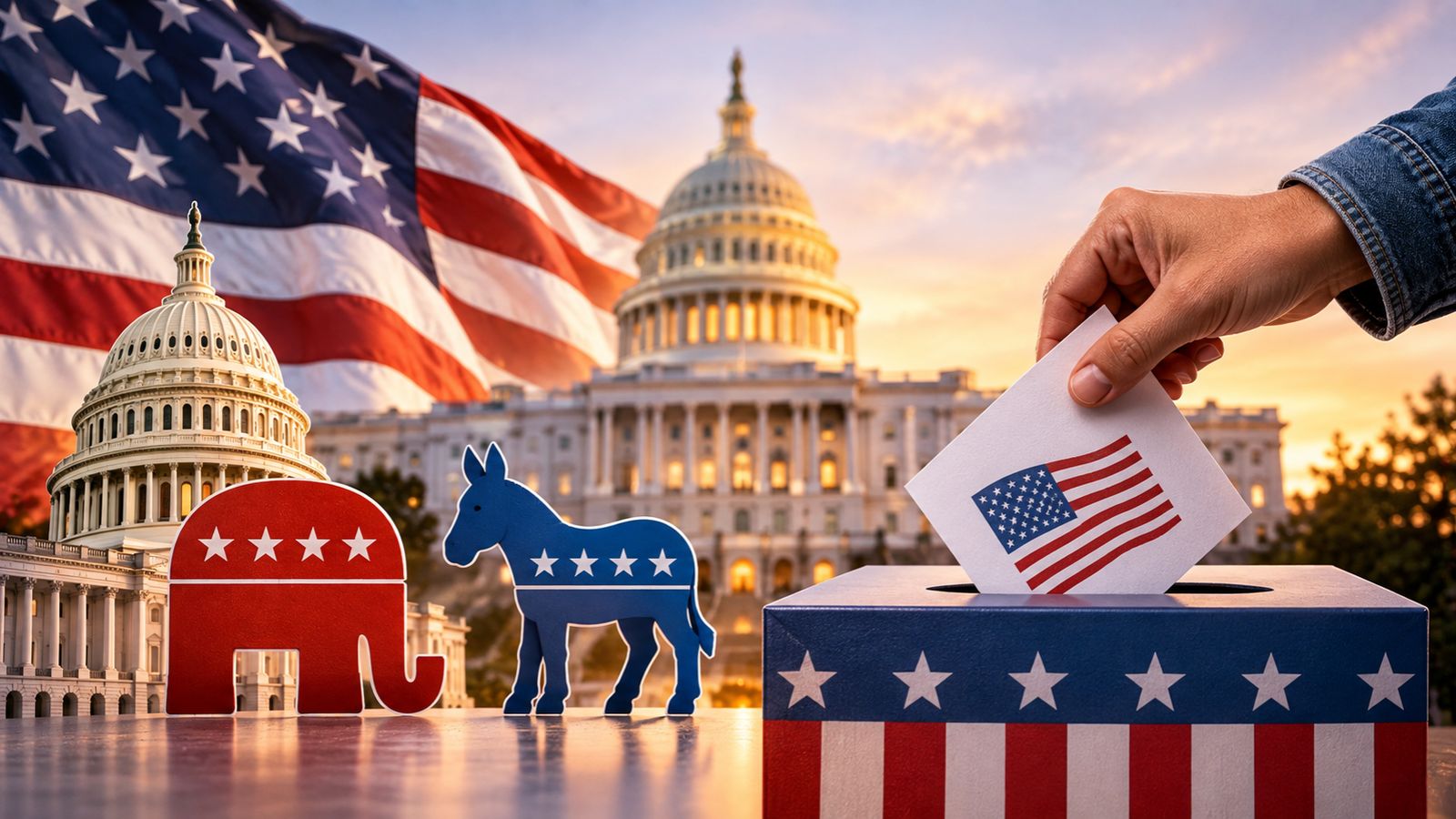
Control of Congress at stake
In the House of Representatives, Speaker Mike Johnson's Republicans hold 218 seats, alongside one independent, Kevin Kiley of California. Democrats have 214 seats, with two vacancies. Democrats need a net gain of three seats to reach 218 and potentially secure the speakership for their leader, Hakeem Jeffries.
The Senate is currently divided 53-47 in favour of Republicans. Democrats need a net gain of four seats to secure a majority and make Chuck Schumer the majority leader. Republicans can afford to lose three seats and retain control with Vice President JD Vance casting a tie-breaking vote in the event of a 50-50 split.
Thirty-five Senate seats are on the ballot, 22 of which are currently held by Republicans. Democrats are hoping to flip seats in Michigan, Maine, Ohio, Kansas, Texas, Iowa and Alaska. However, the electoral map includes several states that Trump won by double-digit margins, making the Senate contest particularly challenging for the opposition.
The outcome will have significant consequences for both parties. A Democratic-controlled House would give the party's lawmakers greater authority to investigate the administration and influence federal spending, including funding related to the Iran conflict. A Democratic Senate majority would give Schumer's party control over the confirmation process for federal judges and Cabinet nominees.
Trump would retain his executive powers regardless of the election outcome, but a Democratic majority in either chamber could limit his ability to push through his agenda.
Trump has acknowledged the possibility of losing congressional control. In an interview with the New York Post's Pod Force One podcast, he said he could become “Mr Veto” if Republicans lost both chambers, referring to the president's power to reject legislation passed by Congress.
Trump and Obama make final campaign pitches
Trump made an unusual choice of venue for his final campaign-day appearance, speaking at the Lincoln Memorial Reflecting Pool in Washington instead of focusing primarily on issues such as tax cuts, tariffs and border security.
According to the White House, Trump travelled across 20 states, mostly Republican strongholds, and addressed 30 rallies during the final 32 days of the campaign.
Former President Barack Obama, meanwhile, campaigned for Democrats with rallies in Ohio, Michigan and Georgia, urging voters to use the elections to check Trump's administration.
“This election is our last, best chance of at least reining him in, reining in some of the foolishness of this administration,” Obama said in Georgia.
Calling the midterms a “circuit-breaker in the system”, he criticised Trump for focusing on White House renovations instead of issues affecting ordinary Americans.
Obama and former First Lady Michelle Obama also urged voters to participate in the elections through messages posted on X on Monday.
“All across the country, I've heard from folks who are sick and tired of what they're seeing from politicians right now. This Election Day, we have the power to vote for the candidates who will bring about the change we need,” Obama wrote.
Michelle Obama stressed the importance of voter turnout and community mobilisation.
“This Election Day, you have the power to change the direction of this country. But nothing's going to change if you don't vote,” she said.
She urged people to help relatives and neighbours reach polling stations and encourage friends to cast their ballots, adding that communities and the country needed every eligible voter to participate.
Indian-American candidates in the fray
Several Indian-American candidates are contesting elections for positions ranging from governor to city council member.
In Ohio, Indian-American Republican Vivek Ramaswamy is in a closely watched gubernatorial contest against Democratic nominee Amy Acton.
Democrat Nithya Raman, who was born in Kerala, is contesting the Los Angeles mayoral election against her former boss, incumbent Mayor Karen Bass. Los Angeles is the second-largest city in the United States.
Indian-American lawmakers Ro Khanna, Ami Bera, Pramila Jayapal and Suhas Subramanyam are seeking re-election to the House of Representatives.
Democrats Pia Dandiya and Amish Shah are also contesting competitive races in an effort to enter Congress for the first time.
The election also carries significance for Vice President JD Vance, who is seeking to strengthen his political standing as a potential successor to Trump's leadership of the Republican Party.
Vance made campaign stops in New York and Ohio on Monday, backing Republican candidates in House and Senate contests. He highlighted Trump's moves to end taxes on tips and overtime and strengthen border security, while describing Democrats as “lunatics” who held American voters in contempt.
Voter turnout and election process
About 210 million Americans are registered to vote, according to USAFacts. California has the highest number of registered voters at 23.2 million, followed by Texas with 17.4 million and Florida with 13.6 million. Together, the three states account for approximately 26 per cent of registered voters.
Wyoming has the fewest registered voters, at 278,468, followed by Vermont with 459,455 and Alaska with 603,310.
According to the Associated Press, more than 57 million ballots had been cast across 47 states and Washington, DC, by Monday. The figure compares with slightly fewer than 44.5 million ballots cast across 49 states and Washington, DC, at the corresponding stage in 2022.
Polling stations in the first states are scheduled to close at 6 pm Eastern time. Results in closely contested races may take several days to finalise, particularly in Alaska, where ranked-choice tabulation is used, and in California, which has a prolonged vote-counting process.
The results will determine the balance of power in Congress and shape the political landscape for the remainder of Trump's second term.
(With agency inputs from ANI and AP via PTI)