

Tehran: Iran is preparing for three possible courses in its confrontation with the United States: renewed diplomacy, an economic blockade or military action, Deputy Foreign Minister Kazem Gharibabadi said on Sunday, maintaining that the country remains in a state of war.
In an interview with Iran's state news agency IRNA, Gharibabadi said Tehran had lost confidence in Washington after what he described as repeated breaches of commitments during diplomatic engagements.
"The US has shown its bad faith at least three times over the past year and a half. This shows that the US cannot be trusted at the diplomacy table," he said.
He cited the 12-day and 40-day conflicts, both of which he said took place while negotiations were underway. He also referred to the 14-point Memorandum of Understanding (MoU) agreed in June, claiming that the understanding lasted no more than two weeks.
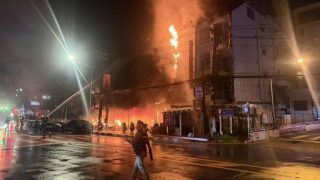
The remarks come as efforts to resolve the conflict remain stalled, with military tensions and economic restrictions continuing despite earlier attempts at mediation.
Iran sets conditions for an agreement
Gharibabadi said any agreement with Washington would have to address several issues before Tehran could consider returning to the negotiating table.
Iran's demands include a permanent end to hostilities on all fronts, the removal of the US economic blockade, a resolution over frozen Iranian assets abroad and the lifting of sanctions, particularly those affecting the country's oil sector.
He also called for the status of additional US military forces and equipment deployed in the region after the previous understanding to be addressed.
The deputy foreign minister argued that these conditions could not be postponed until after an agreement was reached. Tehran, he said, wanted concrete action during the initial implementation phase.
"These proposals are not operational from our perspective, because if even one of those issues I mentioned is not implemented at the current stage, fundamentally no understanding can be reached. Even if an understanding is formed, it would be unstable," he said.
Tehran offers two-day timeline for Hormuz reopening
Gharibabadi also outlined Iran's proposal to end the conflict and reopen the Strait of Hormuz, one of the world's most important routes for international energy shipments.
He said the original proposal envisaged a seven-day implementation period, which mediators, including Qatar and Pakistan, later shortened to two days.
"This means the measures could be carried out within two days and ultimately lead to the reopening of the Strait of Hormuz," he said, adding that the proposal remained on the table.
However, the timeline is conditional on an agreement over the wider set of issues raised by Tehran. Gharibabadi said differences over how and when commitments would be implemented remained a major obstacle.
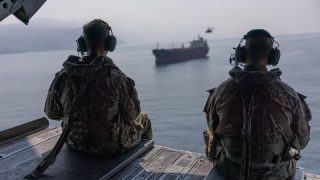
Iran's position on the waterway is particularly significant because the conflict has disrupted commercial shipping and prompted a US blockade of Iranian ports. The Congressional Research Service has documented the wider impact of the conflict on maritime traffic and regional energy trade.
'We are still in a state of war'
Rejecting the description of the current situation as "neither war nor peace", Gharibabadi said he personally believed Iran remained in a state of war under international law.
"My personal belief is that from a legal perspective, we are still in a state of war and not in a neither-war-nor-peace situation," he said.
He maintained that Iran had not initiated the conflict and had acted in self-defence.
"We did not start the war. The Islamic Republic of Iran has fundamentally not been warmongering. The war happened, and we defended ourselves. We have always been in a position of self-defence," he said.
His characterisation of Iran's legal status was a statement of his personal assessment, rather than an independently established legal determination.
Gharibabadi added that Washington would have to take the initiative to rebuild Tehran's confidence if it wanted to pursue negotiations.
"The second path is diplomacy. So if the US is to move toward diplomacy, it is the US that must win the trust of the Islamic Republic of Iran," he said.
Iran criticises US sanctions policy
The deputy foreign minister also criticised Washington's use of economic sanctions, describing its maximum-pressure strategy as unsuccessful.
He argued that the approach, used during US President Donald Trump's first term, had failed to achieve its objectives and was being continued under different names.
Gharibabadi acknowledged that sanctions had affected ordinary Iranians but claimed their wider consequences for global energy markets, financial systems and the US economy were greater.
The US and Iran remain at odds over the terms of a settlement, with Tehran demanding sanctions relief and an end to the blockade while Washington continues to exert economic and military pressure.
The 14-point MoU signed in June 2026 was intended to provide a framework for negotiations over a broader settlement. However, the understanding subsequently collapsed amid renewed hostilities and formally expired in August, according to a Congressional Research Service assessment.
(With inputs from ANI)