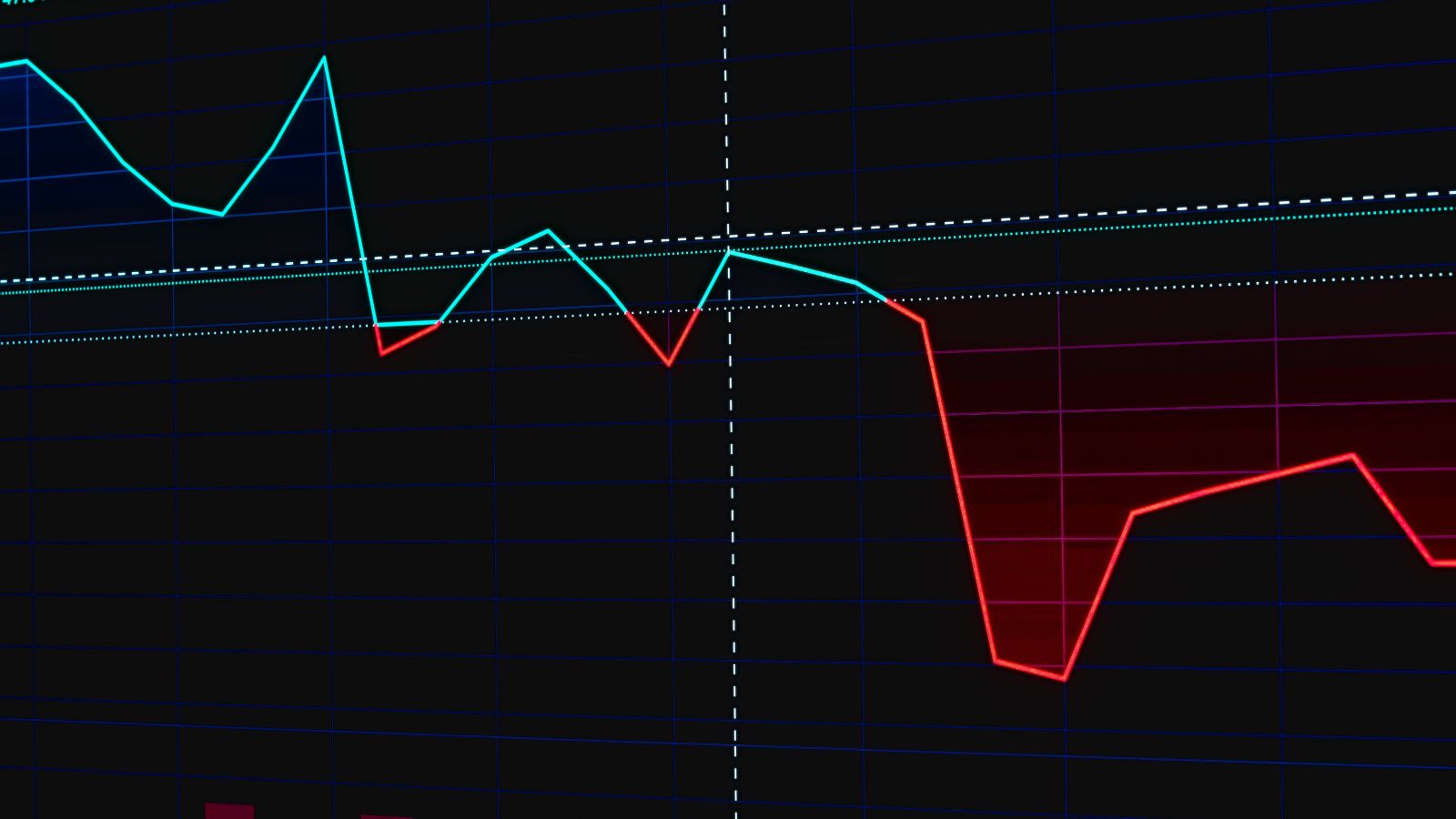


Hong Kong: Asian shares mostly declined Monday as investors' worries over the future of the artificial intelligence trade extended into another week following Nvidia's fallout.
US equity futures were trading lower. Investors and traders are closely monitoring any signals on what is next for the global AI industry ahead of Nvidia's earnings report due Tuesday and Anthropic's massive stock market debut set for later this week.
Jensen Huang's resignation as Nvidia CEO last week after his extramarital affair sparked US national security concerns and shook global markets. Huang has been one of the biggest advocates for AI, and his downfall triggered questions about how the global AI boom could be impacted.
Those worries have spread to Asia, where AI hardware stocks are prominent on markets including South Korea and Japan.
South Korea's benchmark Kospi index lost 2.8 per cent to 5,142.84. Shares fell for memory chipmaker SK Hynix and Samsung Electronics, two of its most valuable companies. SK Hynix plummeted 5.5 per cent, while Samsung Electronics gave up 3.2 per cent.
Japan's Nikkei 225 fell 1.6 per cent to 60,182.50 after official data Monday showed Japan's economy contracted in the latest quarter. Several of Japan's big AI stock names also traded lower. OpenAI investor SoftBank Group slipped 4.2 per cent, while memory maker Kioxia Holdings dropped 5.5 per cent and chip equipment maker Tokyo Electron dipped 5.2 per cent.
Also a beneficiary of the global AI frenzy, Taiwan's Taiex sank 4.1 per cent, with shares of its leading chipmaker TSMC, or Taiwan Semiconductor Manufacturing Co., falling 3.4 per cent.
There have been increasing concerns that the robust growth of AI capital spending may slow, analysts have said, even before the Nvidia episode. For one, uncertainties surrounding developments in AI data centres in the US were also growing following the US midterm elections.
“The market was already worried about this risk before what happened at Nvidia,” Zhiwei Zhang, president and chief economist at Pinpoint Asset Management, said in a commentary Monday. “Now the risk has become even more serious.”
Hong Kong's Hang Seng index rose 0.9 per cent to 23,852.96. The Shanghai Composite index declined 0.4 per cent to 3,621.46 following the latest Chinese official economic data released Monday, including on retail sales and industrial production, that disappointed analysts.
Australia's S&P/ASX 200 edged down 0.2 per cent to 9,064.30.
India's Sensex was up 0.6 per cent.
On Friday, Wall Street's benchmark S&P 500 dropped 0.4 per cent. The Dow Jones Industrial Average edged up 0.1 per cent, while the technology-heavy Nasdaq composite fell 0.9 per cent.
Nvidia lost 2 per cent Friday, after falling 4.3 per cent Thursday as the company announced Huang's resignation. Some of its rivals' shares were also lower, with Broadcom declining 4.8 per cent Friday and AMD, or Advanced Micro Devices, giving up 8.8 per cent.
In commodities trading, oil prices declined as tensions in the Middle East dragged on while oil flows in the Gulf were recovering from prewar levels. The International Energy Agency said last week that Gulf exports “recovered much faster than global oil demand.”
Brent crude, the international standard, slid 1 per cent to $94.91 per barrel, though that is still much higher than the approximately $72 a barrel in late February before the Iran war began.
Investors are also looking for updates this week as US President Donald Trump, Chinese leader Xi Jinping and Russian President Vladimir Putin are expected to meet Thursday on the sidelines of the Asia-Pacific Economic Cooperation summit in Shenzhen, China.
Meanwhile, the minutes from the Federal Reserve's latest policy meeting are set to be released Wednesday, which could offer more detail on the decision-making processes on rates as it attempts to cool inflation in the US
The US dollar was trading at 159.64 Japanese yen and was little changed. The euro was trading at $1.1017, down from $1.1029.